Top 10 Questions to Ask Manager Interview in 2026 to Uncover the Truth
A successful interview is a two-way street. The questions you ask your potential manager are just as important as the answers you give. They reveal your strategic thinking, uncover the reality of the role beyond the job description, and help you determine if the team, culture, and leadership style are the right fit. Generic questions get generic answers. The right questions to ask in a manager interview, however, can uncover critical insights about performance expectations, team challenges, and growth potential, ensuring you make an informed career decision.
This guide provides 10 powerful, high-impact questions designed to probe deeper and reveal the unspoken truths about a role. We'll explore why each question matters, what to listen for in the answer, potential red flags, and how to adapt your approach for different seniority levels. For professionals who value clarity and authenticity, especially neurodivergent candidates, asking structured, insightful questions is key. This list moves beyond the obvious, giving you a framework to truly evaluate your next career move. We will also touch on how tools like Qcard can provide real-time, resume-grounded talking points, helping you connect their answers to your own verified experience without relying on scripts and reducing interview anxiety.
1. What does success look like in this role?
This is one of the most critical questions to ask in a manager interview because it cuts directly to the core of their expectations. By asking this, you move beyond the generic job description and into the specific, measurable outcomes that define high performance. It shows the hiring manager that you are a results-oriented candidate focused on delivering tangible value.
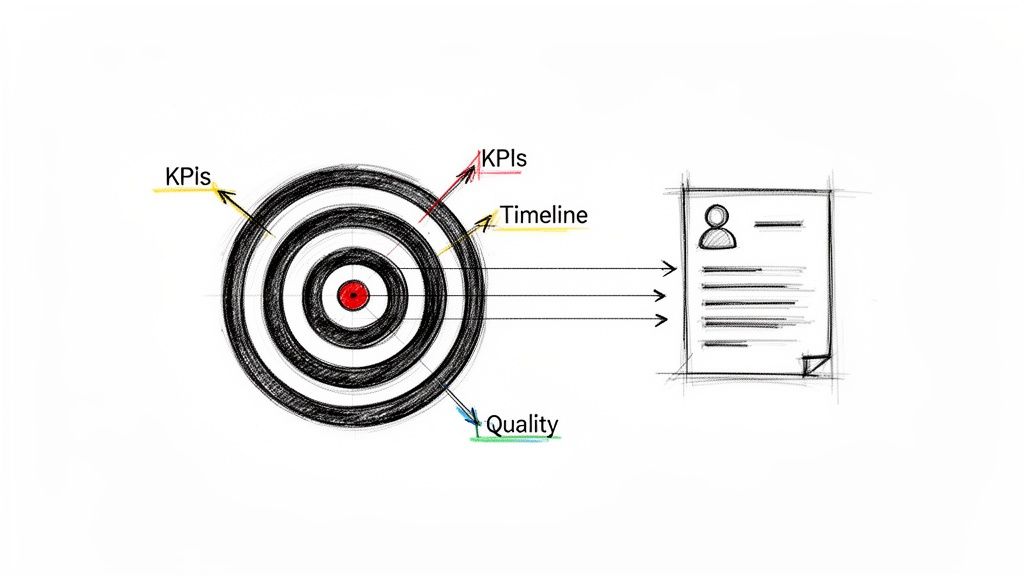
Understanding these key performance indicators (KPIs) allows you to connect your past achievements directly to the role’s needs. For example, a tech candidate might hear that success is "shipping three features per sprint with less than 2% post-launch bugs." A consulting candidate might learn that success is defined as "delivering client recommendations on time and securing follow-on work."
How to Implement This Question
- Listen for 3-5 key metrics: Pay close attention to the specific numbers, timelines, and qualitative goals the manager mentions. These are your targets.
- Map your resume to their metrics: Mentally (or with a tool like Qcard’s real-time talking points) connect your previous accomplishments to these exact KPIs. For instance, if they mention bug reduction, you can share a story about how you improved code quality in a past project.
- Ask a pointed follow-up: A powerful next step is asking, "What would failure look like in the first six months?" This reveals the manager's risk tolerance, biggest concerns, and the team's cultural approach to mistakes.
- Reference it later: Take notes on their answer. Mentioning these specific success metrics in your thank-you email shows you were actively listening and are already thinking about how to succeed.
2. How do you define and measure team performance?
This question shifts the focus from your individual success to the collective, revealing the manager's leadership philosophy. It shows you're not just a solo contributor but a team player interested in shared goals. Understanding how a manager evaluates the entire team’s output uncovers whether they lead with objective data, subjective feedback, or a healthy mix of both.
This insight is particularly valuable for candidates who thrive on clarity and structured feedback. An engineering manager might say, "We measure system uptime, PR review turnaround, and on-call incident resolution time." A finance manager could state, "We track quarterly revenue growth, client retention rates, and peer feedback on collaboration." This tells you precisely what the team rallies around.
How to Implement This Question
- Listen for balance: A great manager will cite both quantitative metrics (e.g., tickets closed, revenue generated) and qualitative feedback (e.g., peer reviews, cross-functional collaboration).
- Ask about the tools: A simple follow-up like, "What tools or dashboards do you use to track these metrics?" can reveal how organized and transparent the performance process is.
- Connect it to your experience: When they mention a metric like "client retention," you can share a brief example of how you contributed to a similar goal in a past role, demonstrating your alignment.
- Watch for vague answers: If a manager can’t articulate how their team is measured, it’s a yellow flag. This might indicate a lack of clear direction, which can lead to confusion and frustration down the line.
3. What challenges is this team currently facing?
This is one of the most powerful questions to ask in a manager interview because it peels back the curtain on the team’s day-to-day reality. A job description lists responsibilities, but this question reveals the immediate problems you will be hired to solve. It shows the hiring manager that you are a proactive problem-solver, not just someone looking to fill a seat.
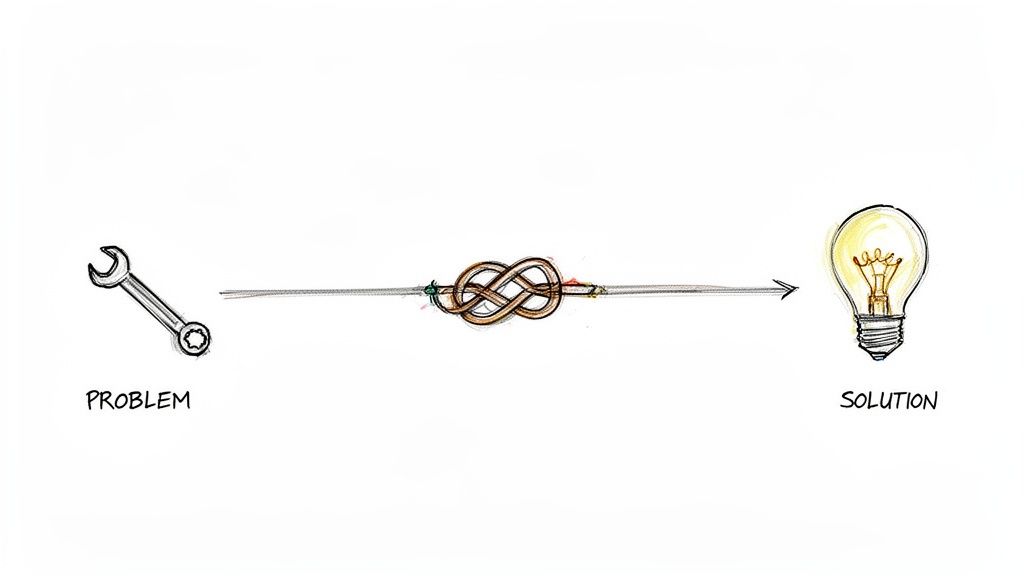
The answer uncovers pain points, resource constraints, and internal politics, helping you assess job stability and impact. For a cybersecurity candidate, a challenge might be "struggling to keep up with security ticket volume." For a product candidate, it could be "a slow, unreliable data pipeline causing bottlenecks in A/B testing." This information allows you to frame your experience as the direct solution.
How to Implement This Question
- Listen for 2-3 core problems: Note the specific technical, process, or team-related issues the manager mentions. These are your entry points to demonstrate value.
- Align your skills to their problems: Immediately connect your past successes to their current challenges. If they mention ticket backlogs, you can share a story about how you automated a similar process, reducing manual work by 40%.
- Ask a prioritizing follow-up: A great next question is, "Which of these challenges is the highest priority to solve in the next quarter?" This clarifies where you should focus your energy from day one.
- Frame your potential contribution: Use their answer to talk about your first 90 days. For instance, "Based on what you've said about the data pipeline, my initial focus would be on diagnosing the core reliability issues and implementing a more robust monitoring system." This shows you're already thinking like a team member.
4. How has this role evolved over the past 1-2 years, and where is it headed?
Asking this question helps you understand the trajectory and stability of the position. It reveals whether the role is a new creation tied to growth, a static position, or a role being redefined due to shifting priorities. This insight is crucial for assessing long-term fit, growth potential, and the company's strategic direction.
This question shows the hiring manager you are a strategic thinker, interested not just in the job today but in its future and how you can contribute to that evolution. For a tech candidate, the answer might be: "This role was originally backend-focused, but we're shifting to full-stack to own our microservices end-to-end." For a consulting candidate, it could be: "We created this role to support our AI practice expansion; we expect it to take on more client-facing responsibilities within 18 months."
How to Implement This Question
- Listen for keywords: Pay attention to terms like growth or expansion (positive), restructuring (caution), backfill (neutral), or consolidation (potential red flag). These words give you a quick read on the team's health.
- Ask a skills-focused follow-up: A great next question is, "What skills will become more important in this role over the next two years?" This signals your interest in professional development and adapting to future needs.
- Connect to your own growth: Frame your past experiences in the context of their answer. If they mention a shift to AI, you can share a story about how you upskilled in machine learning in a previous role.
- Probe for investment: Inquire about budget allocation or future hiring plans for the team. This helps you gauge the level of organizational commitment and investment in the area this role supports.
5. What's your leadership philosophy, and how do you support your team's growth?
Asking about a manager’s leadership philosophy goes beyond their day-to-day tasks; it uncovers the core principles that guide their decisions, communication, and team culture. This is one of the most revealing questions to ask in a manager interview because it tells you how they lead, not just what they manage. It reveals their commitment to mentorship, professional development, and creating a supportive environment.

A great answer will be specific and action-oriented. For example, a manager might say, "I believe in servant leadership. I set clear goals, then my job is to remove roadblocks and provide the resources my team needs." A senior leader might add, "I focus on creating psychological safety so my team can innovate without fear of failure, and I sponsor high-performers for stretch assignments."
How to Implement This Question
- Listen for specific actions: Vague answers like "I support my team" are a red flag. Look for concrete examples like weekly 1:1s, a dedicated training budget, clear career pathing discussions, or mentorship programs.
- Ask a targeted follow-up: A powerful next question is, "Can you give me an example of how you've helped someone on your team grow their career?" This forces them to move from theory to practice.
- Assess for neurodiversity support: For neurodivergent candidates, this is a chance to gauge a manager's flexibility. Ask, "How do you adapt your communication and feedback styles for different working preferences on your team?" Their response reveals their awareness and willingness to accommodate.
- Connect it to your goals: Briefly mention your own desire for growth. You could say, "That's great to hear, as I'm looking for a role where I can develop my skills in [specific area]." This aligns your ambitions with their leadership style.
6. What does a typical day or week look like for someone in this role?
This is one of the most practical questions to ask in a manager interview because it peels back the curtain on the role's reality. It moves beyond high-level responsibilities to reveal the day-to-day rhythm, including time allocation, meeting frequency, and the degree of context-switching required. This shows the hiring manager that you are thinking realistically about how you will fit into the team's operational flow.
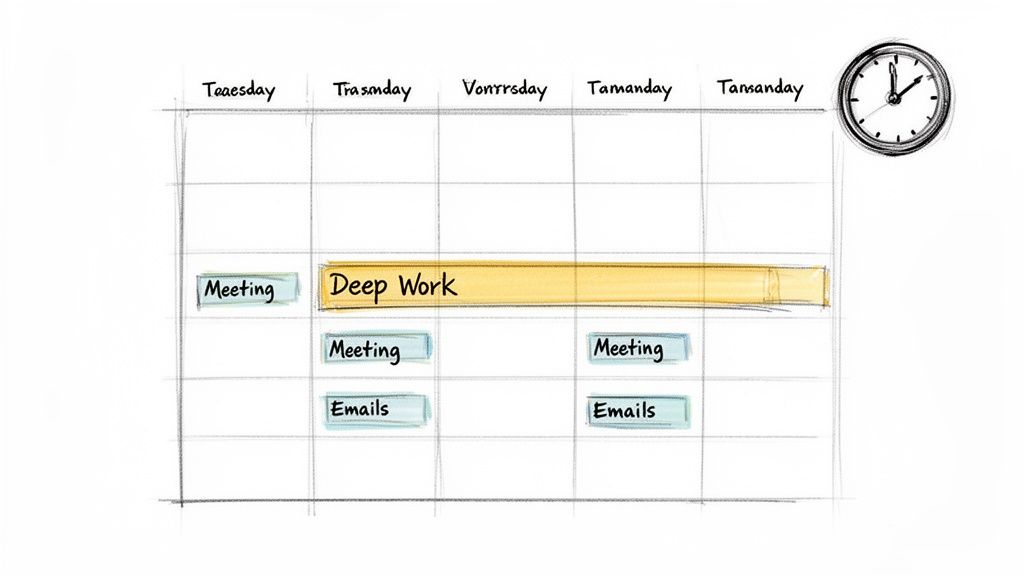
Understanding the daily cadence helps you assess if the work style aligns with your own productivity needs. For an engineer, a typical week might involve "four to five hours of focused coding time daily, with sprint planning meetings concentrated on Mondays." A product manager might hear that their week is "split between deep work on specs Tuesday-Wednesday and collaborative sessions with design and engineering on Thursday."
How to Implement This Question
- Ask for specifics on focus time: A great follow-up is, "How much time does the team actually get for uninterrupted deep work versus collaborative meetings?" This helps you gauge the company's culture around focused productivity.
- Gauge the alignment with your needs: Listen carefully to see if the described routine matches how you work best. A role heavy on ad-hoc meetings may be challenging for those who thrive on structured, predictable schedules.
- Inquire about flexibility: Ask, "Can team members adjust their hours or work asynchronously to accommodate their focus periods?" This reveals the team’s approach to autonomy and work-life balance.
- Assess context-switching demands: This question is especially valuable for neurodivergent candidates. You can ask, "How does the team handle frequent interruptions or the need to context-switch between different projects?"
7. What qualities do you look for in strong performers on your team?
This question helps you look past the job description's buzzwords and discover what the manager truly values. It uncovers the specific personality traits, work styles, and behaviors that lead to success within their team's unique culture, moving beyond just technical skills. Asking this shows you care about being a great teammate, not just a capable employee.
It allows you to understand the unspoken expectations and assess whether you will genuinely thrive. For example, a consulting manager might say, "I look for people who are intellectually rigorous and comfortable with ambiguity." A tech lead might value engineers who are "self-directed, proactive about learning, and great communicators who mentor others." These answers are goldmines of cultural insight.
How to Implement This Question
- Listen for 3-5 key qualities: Pay close attention to the traits they emphasize, like curiosity, proactivity, or collaboration. These are the soft skills that matter most.
- Map your experience to their values: Connect your past achievements to these qualities. If they value proactivity, you can share a story about a time you identified and solved a problem without being asked.
- Ask a storytelling follow-up: A great next question is, "Can you share an example of someone on the team who really exemplifies one of those qualities?" This makes the abstract quality concrete and reveals what it looks like in practice.
- Inquire about development: Ask, "How do you support team members in developing these qualities?" This demonstrates a growth mindset and tests whether the manager invests in their people's professional development.
8. How does this team collaborate with other departments, and what can I expect in terms of cross-functional work?
This is a crucial question to ask in a manager interview because modern work is rarely done in a vacuum. Your success often depends on your ability to influence and coordinate with teams you don't directly manage. This question uncovers the role's true complexity, revealing your actual stakeholders and the political landscape you'll need to navigate. It shows the hiring manager that you understand the importance of organizational dynamics and are prepared for collaborative challenges.
Understanding the cross-functional nature of a role is key to gauging your day-to-day reality. For a product candidate, the answer might be: "We work closely with engineering, design, and marketing. We have weekly syncs and use async Slack for ad-hoc coordination." A finance candidate might hear: "Analysts work with portfolio managers, risk management, and compliance, with a lot of back-and-forth on deal structures." This reveals the communication channels and relationship-building required for success.
How to Implement This Question
- Listen for relationship dynamics: Pay attention to keywords like "partnership" or "trust" (positive) versus "turf wars" or "unclear ownership" (negative). This tells you about the company culture.
- Map your experience to their model: As they describe the collaboration structure, think of specific examples where you successfully managed similar cross-functional projects. Be ready to share a story about navigating dependencies or aligning different teams.
- Ask a pointed follow-up: A great next step is, "What is the biggest collaboration challenge this team currently faces?" This question reveals existing friction points and how the manager approaches conflict resolution and process improvement.
- Clarify decision-making: Follow up with, "How are conflicts or disagreements between teams typically resolved?" Their answer will tell you if there are clear escalation paths or if decisions get stuck in committees, which is a significant red flag.
9. What's your biggest frustration with hiring managers or leaders in similar roles at other companies?
This unconventional question provides a "reverse rubric" for success. It reveals the hiring manager's past frustrations and biggest pet peeves with people in similar roles, giving you a clear picture of what not to do. The answer is a roadmap to the unspoken expectations and cultural landmines you need to avoid.
This question shows you are insightful, coachable, and interested in building a strong working relationship based on mutual understanding. For a tech manager, a frustration might be, "Engineers who over-engineer simple solutions and can’t ship on time." A consulting manager might say, "People who struggle with ambiguity and need constant hand-holding instead of taking initiative."
How to Implement This Question
- Listen for behavioral traits: Pay attention to the specific behaviors they describe, such as a lack of accountability, poor communication, or an inability to adapt. These are the negative patterns they are actively trying to avoid hiring.
- Frame your strengths as the solution: Use their answer as a cue to highlight experiences where you demonstrated the opposite behavior. For example, if they mention poor communication, share a story about how you kept stakeholders aligned on a complex project.
- Ask a proactive follow-up: A great next step is to ask, "How can we work together to ensure I’m avoiding those pitfalls and meeting your expectations?" This signals that you are self-aware and committed to a successful partnership from day one.
- Don't get defensive: Remember, this isn't a personal criticism or a warning. Treat it as valuable intelligence that helps you understand the manager's leadership style and the team's dynamics.
10. What do you wish you had known before you started managing this team?
This reflective question is one of the more advanced questions to ask in a manager interview. It encourages vulnerability and reveals what the hiring manager has learned through trial and error, what they underestimated, and what they would do differently. Their answer provides priceless intel about the team's hidden dynamics, cultural nuances, and real challenges that aren't on any job description.
A hiring manager's self-awareness here is a strong indicator of their leadership style. For instance, an engineering manager might share, "I wish I'd known how burned out the team was. It took six months to rebuild trust and reset expectations." This reveals a focus on team well-being. A product manager might say, "I didn't realize how political the relationship with sales was," showing the importance of internal stakeholder management.
How to Implement This Question
- Listen for emotional resonance: Pay close attention to the manager's tone. Their pain points and learned lessons often reveal their core values and what they prioritize now.
- Ask a direct follow-up: A great next step is, "What did you do to address that, and how has it changed your management approach?" This turns their reflection into a concrete example of their leadership skills.
- Calibrate your own expectations: Use their answer to understand the true landscape of the role. If they mention burnout, you can frame your own experience around creating sustainable pacing and protecting team capacity.
- Show appreciation for their candor: Acknowledging their honesty with a simple, "Thank you for sharing that, I appreciate the transparency," builds significant rapport and shows you value open communication.
Turn Your Questions into Your Advantage
The interview process is fundamentally a two-way street. While the hiring manager is assessing your skills and fit, you are simultaneously evaluating whether the role, the team, and the company align with your career goals and values. The questions to ask manager interview that we've explored are not just a formality to fill the final minutes; they are your most powerful tool for conducting thorough due diligence. They transform you from a passive candidate into an active, strategic partner.
By asking about success metrics, team challenges, and leadership philosophy, you gain a panoramic view of the reality behind the job description. The answers you receive, and just as importantly, the way they are delivered, provide invaluable data. A manager's transparency about existing problems or their enthusiasm for team development can speak volumes about the company culture and their personal leadership style. Remember, you are not just accepting a job; you are joining a team and committing to a manager who will directly influence your professional growth and daily well-being.
From Preparation to Performance
Mastering the art of inquiry is about more than just having a list of smart questions. It's about active listening, observing non-verbal cues, and having the confidence to ask insightful follow-ups. This is where your preparation truly pays off. When you've internalized your key questions, you free up mental energy to focus on building genuine rapport and making a lasting connection.
This preparation phase is critical for all candidates, but especially for those who may need additional support to stay on track under pressure. The goal is to move beyond rote memorization and towards a state of confident, authentic conversation.
Key Takeaway: Your questions reveal your priorities, your analytical skills, and your understanding of what drives business success. A well-posed question demonstrates that you are already thinking like a valuable member of the team.
Moving forward, your next steps are clear:
- Select Your Top 3-5 Questions: Choose the questions from this list that resonate most with your personal and professional priorities.
- Tailor and Rehearse: Customize the phrasing to fit the specific role and company. Practice asking them aloud until they feel natural.
- Prepare for the Answers: Think about what a good answer sounds like to you, and what might constitute a red flag.
By investing this time upfront, you equip yourself to make a clear-headed, informed decision when an offer is on the table. You will be able to confidently accept the right opportunity or gracefully decline one that isn't a true fit, saving you from potential career missteps down the line. Go into your next interview ready not just to answer questions, but to lead a conversation that uncovers the truth.
FAQs on Questions to Ask Managers During an Interview
Q: Why are the questions I ask in a manager interview so important?
Asking insightful questions is a critical part of a manager interview. It shifts you from a passive candidate to an engaged leader. Your questions demonstrate your strategic thinking, priorities, and how you evaluate a team's health and challenges, which are key leadership qualities.
Q: What are some examples of strategic questions to ask about a team?
Go beyond basics. Ask about the team's biggest current challenge, how success is measured for the manager role, the dynamics between the team and key stakeholders, and what the ideal candidate would achieve in their first 90 days. These show you're thinking about impact and integration from day one.
Q: When is the best time to ask these questions during the interview process?
While you typically get a formal chance at the end, you should integrate relevant questions naturally throughout the conversation. For example, after discussing a project, you could ask about decision-making authority or resource allocation. This creates a more dynamic, two-way dialogue.
Q: How do questions for a manager interview differ from those for an individual contributor role?
Manager-focused questions should center on leadership, strategy, and team development. Instead of asking about your personal tasks, ask about team mentorship, managing cross-functional priorities, aligning the team with company goals, and your role in shaping culture and process.
Q: Should I ask about challenges or negative aspects of the role?
Yes, but frame it constructively. Asking about "the biggest challenge the team is facing" or "what past managers have found most difficult" shows you are realistic and problem-solving oriented. It also gives you crucial information to assess if you have the skills to succeed in that specific environment.
Ready to feel more confident and articulate in your next high-stakes interview? Qcard provides a real-time AI copilot that surfaces your key metrics and talking points just when you need them, helping you stay on-message without sounding scripted. Prepare smarter and perform at your peak by visiting Qcard to see how it can support your interview success.
Ready to ace your next interview?
Qcard's AI interview copilot helps you prepare with personalized practice and real-time support.
Try Qcard Free