TL;DR
The final interview is a two-way decision, and your questions should evaluate the employer as carefully as they're evaluating you. Choose two or three from eight — first-90-day success, a recent team decision, how success and failure are measured, what surprised the interviewer, what wouldn't come up naturally, how the role has evolved, what onboarding looks like, and who you'd build credibility with. Pick based on what's still unknown after the conversation: expectations gaps point to questions 1 and 3, environment gaps point to 4 and 5, growth uncertainty points to 6, and career-switching or support needs point to 7 and 8. Prepare for what you'll be asked too — why this role, why this company, a trade-off you made, a conflict, a setback, compensation expectations, availability — using STAR to keep answers focused on the decision and the result. Prepare recovery phrases for blanking ("Let me take a moment to organize that"), since a 2025 report found 78% of candidates experienced significant mental blocks at least once in the prior year. Send a specific thank-you within 24 hours referencing something the interviewer actually raised.
You've reached the final interview. The baseline questions about your experience are largely behind you, and the conversation now feels less like a screening and more like a decision. The employer is testing your judgment, communication, and readiness, while you're trying to determine whether the role, manager, team, and working environment match what you need.
The strongest questions for final interview rounds don't fill silence. They uncover how success is defined, how decisions are made, what support exists, how relationships work, and whether the opportunity fits your direction. This guide gives you eight questions to choose from, plus suggested phrasing, timing cues, candidate-specific adaptations, and preparation for common final-stage prompts.
You'll also see how early-career candidates, career switchers, neurodivergent candidates, and international candidates can tailor the conversation. Qcard can support preparation with resume-grounded cues, practice tools, checklists, and Interview Coach features, so you can prepare naturally without memorizing a script.
What Are the Best Questions for a Final Interview?
By the final round, the baseline questions about your experience are largely behind you. The conversation is now a decision — the employer is testing your judgment, communication, and readiness, while you're determining whether the role, manager, team, and environment actually fit. The strongest final-interview questions don't fill silence. They uncover how success is defined, how decisions get made, what support exists, and where the role is heading.
The eight questions worth choosing from:
1. What does success look like in this role during the first 90 days? Shows you're thinking past the offer. Ask near the end, once you have enough context to make it specific. Listen for a concrete deliverable, relationship, or business outcome — vagueness may signal a role still being shaped.
2. Can you walk me through a recent decision or initiative led by someone on this team that you're proud of? Reveals how the team handles ownership, disagreement, and cross-functional work. Follow up with "What would you do differently?" — that's more useful than asking whether it succeeded.
3. How do you measure success for someone in this role, and how would you know if they're not succeeding? Ask the positive version first, then the second part separately. Strong answers distinguish output from impact — shipping work versus stakeholders actually trusting and using it.
4. What surprised you most about joining this team, and what took longer to adjust to than you expected? Gives the interviewer permission to describe daily reality. Follow with "How did you work through that?" to learn whether adjustment is supported or solved privately.
5. What's one thing you'd want me to know about working on this team that wouldn't come up naturally in interviews? Ask near the end, and let the silence work — don't rescue a pause with another question.
6. How has this role or team evolved since the position was created, and where do you see it heading? Distinguishes growth from instability. Ask "What would that direction mean for someone starting now?"
7. What does your onboarding process look like, and how would you set me up for success in those first weeks? Reveals whether the company has a plan or expects trial and error. Especially useful for career changers and anyone who benefits from documented expectations.
8. Who would I be working most closely with, and what's the best way to build credibility with them? Reveals who matters in practice, not just on the org chart.
Ask two or three, not all eight. Too many makes the close feel mechanical.
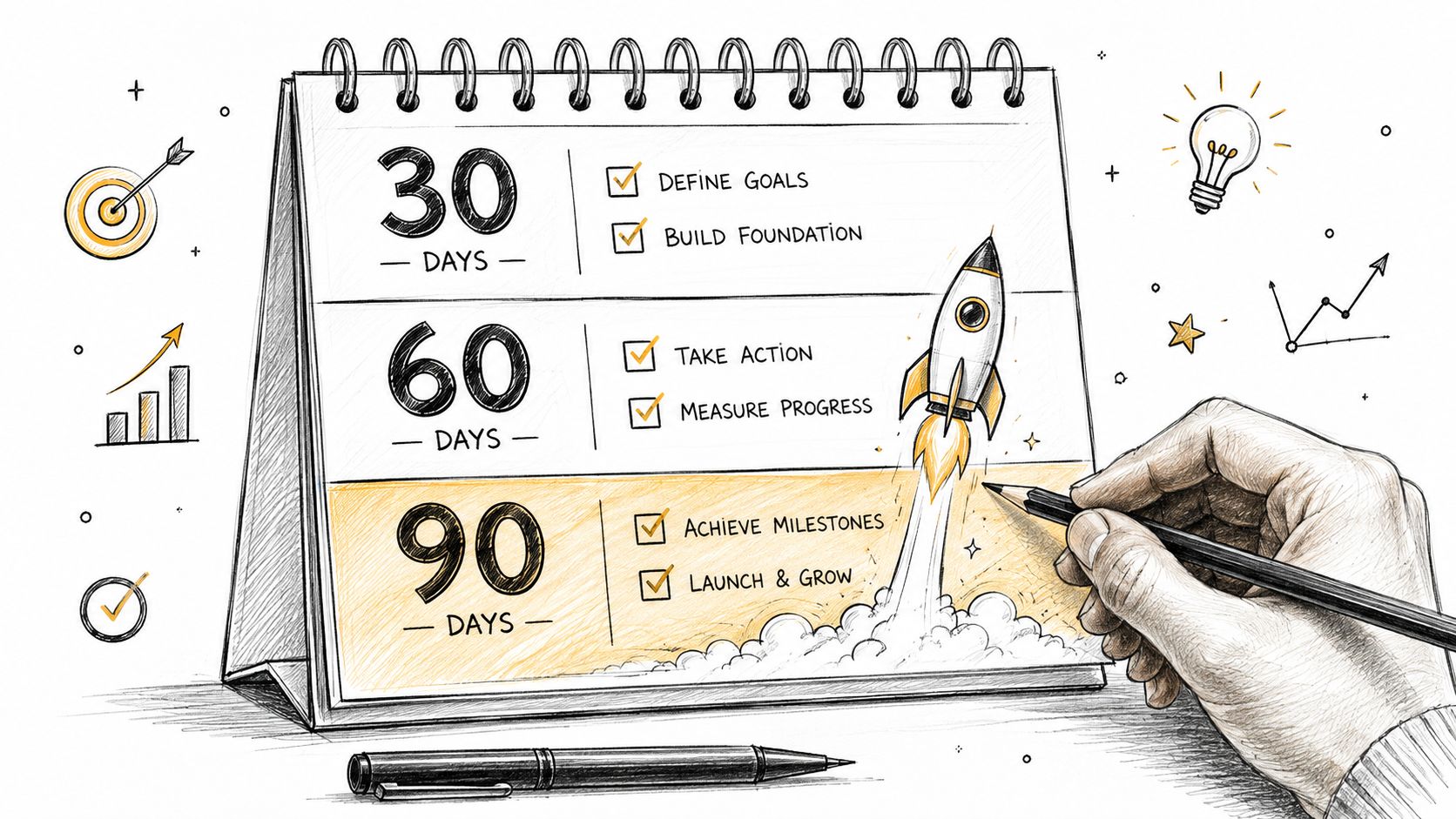
1. What does success look like in this role during the first 90 days?
A final-round interviewer wants evidence that you're thinking beyond getting the offer. Asking about the first 90 days shows that you're already considering priorities, relationships, and useful contributions. The answer also tells you whether the company has a clear view of what the new hire needs to accomplish.
Ask this near the end of the interview, after the interviewer has explained the team and responsibilities. The timing matters because you'll have enough context to make the question specific rather than generic.
A product manager might ask:
“If I'm hired, what would make the first quarter successful? Would that mean shipping a feature, stabilizing a process, or achieving something else?”
For a consulting role, try:
“What's one challenge the team is facing that you'd want a new hire to understand immediately?”
Listen for concrete priorities, such as a deliverable, stakeholder relationship, process improvement, or business outcome. A detailed answer gives you useful preparation material. A vague answer may indicate that the role is still being shaped, that priorities change frequently, or that expectations haven't been communicated consistently.
Use the answer after the interview
Write down the exact themes the interviewer emphasizes. If they mention improving a workflow, learning a customer segment, or partnering with a specific department, connect that information to your experience in your follow-up message.
You might write:
“Based on your description of the first 90 days, I'm particularly interested in learning how the team approaches [specific priority]. My experience with [relevant example] would help me contribute while I build context.”
Reviewing the job description, identifying likely first-quarter priorities, and preparing resume-grounded talking points will make your answer sound more natural. Qcard's interview preparation guide can help you turn your experience into concise cues instead of rehearsed paragraphs.
2. Can you walk me through a recent decision or initiative led by someone on this team that you're proud of?
Job descriptions describe responsibilities. This question reveals how the team makes decisions, handles disagreement, and defines good work. It also gives the interviewer a chance to discuss something real rather than repeat the company's standard messaging.
Tailor the question to research you can verify. In a banking interview, you might say:
“I noticed that the team recently expanded into [new market]. Can you tell me how that decision came together and who drove it?”
In cybersecurity, ask:
“What's a recent security initiative or process change the team implemented? How did you approach getting buy-in from other departments?”
The answer can reveal whether people have meaningful ownership, whether leaders invite challenge, and whether cross-functional work is treated as a shared responsibility. Pay attention to how the interviewer describes mistakes. A team that can discuss setbacks constructively may offer more room for learning than one that presents every initiative as effortless.
Ask the reflective follow-up
After hearing the story, ask:
“What would you do differently if you could do it again?”
This follow-up is more useful than asking whether the initiative was successful. It shows whether the team examines its choices, learns from friction, and recognizes trade-offs. Listen for whether the interviewer gives credit to several contributors or presents the result as the achievement of one person.
A rushed decision isn't automatically a warning sign. Some situations require speed. The important point is whether the team understood the constraints, communicated them, and reviewed the outcome afterward.
You can use Qcard's practice interview questions to rehearse follow-ups without turning your answers into fixed scripts. Practice explaining one project in different ways, because a final interviewer may focus on ownership, collaboration, risk, or judgment.

3. How do you measure success for someone in this role, and how would you know if they're not succeeding?
This question examines both performance expectations and management style. Ask the positive version first, then introduce the second part once the interviewer has answered. Combining both questions too quickly can sound suspicious, while separating them creates a more constructive conversation about feedback and support.
For a data analyst position, you could ask:
“What would excellent performance look like once someone is established in this role? Would you focus on report accuracy, stakeholder adoption, decision quality, or something else?”
Then follow with:
“What pattern would tell you that someone wasn't tracking toward success?”
A startup product candidate might ask:
“How do you know whether a new hire is helping the product? Which outcomes or signals would you watch?”
Separate output from impact
Strong answers distinguish between completing tasks and producing useful outcomes. An analyst may deliver reports, but the larger question is whether stakeholders trust and use them. A product manager may ship work, but the employer may care more about customer behavior, reliability, or adoption.
Look for specificity around expectations, review points, and feedback. “You'll just know” gives you little protection or direction. An answer that explains how the manager reviews work, identifies problems, and adjusts priorities gives you a clearer picture of day-to-day leadership.
Ask:
“How frequently would we review progress against those expectations?”
This is also a useful way to assess whether the role suits your working style. Early-career candidates may value regular feedback and structured development. A senior candidate may prefer autonomy with clear outcomes. Neither preference is universally better, but a mismatch can create frustration quickly.
Avoid presenting the question as a demand for guaranteed evaluation criteria. Frame it as an effort to understand how you can do good work and recognize when you need to correct course.
4. What surprised you most about joining this team or company, and what took longer to adjust to than you expected?
People who work inside an organization often notice differences between the formal description and daily reality. This question gives them permission to discuss those differences. It may surface the pace of work, communication norms, approval processes, politics, or the amount of collaboration required.
Ask it conversationally, especially if the interviewer has already described their own experience. You might say:
“You've been here for a while. What surprised you most when you joined, and what took longer to understand than you expected?”
A technology startup employee might explain that cross-functional collaboration is much heavier than the job description suggested. A banking interviewer might mention compliance processes, informal approval chains, or legacy systems that took time to learn.
The answer isn't automatically positive or negative. A fast-moving environment can be energizing for one candidate and exhausting for another. A complex approval process may be manageable if the team provides guidance, but difficult if new hires are expected to discover it alone.
Explore the adjustment process
Follow up with:
“How did you work through that?”
This reveals more than the surprise itself. Did the person receive support? Did they build relationships, ask questions, document processes, or endure the difficulty? Their response can show whether the organization treats adjustment as a normal part of onboarding or leaves employees to solve every problem privately.
If the answer concerns you, ask:
“Is there anything you wish you'd known during your first week?”
Keep your tone curious rather than adversarial. You're not trying to catch the interviewer in a contradiction. You're testing whether the workplace is willing to describe its operating reality with reasonable honesty.

5. What's one thing you'd want me to know about working on this team that wouldn't come up naturally in interviews?
This open-ended question lets the interviewer choose the information they consider important. That makes it especially valuable when you've already covered the obvious topics. You don't need to predict every hidden dynamic. You only need to invite a thoughtful answer.
A consulting candidate could ask:
“You've spent time in this role. Is there one thing about working on this team that I wouldn't learn from the job description or formal interview process?”
A product candidate might phrase it more clearly:
“Before we wrap up, is there anything about the team or role that you think I should know and we haven't covered?”
The response may reveal communication expectations, independent work habits, distributed collaboration, client relationship responsibilities, or unwritten norms about decision-making. Sometimes it confirms a strength that hasn't appeared in the interview. Sometimes it identifies a constraint you need to investigate.
Let the silence work
Ask this near the end, when the conversation has developed enough rapport for the interviewer to answer sincerely. If they pause, don't rush to rescue them with another question. A short silence can produce a better answer than immediate prompting.
You can add:
“What does that look like in practice during a normal week?”
That follow-up turns a broad observation into something you can evaluate. If the interviewer says the team is highly collaborative, ask how collaboration happens. If they say the role requires independence, ask how priorities and decisions are communicated.
Thank them for the insight and mention it in your follow-up email. A specific reference shows that you listened:
“I appreciated your explanation of how the team balances collaborative problem-solving with independent execution.”
Don't use this question as a disguised accusation. Its value comes from genuine curiosity. You're asking the interviewer to share useful context, not to confess a flaw.
6. How has this role or team evolved since the position was created, and where do you see it heading?
A role can carry the same title while changing significantly over time. This question helps you understand whether the company is filling an established need, building a new function, replacing someone, or responding to changing priorities.
In a fintech interview, you might ask:
“I understand that this team handles [specific area]. Has the role expanded or shifted since it was created, and where do you see it going as the company grows?”
For cybersecurity, try:
“It seems the security function is maturing. What has changed about this role or team, and what do you expect to change next?”
Research the company's recent news, organizational changes, and business direction before asking. The point isn't to display every fact you found. It's to understand how the role connects to the company's current needs.
Distinguish growth from instability
Listen for whether the team is expanding, consolidating, or pivoting. Growth can mean broader responsibility and investment. It can also mean unclear priorities. Consolidation may provide stability, or it may signal reduced attention. A pivot can offer meaningful ownership, but it may require comfort with uncertainty.
Follow up with:
“What would that direction mean for someone starting this role now?”
This brings the discussion back to your immediate experience. You'll learn whether the employer expects the new hire to build foundations, maintain existing work, influence strategy, or adapt as the function changes.
Also notice the interviewer's energy. Enthusiasm about the trajectory can indicate that they're engaged with the work. A hesitant answer may reflect uncertainty, but it deserves a second question about priorities and decision-making.
Career switchers can use this question to connect transferable experience to the team's future needs. For example:
“My background in operations has involved building processes during periods of change. If this team is formalizing its workflows, where would that experience be most useful?”
That turns curiosity into relevant positioning without forcing a sales pitch.
7. What does your onboarding process look like, and how would you set me up for success in those first weeks?
Onboarding reveals whether the organization expects new hires to learn through a plan or through trial and error. The question also signals that you take learning seriously and want to contribute quickly without pretending you'll understand everything immediately.
In a technical role at a larger company, ask:
“Could you walk me through the first two weeks? Would I have documentation, team introductions, a structured plan, or another format?”
In a startup, use language that acknowledges a different environment:
“I know onboarding can look different at a smaller company. Is there a buddy system, documentation, or mostly learning by doing?”
Ask for specifics. Who would you meet first? What would you learn during the first week? Which responsibilities would wait until you had more context? The answers can show whether the manager has thought about your arrival or expects you to create your own orientation.
Look for support that matches your needs
This question is particularly useful for neurodivergent candidates and career changers who may benefit from clear expectations, written information, predictable communication, or a defined point of contact. You don't need to disclose a diagnosis to ask for clarity about working conditions.
Independent accommodation guidance identifies options such as receiving questions in advance, getting written questions through chat, having extra time, using a quieter setting, reducing panel size, or responding in an alternative format. The Higher Education Recruitment Consortium's accommodation guidance also emphasizes that disclosure is optional and accommodations don't need to be framed as special treatment. The remaining challenge is often practical wording, timing, and preserving a professional impression in the final round.
You could ask:
“I do my best work when expectations and early priorities are documented. How does the team usually share onboarding information and feedback?”
A useful follow-up is:
“What's the biggest onboarding mistake you've seen, and how do you avoid it now?”
A response such as “no one really did onboarding for me, so you'll figure it out” may be a warning sign. It doesn't prove the role is unsuitable, but it tells you to ask who will provide context, access, and feedback.
8. Who would I be working most closely with, and what's the best way to build credibility with them?
Good performance depends on relationships as well as individual output. This question shows that you understand how work gets done across teams, and it reveals who matters in practice, not only on the formal organization chart.
A product candidate might ask:
“Who would I collaborate with most closely across engineering, design, and marketing? What does it take to build credibility with each group?”
For banking operations, try:
“Beyond my direct team, who would be critical partners in my success, and what do they care most about?”
The interviewer may describe priorities such as responsiveness, technical depth, risk awareness, customer understanding, or reliable follow-through. Those details help you decide how to introduce yourself and where to invest relationship-building effort early.
Read the informal structure
Pay attention to tone. Is the interviewer enthusiastic about the team, or unusually cautious? Do they describe shared ownership, or suggest that one person's approval controls most decisions? Informal authority isn't necessarily unhealthy, but you should understand it before accepting the role.
Follow up with:
“Have you seen new hires build those relationships quickly and effectively? What did they do?”
You're looking for observable behaviors, not personality judgments. A strong answer might involve listening sessions, clear project updates, early delivery on small commitments, or asking partners how they prefer to work.
International candidates can tailor this question to communication norms without making assumptions:
“Which collaboration practices are most important on this team, especially across locations and time zones?”
Candidates who experience brain fog or anxiety can prepare this question as a short memory cue rather than a full sentence. Qcard's AI mock interview tool can help you practice asking it, handling a follow-up, and returning to your main point without sounding rehearsed.
Leave With Clarity and a Stronger Final Impression
You don't need to ask all eight questions. In a final interview, asking too many can make the closing feel mechanical and leave little room for a genuine exchange. Choose two or three questions based on what remains unknown after the conversation.
If the interviewer explained the team's work but not the role's expectations, ask about first-90-day success or performance measurement. If the responsibilities sound attractive but the environment is unclear, ask what surprised the interviewer and what they want candidates to know. If you're excited about the role but unsure about growth, ask how the team has evolved. If you're changing careers or entering a new field, onboarding and credibility-building questions can reveal how much support you'll receive while applying transferable skills.
Prepare for the questions you're likely to answer, too. Review the job description and identify the skills the employer emphasizes. Then prepare concise examples for prompts such as:
- Why this role?
- Why this company?
- What trade-off did you make in a past decision?
- Tell me about a conflict or disagreement.
- What did you learn from a setback?
- What are your compensation expectations?
- What's your availability?
For behavioral prompts, use STAR, Situation, Task, Action, Result, to keep your response focused. A conflict answer should briefly establish the context, explain your responsibility, describe what you did, and finish with the outcome or lesson. Don't memorize every word. Prepare the sequence of facts, the decision you made, and the result you can defend.
A simple Qcard workflow can keep preparation manageable. Start by reviewing the job description and your resume. Create short cues for one technical or role-specific example, one teamwork example, and one leadership or ownership example. Add likely follow-up questions, practice answering with different openings, then trim each response until you can deliver the core point without losing your natural voice.
Candidates who blank under pressure should also prepare recovery phrases:
“Let me take a moment to organize that.”
“The clearest example is…”
“I'd separate that into the decision, the trade-off, and the result.”
A 2025 report found that 78% of candidates experienced significant mental blocks or blanking out at least once during the previous year. The OfferGoose report places this experience in the context of final-round preparation and neuroinclusive interview practices. Direct questions, one prompt at a time, and less ambiguous formats can make processing easier, but candidates still benefit from practicing concise answer structures.
Tailoring matters. Early-career candidates can ask how feedback and learning are structured. Career switchers can connect transferable evidence to first-90-day priorities. Neurodivergent candidates can seek clarity about communication, onboarding, and available accommodations without disclosing personal information. International candidates should confirm work authorization, location, time-zone expectations, and compensation details professionally.
After the interview, send a specific thank-you email within 24 hours, as recommended by Articuler's final-interview guidance. Mention a project, challenge, or value the interviewer raised, then briefly restate your fit and interest. Avoid a generic template that could have been sent to anyone.
Strategic questions also help you evaluate the employer. Indeed's final-interview advice recommends informed questions about the role, team, and long-term fit, while cautioning against questions answered on the company website and suggesting no more than three questions in the moment. Coursera's final-interview guidance similarly emphasizes researching who you'll meet, reviewing required and recommended skills, and adapting examples so they feel fresh rather than memorized.
Use Qcard's resume-locked practice and real-time coaching only as support for authentic answers. The tool is designed to surface high-level, resume-grounded cues, support practice and mock interviews, and provide feedback on pacing, filler words, and answer length. It should help you remember your real achievements, not replace your judgment or turn your conversation into a script.
Key Takeaways
- The best final-round questions are chosen based on what's still unknown, not asked from a list — if the interviewer explained the work but not the expectations, ask about 90-day success or performance measurement; if the responsibilities sound good but the environment is unclear, ask what surprised them; and asking all eight makes the close feel mechanical rather than genuine.
- The follow-up often produces more signal than the original question — "What would you do differently?" reveals whether the team examines its choices, "How did you work through that?" reveals whether adjustment is supported or solved alone, and "What would that direction mean for someone starting now?" pulls a broad trajectory answer back to your actual experience.
- Strong answers separate output from impact, and vague ones are their own data — "You'll just know" gives you no direction, while an answer explaining how the manager reviews work, spots problems, and adjusts priorities tells you exactly what day-to-day leadership looks like; a hesitant or fuzzy response about the role's direction deserves a second question rather than an assumption.
- Onboarding and credibility questions do double duty for candidates who need clarity — asking how the team shares onboarding information and feedback lets neurodivergent candidates and career changers assess structure without disclosing anything personal, and a response like "no one really did onboarding for me, so you'll figure it out" is a signal worth investigating further.
- Preparation should cover both directions and include recovery — build short cues for one technical example, one teamwork example, and one ownership example, practice different openings for each, and rehearse phrases like "The clearest example is…" or "I'd separate that into the decision, the trade-off, and the result," since a 2025 report found 78% of candidates blanked at least once in the past year.
Visit Qcard to prepare questions for final interview conversations with resume-grounded cues, practice tools, checklists, mock interviews, and Interview Coach support. Build your Qcards around the role, rehearse concise answers, and enter the final round ready to evaluate the opportunity as carefully as the employer evaluates you.
Ready to ace your next interview?
Qcard's AI interview copilot helps you prepare with personalized practice and real-time support.
Try Qcard Free