TL;DR
Interview follow-up works as a decision rule, not a ritual — one thank-you email within 24 hours, one relevant clarification if a genuine gap emerged, and one status check after the promised date passes. That sequence has an endpoint, which is what separates professional persistence from anxious chasing. The opportunity is significant because candidate behavior is inconsistent: only 24% of candidates send a thank-you note, while 68% of hiring managers say it affects their decision-making and 16% have rejected candidates specifically for failing to follow up. Write your thank-you from interview notes rather than a template, connecting one specific discussion detail to one verified proof point from your own experience. Record the promised timeline immediately, before the conversation fades. Use LinkedIn for professional connection within a week with personalized notes to each interviewer. And when the process goes quiet, wait for the stated date to pass before checking in — a large email analysis found that fourth-and-later messages cut reply rates by roughly 55% and tripled spam complaints, so more messages don't create more attention.
You've just finished an interview and your mind is replaying the conversation. One answer landed well, another needed more detail, and you're still unsure whether to send a note, connect on LinkedIn, or wait. Effective follow-up isn't repeated checking in. It's a brief, relevant sequence that confirms interest, adds useful context, and respects the employer's stated timeline. These interview follow up tips follow that sequence: send the right thank-you email, use a clear subject line, ground your message in resume evidence, choose LinkedIn carefully, request an optional team conversation, clarify genuine gaps, and respond calmly when the process goes quiet. Candidates can also use verified resume details and tools such as Qcard to reduce recall pressure without turning their messages into scripts.
What Are the Best Interview Follow Up Tips?
Effective follow-up isn't repeated checking in — it's a brief, relevant sequence that confirms interest, adds useful context, and respects the employer's stated timeline. The opportunity is real: one widely cited survey found only 24% of candidates send a thank-you note, while 68% of hiring managers said a thank-you email affects their decision-making and 16% said they had rejected a candidate specifically for failing to follow up.
Here are the seven steps that make up a complete follow-up sequence:
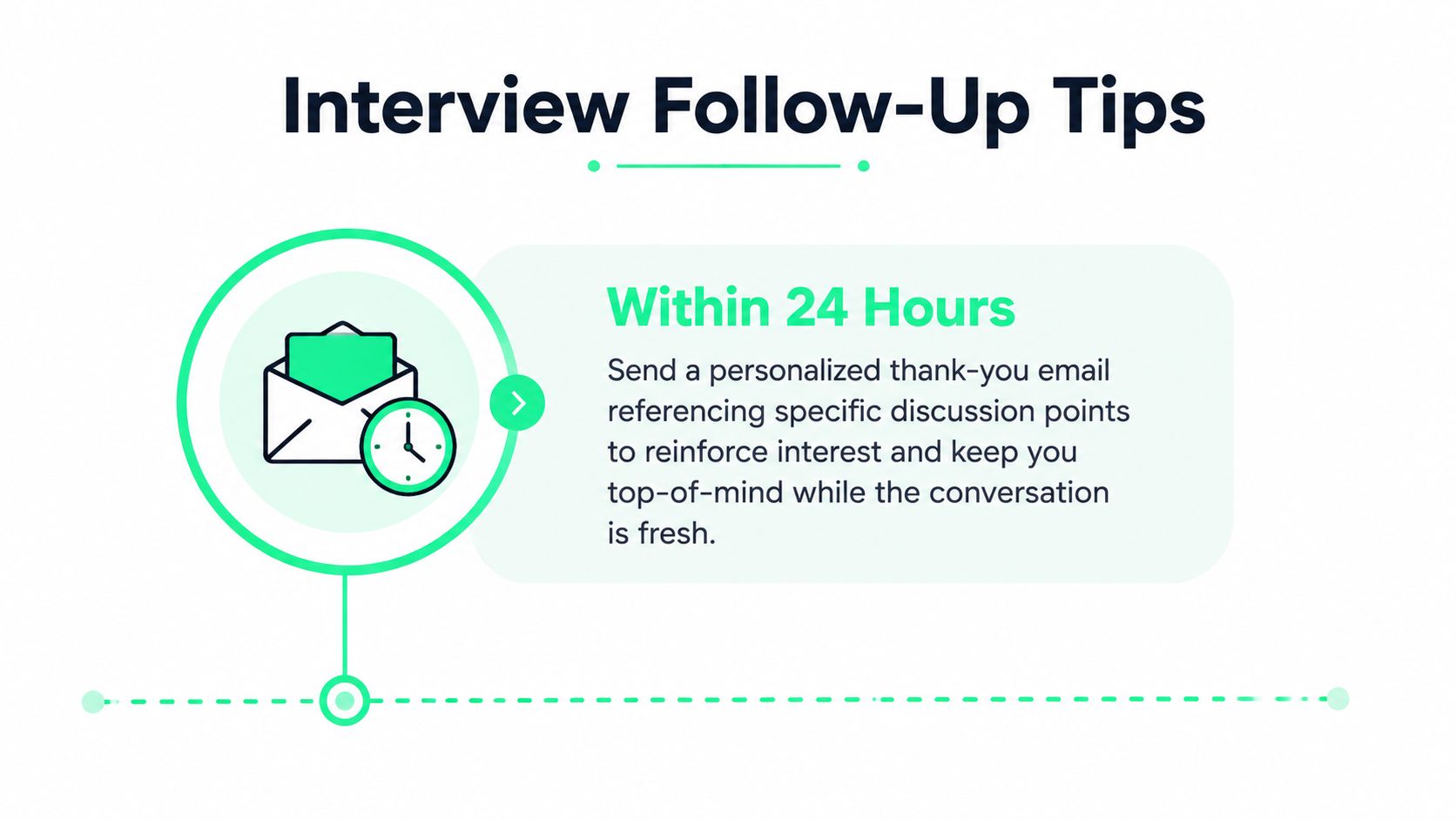
1. Send a personalized thank-you email within 24 hours. Harvard Law School's advising toolkit recommends sending within 24 hours — the same evening after a morning interview, or the next morning after an afternoon conversation. Thank the interviewer by name, mention a specific detail from the discussion, and connect it to something you've actually done. Write from your interview notes, not a template.
2. Confirm next steps and timeline expectations. If the interviewer mentioned a decision date, assessment, or reference check, reflect it accurately and ask only about what's unclear: "Could you share the expected timeline for next steps?" Then write down the promised date immediately — calendar it with the contact's name, email, and stated next stage.
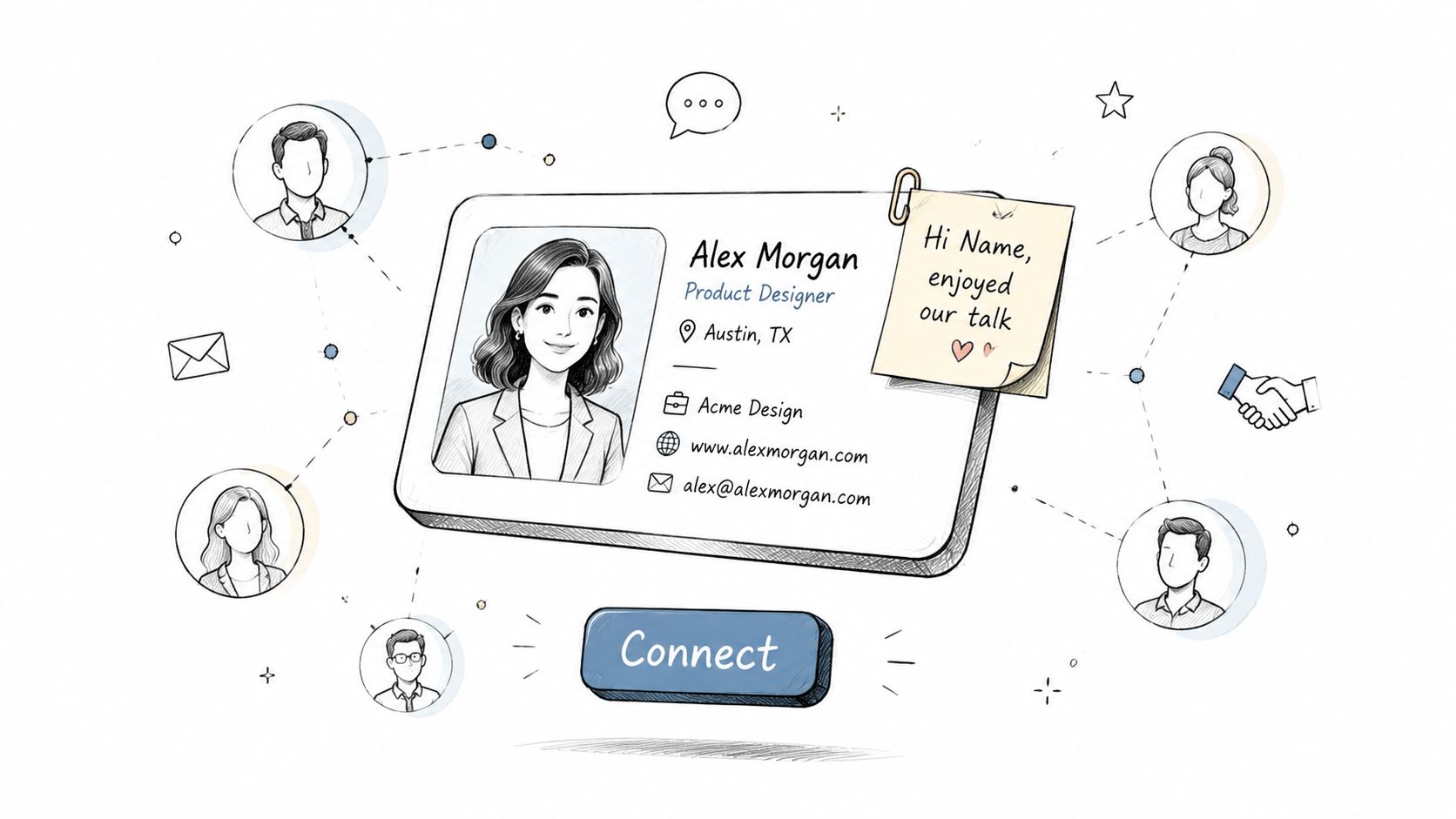
3. Connect on LinkedIn within one week. Send requests only to people who directly interviewed you, personalize each one, and keep the note short: mention the role and one discussion point. Don't send requests to every employee you can find — that turns a focused gesture into a broad campaign.
4. Request an informational conversation with a team member, if appropriate. Make the request through the hiring manager or recruiter, not by cold-messaging the team. Keep the ask modest (15 to 20 minutes) and focused on learning about workflows and collaboration, not disguising another interview.
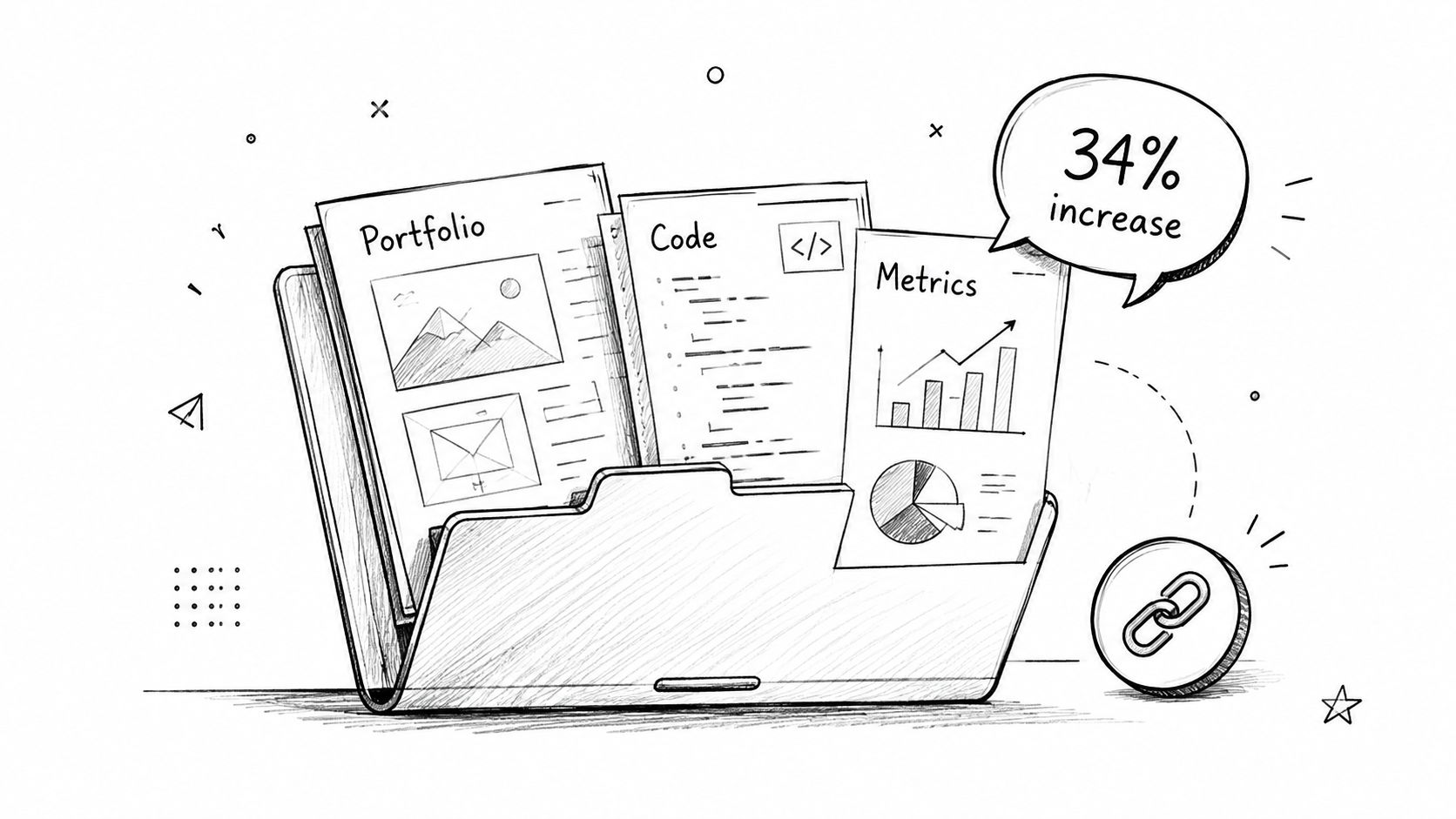
5. Provide additional evidence only when a real gap emerged. Use neutral language — "I wanted to add a brief clarification" rather than "I forgot to mention." Include links in the body rather than surprise attachments. A missing project example justifies a note; a minor wording issue usually doesn't.
6. Engage on social media only when it's genuinely relevant. Comment when the content connects naturally to the role or your professional interests. Avoid generic compliments, internal disputes, and anything that reads like an application pitch.
7. Send one status check after the promised date passes. Acknowledge the original timeline rather than implying the company owes you an answer: "You mentioned I'd hear back by [date] — I wanted to check whether the timeline has shifted." Then stop. A large email analysis found one message plus one follow-up produced the highest reply rates at roughly 8%, while fourth-and-later messages reduced reply rates by about 55% and tripled spam complaints.
1. Send a Personalized Thank-You Email Within 24 Hours
A thank-you email is your first follow-up decision, and timing matters. Harvard Law School's public-interest advising toolkit recommends sending a thank-you note or email within 24 hours of the interview (Harvard Law School's interview follow-up guidance). Send it the same evening after a morning interview, or the next morning after an afternoon conversation.
Keep the note short, specific, and connected to the employer's needs. Thank the interviewer by name, mention a detail from the discussion, and link that detail to something you've done. You don't need to restate your entire resume. One verified example is more credible than several broad claims.
Practical rule: Write from your interview notes, not from a generic template.
For example, after discussing cross-functional work, you might write:
Thank you for discussing the product launch timeline. Your comments about stakeholder alignment connected closely with my experience coordinating design, engineering, and marketing on a previous launch. I'm even more interested in the role after learning how the team is handling the next phase.
If the conversation focused on technical work, try:
I appreciated our discussion about React optimization and the performance bottlenecks your team is addressing. That conversation reinforced my interest in applying my front-end experience to the role.
Use a professional address, check the interviewer's title, and proofread before sending. Qcard can generate a starting point from the interviewer, role, discussion topics, and details you want to reference, but customize any suggestion so the final message reflects your voice. For more support, see these professional email writing tips.
2. Follow Up on Your Next Steps and Timeline Expectations
Your thank-you note can also prevent unnecessary uncertainty. If the interviewer mentioned a decision date, another interview, an assessment, or a reference check, reflect that information accurately and ask only about what remains unclear.
A natural sentence might be:
I'm very interested in the opportunity. Could you share the expected timeline for next steps? I'd like to make sure I'm available for upcoming interviews and prepared for any assessments.
If you're an international student or need to understand sponsorship timing, clarity is especially useful:
I'm excited about the possibility of joining the team. Given the visa sponsorship requirements, could you share when final hiring decisions typically occur?
These questions work because they're operational, not demanding. You're showing that you want to plan responsibly, not pressure the hiring team into an immediate answer. If the process is complex, ask who your primary contact will be and whether future communication should go through the recruiter or hiring manager.
Record what the employer tells you
Write down the promised date immediately. Put it in your calendar, along with the person's name, email address, and any stated next stage. Candidates managing several applications may also keep a simple spreadsheet with the role, interview date, contact, timeline, and next action.
Hiring timelines vary by company, location, approval process, and role. A practical interview preparation guide from Qcard can help you organize preparation details before the interview so you have more attention available for recording next steps afterward.
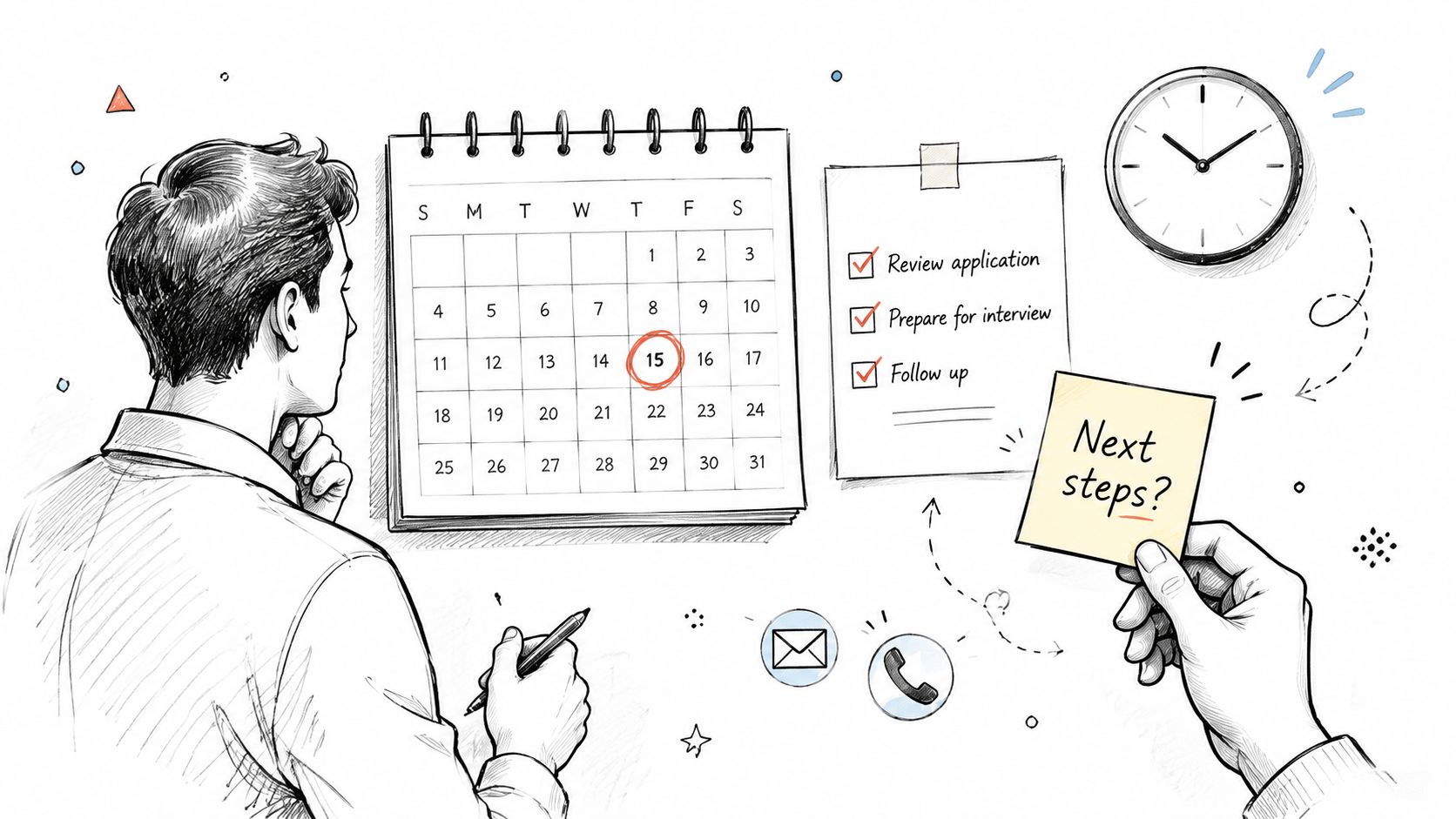
Don't combine every possible question into the thank-you email. Ask about the timeline, then wait for the employer's response. If the stated date passes, you'll have a legitimate reason for a later status check.
3. Connect With Your Interviewer on LinkedIn Within One Week
LinkedIn is useful after the thank-you email, not instead of it. Within a week, you can send a connection request to people who directly interviewed you, especially if your conversation involved shared professional interests or a role-specific topic.
A short note is enough:
Hi Sarah, I enjoyed our conversation about the team's product roadmap. I'd like to stay connected as I follow your work at Company X.
The message should help the person remember you. Mention the role, a discussion point, or a professional subject you explored together. Don't send a connection request to every employee you can find. That can make a focused networking gesture look like a broad campaign.
Keep the connection low pressure
You don't need to start another conversation immediately after connecting. Follow the interviewer's public work, respond only when you have something relevant to add, and avoid turning every company post into an opportunity to restate your candidacy.
For early-career candidates and career switchers, LinkedIn can provide a structured way to preserve a professional relationship without requiring an unscheduled phone call. Neurodivergent candidates may find the process easier if they use a consistent routine: send the note, record where they met the person, save one conversation detail, and set a reminder for future engagement.
If you interviewed with several people, personalize each request. A separate message to each interviewer is more appropriate than copying one note across the group. Before sending, review your profile for accuracy and professionalism. Your follow-up shouldn't create a mismatch between the experience you described and the information visible online.
4. Request Informational Interviews With Team Members if Appropriate
A team conversation can help you assess the work while showing that your interest extends beyond the job description. It's most suitable when the hiring manager has described a collaborative process, when you'd work closely with the team, and when nobody has asked candidates to avoid additional contact.
Make the request through the hiring manager or recruiter. Don't cold-message team members and assume they're available. Keep the ask modest:
I'm very interested in understanding more about the day-to-day work. Would someone on the team have 15-20 minutes for a brief conversation about the technical challenges you're solving and how the team collaborates?
A product candidate could ask:
I'd appreciate learning from someone on the product team about current development priorities and how this role supports those goals.
The purpose is learning, not another disguised interview. Ask about actual workflows, decision-making, collaboration, onboarding, and the problems the person spends time solving. Avoid leading with compensation or benefits unless the recruiter directs you to that person.
Read the context before asking
A team conversation may be valuable for a career changer who needs to understand unfamiliar technical language or operating practices. It may be less appropriate after a tightly controlled final interview, during a confidential search, or when the company has already explained that all communication must go through one contact.
Afterward, thank the team member directly and record what you learned. Those details can help you decide whether the role fits and can make later interview answers more grounded. The conversation also gives you a chance to notice whether the team's description of the role matches the hiring manager's description.
Don't request several conversations at once. One well-framed request is easier to accept and less likely to burden the team.
5. Provide Additional Evidence or Materials if Interview Gaps Emerge
A follow-up email can repair a meaningful omission, but it shouldn't become a transcript of everything you wish you'd said. Send additional context when you have a substantive answer, a relevant work sample, or a correction that helps the hiring team evaluate your experience accurately.
Use neutral language. Instead of writing, “I forgot to mention this,” try:
I wanted to add a brief clarification about the campaign example we discussed. The project involved coordinating the launch plan across marketing and sales, and the attached case summary provides the process and results in more detail.
For a technical role:
I realized I didn't share the repository we discussed during the technical conversation. Here's my GitHub profile, including the model optimization project from my internship.
Keep the message concise and send it while the discussion is still fresh. Include links in the body rather than sending unexpected attachments, unless the employer has requested a specific file format.
Separate useful evidence from interview anxiety
A missing project example or unclear technical answer may justify a note. A minor wording issue usually doesn't. Sending several correction emails can draw attention to gaps that the interviewer may not have considered important.
Candidates who experience brain fog under pressure can use a review step before sending. Ask a trusted person to check whether the message is relevant, respectful, and easy to understand. Then use Qcard's interview practice questions to rehearse concise examples for future conversations, using only details supported by your actual experience.
The right additional note improves the record. The wrong one signals rumination. Choose the former.
6. Engage Thoughtfully With the Company on Social Media if Relevant
Social engagement can keep you informed, but it's easy to make it look performative. Don't like every company post or comment on subjects you don't understand. Engage only when the content connects naturally to the role, the interview, or your professional interests.
Suppose the company posts about an accessibility-focused product feature you discussed. A useful comment might be:
The focus on accessibility is encouraging. It connects with the priority your team described during my interview, and I'm interested to see how users respond to the feature.
If the company shares an industry article, add a specific observation about the topic rather than writing a generic compliment. Your goal is to contribute to a public conversation, not to remind the interviewer that you're waiting for a decision.
Match the company's communication style
Some organizations publish regularly and encourage employee discussion. Others maintain a limited social presence. Follow the company's norms instead of forcing interaction where it doesn't exist.
Marketing, product, and business development candidates may have a more natural reason to engage with public launches, customer education, or industry analysis. For a career changer, thoughtful comments can demonstrate that they're learning the new field. Even then, accuracy matters more than frequency.
Avoid internal disputes, sensitive announcements, confidential information, and comments that sound like an application pitch. Check that your public profile supports the professional impression you want to create. If you're unsure whether a post deserves a response, reading it may be the better choice.
7. Schedule a Strategic Follow-Up Call if No Response After One Week
Silence calls for patience first, then a controlled action. If the employer gave you a decision date, wait until that date has passed before sending a status message. A recruiter may be waiting for approval, coordinating interviews, or dealing with an unexpected change. Your follow-up should acknowledge the original timeline rather than imply that the company owes you an immediate answer.
A concise email works well:
I remain very interested in this opportunity. You mentioned that I'd hear back by [date], so I wanted to check whether the timeline has shifted or whether I can provide any additional information.
If a phone call is appropriate, use a short outline:
Hi [Name], I'm following up on our interview last week. You mentioned I'd hear back by [date], and I wanted to check on the timeline while reiterating my strong interest in the position.
Don't call repeatedly. A single voicemail should include your name, role, reason for calling, and number. If phone contact causes significant anxiety, email is a valid lower-pressure channel, particularly when the employer has used email throughout the process.
Stop before follow-up becomes chasing
A guide to second follow-up emails after an interview supports keeping the message focused on the passed timeline, continued interest, and any additional information you can provide. That structure protects your professionalism because it gives the recipient a clear reason to respond.
Candidates who are neurodivergent may benefit from writing the script, rehearsing it, and setting a stopping rule before making contact. Qcard's AI mock interview tool can support practice for the underlying interview conversations and help reduce the pressure of improvisation.
A follow-up sequence should have an endpoint. One thank-you, one relevant clarification if needed, and one status check after the promised date are usually more useful than a stream of increasingly anxious messages. A large email analysis found that one initial message plus one follow-up produced the highest reply rates at roughly 8%, while fourth-and-later messages reduced reply rates by about 55% and increased spam complaints about 3x (Superhuman's email follow-up analysis). That evidence concerns email outreach rather than interview decisions, but the practical lesson is still sound: more messages don't automatically create more attention.
Follow Up With Purpose, Then Keep Moving
The best interview follow-up strategy is a decision rule, not a ritual. Send one personalized thank-you message within the recommended window. Record the promised timeline before the conversation fades. Add relevant context only when it improves the hiring team's understanding of your experience. Then choose the next channel based on the situation: LinkedIn for a professional connection, a team conversation for genuine role research, social engagement for relevant public content, or a status check after the stated date passes.
Follow-up matters because candidate behavior is inconsistent. One widely cited survey found that only 24% of candidates send a thank-you note, while 68% of hiring managers said a thank-you email affects their decision-making, and 16% said they had rejected a candidate specifically for failing to follow up (The Interview Guys survey summary). Those figures don't mean a thank-you guarantees an offer. They show why a concise, relevant note can protect your candidacy when other applicants omit the step.
Timing still depends on the stage and the employer's stated process. A recent 2026 dataset reported that about 75% of applicants who hear back receive an interview-related email within roughly 8 days, with responses faster in May and June and slower, less predictable responses in December (CareerY's interview follow-up timing guidance). Treat that as context, not a promise. Your own timeline from the interview remains the strongest signal.
If the company never responds or rejects you, don't send endless messages. Send one professional final note, thank the people who invested time, preserve the relationship where appropriate, and continue other applications. A residency-selection study found that 73 of 95 applicants, or 76.8%, sent thank-you communications, while 21.9% said responses changed their own rank-list decisions (the peer-reviewed study on post-interview thank-you communications). Follow-up can influence how both sides experience the process, but your job search shouldn't stop while one employer decides.
Before your next interview ends, capture four things: two conversation details, one resume-grounded proof point, the expected next-step date, and the preferred contact channel. If you can't write them down in the moment, record them immediately afterward. That small routine turns post-interview uncertainty into a clear next action.
Key Takeaways
- The thank-you email is the single highest-leverage follow-up action available, and most candidates skip it — only 24% send one, while 68% of hiring managers say it affects their decision-making and 16% have rejected a candidate specifically for failing to follow up, which means a concise, specific note within 24 hours protects your candidacy at almost no cost.
- Specificity is what makes a follow-up credible — writing from your interview notes and connecting one discussion detail to one verified example from your background ("your comments about stakeholder alignment connected closely with my experience coordinating design, engineering, and marketing on a previous launch") beats restating your entire resume in broad claims.
- Recording the employer's stated timeline immediately is what makes every later message defensible — calendaring the promised date along with the contact's name, email, and next stage means your eventual status check references their own words rather than implying they owe you an answer, which is the difference between a professional nudge and a pressure tactic.
- A follow-up sequence needs a defined endpoint — one thank-you, one clarification if genuinely needed, and one status check after the stated date is the working limit, supported by email analysis showing one message plus one follow-up produced the highest reply rates at roughly 8% while fourth-and-later messages cut replies by about 55% and tripled spam complaints.
- Additional evidence should improve the hiring team's understanding, not process your own anxiety — a missing GitHub link or an unshared case summary justifies a short note using neutral language, while multiple correction emails draw attention to gaps the interviewer may never have considered important, which is why a review step (or a trusted second reader) helps candidates who ruminate after interviews.
Qcard offers resume-grounded talking points, interview practice, mock interviews, and thank-you email generation to help you remember what you discussed and follow up naturally. Visit Qcard to prepare your next interview and turn those details into a focused, authentic follow-up.
Ready to ace your next interview?
Qcard's AI interview copilot helps you prepare with personalized practice and real-time support.
Try Qcard Free