TL;DR
Hard skills earn their place on a resume when they come with evidence, not when they fill a checklist. The ten categories that matter in 2026 span data and SQL, programming and full-stack development, cloud platforms, cybersecurity fundamentals, product sense, financial modeling, technical writing, machine learning, system design, and interview communication. Use tool-specific language rather than broad phrases — a job-listing analysis counted Excel in 531,000 postings, Python in 67,000, and SQL in 60,000. Build each bullet from four parts: action, tool, scope, and outcome. Never invent an outcome to sound professional; "Built a Flask API and documented its endpoints" is stronger than a fabricated performance claim, and unverified accuracy scores or savings figures collapse under interview follow-up. Match the depth to your seniority — early-career candidates lean on documented projects, coursework, and certifications; career switchers connect prior domain knowledge to new technical work; experienced candidates show ownership, constraints, stakeholder impact, and architecture trade-offs. Then rehearse the explanation behind each bullet, because the interviewer will ask why you chose that method and what you'd change.
The most popular advice about hard skills for resume writing is to create a long checklist and hope an applicant tracking system notices it. That approach misses the test. Employers need to see whether you can apply a skill to the work described in the posting, not whether you can repeat a familiar software name.
Choose skills that match the target role, use the employer's terminology naturally, and support each one with a tool, project, scope, or outcome. A stronger bullet says, “Built a PostgreSQL reporting workflow for customer data,” rather than listing “SQL.” If you're early in your career or changing fields, a well-documented project can provide evidence when your employment history doesn't.
The ten categories below cover data, software, infrastructure, security, product work, finance, documentation, machine learning, architecture, and interview communication. The last category supports the resume story rather than replacing technical proof. Communication-focused preparation helps you explain what you built, why you chose a method, and what changed because of your work. It can't compensate for a resume that lists tools without showing how you used them.
What Are the Best Hard Skills for a Resume?
The most common advice is to build a long skills checklist and hope an ATS notices it. That misses the actual test. Employers need to see whether you can apply a skill to the work in the posting — not whether you can repeat a software name. "Built a PostgreSQL reporting workflow for customer data" beats listing "SQL" every time.
The ten hard skill categories that carry the most weight in 2026:
- Data analysis and SQL — SQL, PostgreSQL, joins, aggregation, dashboards, reporting. A job-listing analysis counted Excel in 531,000 postings, Python in 67,000, and SQL in 60,000, which is why tool-specific wording beats "computer skills."
- Programming and full-stack development — Python, JavaScript, React, Flask, Node.js, plus APIs, authentication, deployment, and testing. Name the delivery path, not just the framework.
- Cloud platform management — AWS, GCP, Azure, EC2, RDS, SageMaker, Cloud Run, Docker, Terraform. Identify the services, architecture, and operational reason for your choice.
- Cybersecurity fundamentals — OAuth 2.0, OWASP Top 10, TLS, vulnerability assessment, secure coding. Relevant well beyond dedicated security titles.
- Product sense and requirements gathering — user research, backlog management, acceptance criteria, RICE prioritization, success metrics.
- Financial modeling and valuation — DCF, comparable company analysis, precedent transactions, scenario and sensitivity analysis.
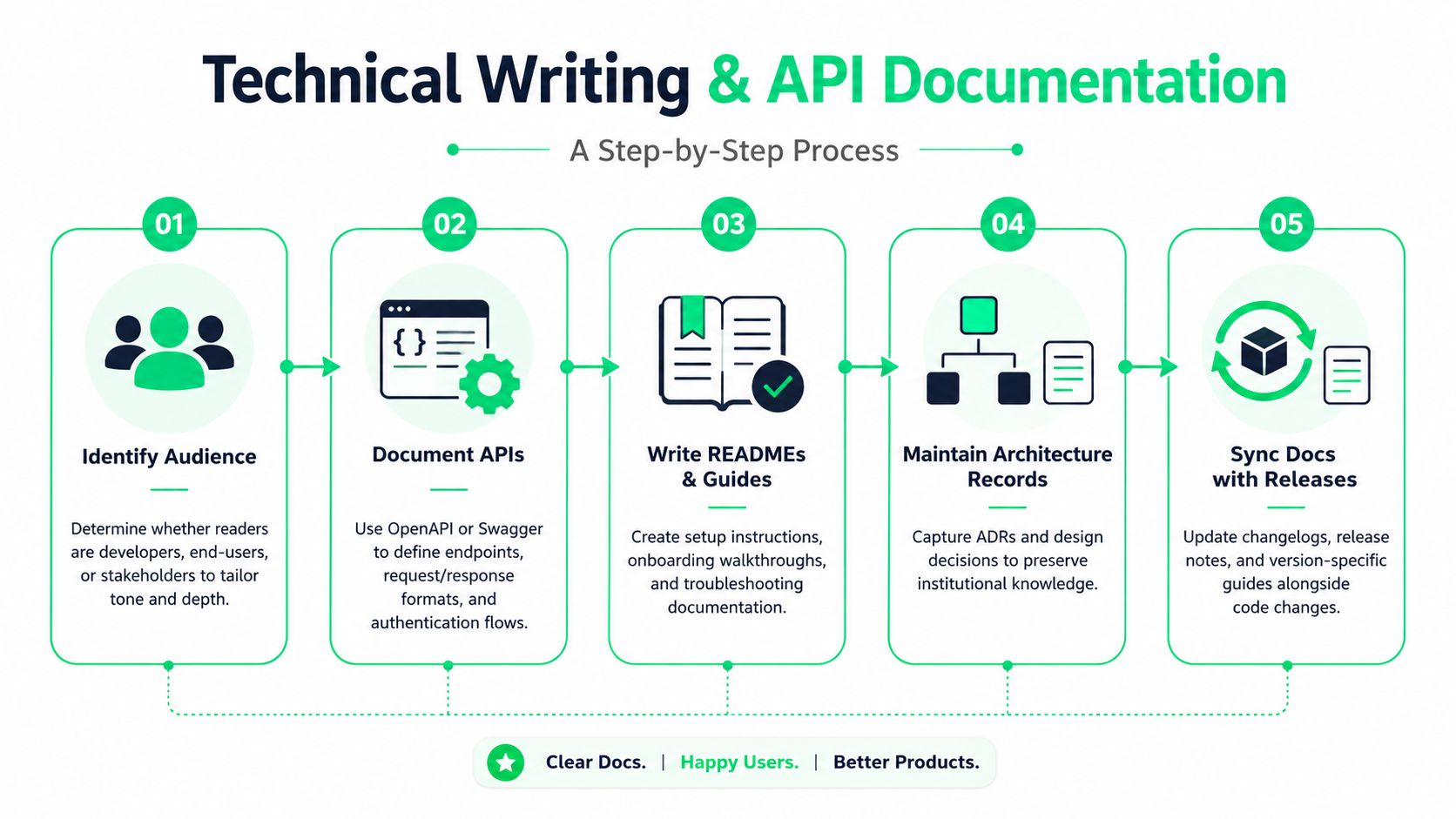
- Technical writing and API documentation — OpenAPI, Swagger, README, architecture diagrams, release notes, troubleshooting guides.
- Machine learning development and deployment — feature engineering, model evaluation, scikit-learn, PyTorch, Docker, monitoring.
- System design and architecture — database modeling, API design, caching, queues, observability, failure handling.
- Behavioral interview communication and stakeholder management — supports your technical evidence rather than replacing it.
The bullet formula that works combines four parts: Action (what you built, analyzed, configured, or improved), Tool (the language, platform, or method), Scope (the system, dataset, audience, or business area), and Outcome (what changed or what the work enabled).
Start with the target posting, not a generic list. Mark the tools, methods, and business terms in the responsibilities, then select only the skills you can demonstrate through work, coursework, volunteering, open-source contributions, or portfolio projects — and mirror the employer's exact terminology without stuffing.
1. Data Analysis and SQL Proficiency
SQL is one of the clearest ways to show that you can work with structured information and turn it into a business decision. Employers may search for terms such as SQL, PostgreSQL, MySQL, data analysis, database management, joins, aggregation, dashboards, and reporting. The best keyword depends on the posting, so use the exact tool or method you can explain confidently.
Demand is visible across current labor-market evidence. A job-listing analysis counted Excel in 531,000 postings, SQL in 60,000, and Python in 67,000, making software-specific wording more useful than a broad phrase such as “computer skills” (Resume Genius job-skills analysis). The World Economic Forum's 2025 employer survey also found that seven out of ten companies considered analytical thinking essential, while AI and big data are projected to rise rapidly in importance over the next five years (World Economic Forum Global Skills Report 2025).

Turn queries into evidence
A career switcher could analyze retention by joining customer, transaction, and churn tables, then explain which segments were most valuable. An international student could query a public e-commerce database to calculate customer lifetime value and group users by purchasing behavior. A resume bullet might read:
Wrote SQL queries across a PostgreSQL database to segment users by purchase behavior and present retention findings in a stakeholder dashboard.
Build a project with a public dataset from Kaggle or Google BigQuery, and document both the query and the business question. During interviews, explain why you used a join, how you checked the result, and what decision the analysis supported. That explanation makes the keyword credible.
2. Programming and Full-Stack Development Capability
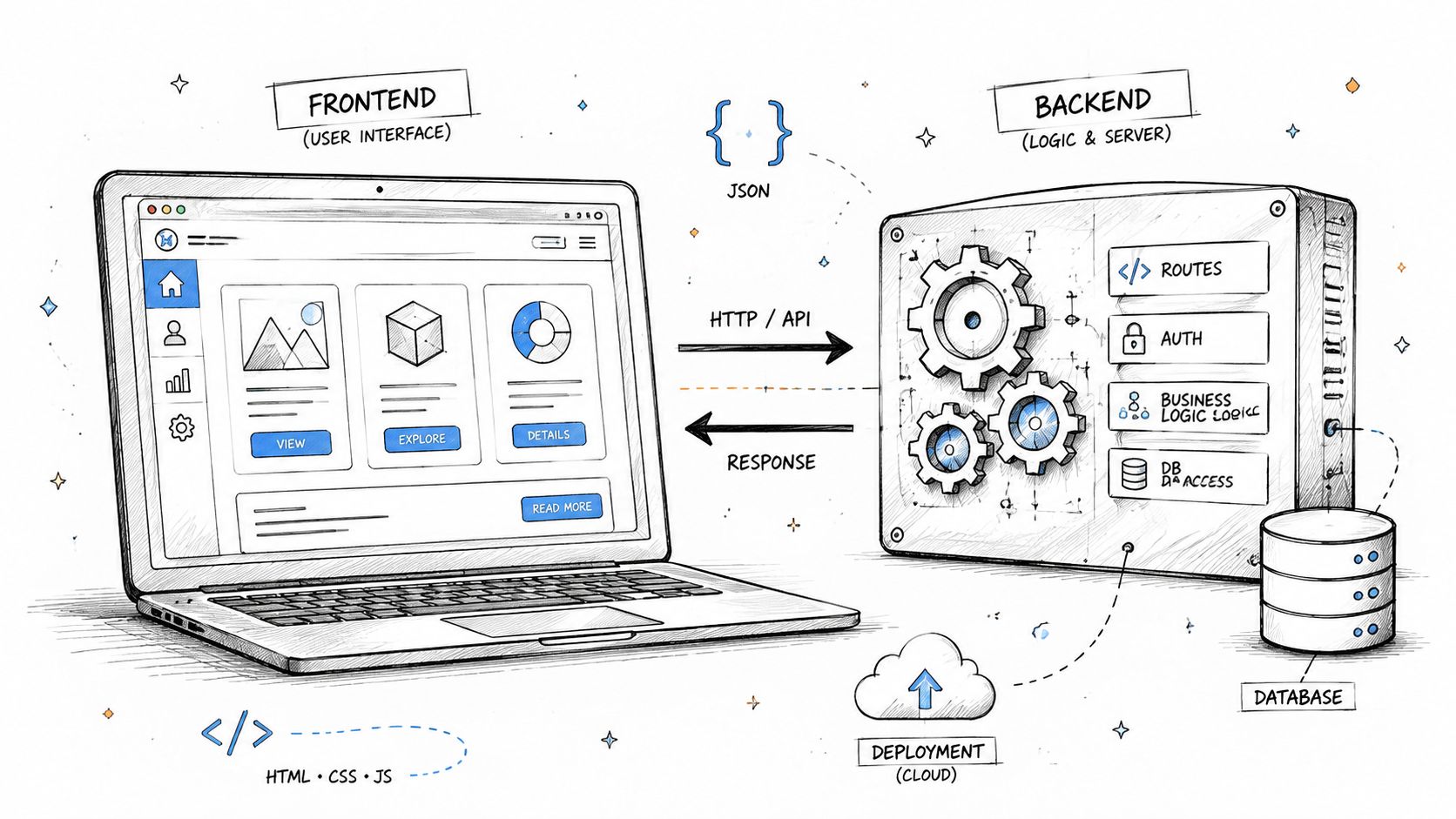
A primary programming language becomes more persuasive when you connect it to an end-to-end product. Python and JavaScript are useful resume keywords, but the surrounding stack gives hiring teams a clearer picture of your ability to build, integrate, and deploy software. Depending on the role, include frameworks such as React, Flask, Node.js, or Express, along with databases, APIs, authentication, deployment, and testing.
A graduate might contribute to an open-source JavaScript project to show collaboration with an existing codebase. A neurodivergent candidate could build a Python task-automation tool that demonstrates logic and problem-solving without relying solely on interview performance. A career switcher might create a fintech application with a user-facing frontend, Python transaction-processing backend, and PostgreSQL database.
Show the whole delivery path
Create several GitHub projects with clear README files, setup instructions, architectural decisions, and explanations of why the code works as it does. At least one project should include authentication, database relationships, API integration, deployment, and a documented CI/CD process. Your resume language should name the implementation:
- Backend development: Built a Flask REST API with multiple endpoints and a PostgreSQL backend.
- Frontend delivery: Developed a React interface that consumed authenticated API responses.
- Production readiness: Deployed the application and documented environment configuration, testing, and rollback considerations.
A candidate who can explain how a request moves from the browser to the API and database will sound more credible than someone who only recites framework names. Use Qcard's AI mock interview practice to rehearse those system interactions and surface technical achievements without memorizing a script.
3. Cloud Platform Management and Deployment
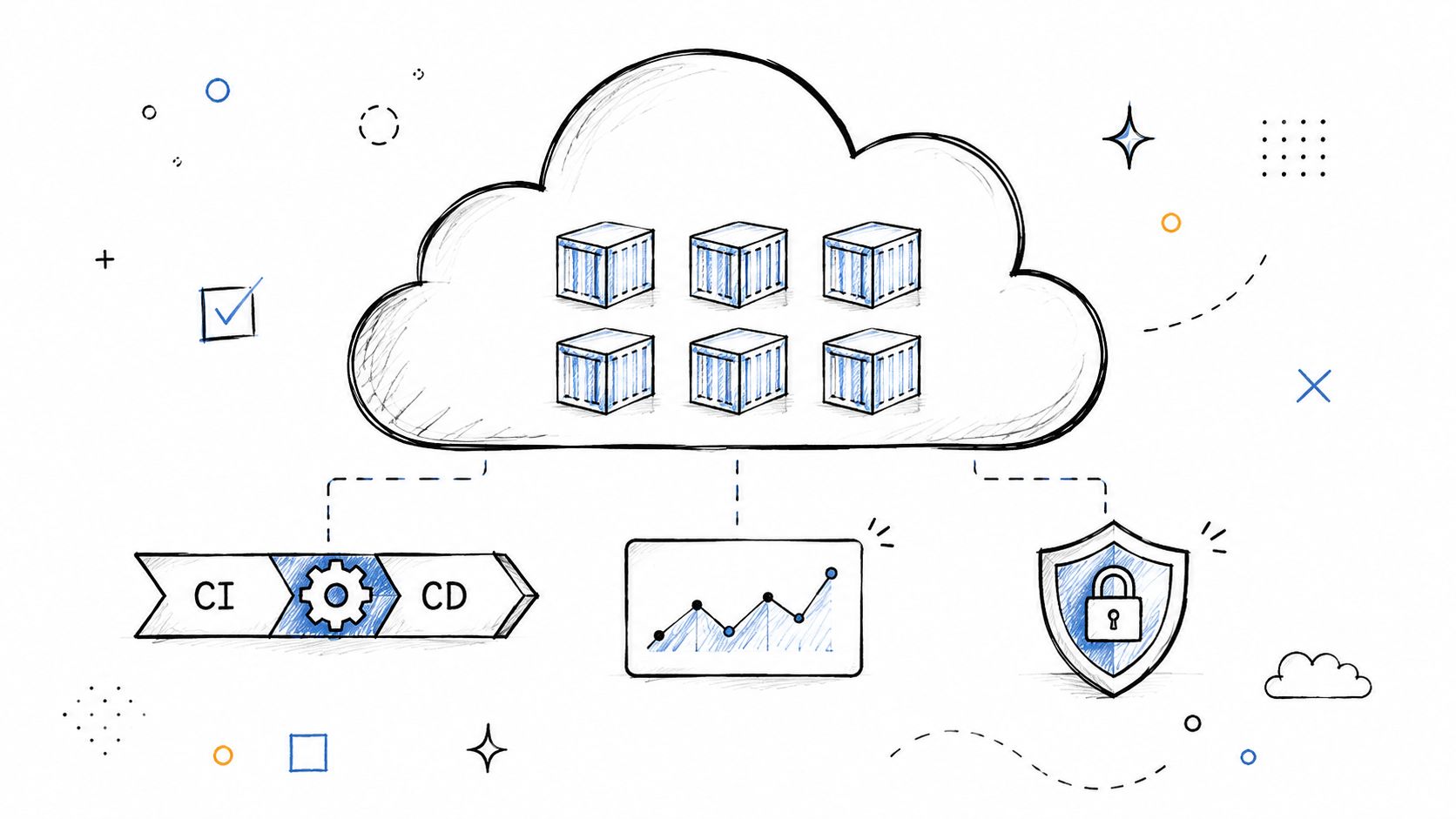
Cloud skills should communicate more than familiarity with a provider's name. A resume becomes stronger when it identifies the services you used, the architecture you chose, and the operational reason for that choice. Relevant terms may include AWS, Google Cloud Platform, Microsoft Azure, EC2, RDS, SageMaker, Cloud Run, Docker, Terraform, CloudFormation, monitoring, security, and deployment automation.
A finance professional moving into technology could deploy a machine-learning model with AWS SageMaker, connecting previous domain knowledge to cloud infrastructure. An international student could containerize an application and launch it on Google Cloud Run, then explain how the deployment handled configuration and scaling. These projects give employers something concrete to assess when the candidate lacks commercial cloud experience.
Document infrastructure decisions
Use an available practice tier from AWS or Google Cloud to deploy a real project, then record the services, permissions, environment variables, monitoring approach, and security controls. Infrastructure as code with Terraform or CloudFormation adds evidence that your setup is repeatable rather than a one-time manual experiment.
A useful bullet could say:
Deployed a containerized Python service on Google Cloud Run, documented service configuration, and automated deployment through a version-controlled workflow.
Don't claim scale, savings, uptime, or speed improvements unless you measured them and can explain the method. For an early-career candidate, a well-documented deployment is enough to demonstrate practical ability. For a more experienced candidate, add ownership of reliability, access control, cost decisions, and incident response.
4. Cybersecurity Fundamentals and Network Security
Cybersecurity belongs on more resumes than those aimed at dedicated security titles. Developers, cloud engineers, fintech professionals, and analysts may all need to understand authentication, encryption, network protocols, access control, rate limiting, and common vulnerability patterns. Use specific terms such as OAuth 2.0, OWASP Top 10, TLS, vulnerability assessment, penetration testing, SIEM, or secure coding only when your project or training supports them.
A banking career switcher could complete a Capture the Flag challenge through Hack The Box or TryHackMe and publish a careful write-up of the vulnerability, evidence, and remediation. A neurodivergent candidate might build a secure password manager to demonstrate cryptography concepts, authentication design, and threat awareness. The project should explain its limits. A practice application isn't proof that you can secure every production system.
Make defensive work visible
A portfolio web application can demonstrate input validation, access control, secure password handling, OAuth 2.0, and protection against selected OWASP risks. Your resume should describe the action and control:
Implemented OAuth 2.0 authentication in a Python Flask API, added rate limiting, and documented protections against brute-force attempts.
Avoid unsupported claims about attacks prevented or risk reductions. Instead, show how you tested the control, what threat it addressed, and which tools you used. A course such as CompTIA Security+ or Network+ can support foundational knowledge, while practical challenge reports show that you can apply it.
In an interview, explain the trade-off between stronger controls and user friction. Qcard can help you practice describing a vulnerability and its remediation in clear, resume-grounded language.
5. Product Sense and Requirements Gathering
Product sense is a technical business skill because it connects user problems, requirements, prioritization, and delivery. It matters for product managers, senior engineers, consultants, analysts, and customer-facing technical roles. Resume keywords can include user research, requirements gathering, product discovery, backlog management, acceptance criteria, RICE prioritization, competitive analysis, and success metrics.
A graduate can demonstrate this skill through a side project by interviewing potential users, recording recurring pain points, writing a product brief, and deciding what not to build. A career switcher developing a fintech idea could document user needs, compare competing products, prioritize features with a RICE framework, and explain how the decisions shaped the first release.
Connect decisions to user evidence
Your project should include research notes, a problem statement, requirements, feature priorities, and a rationale for trade-offs. A resume bullet could read:
Gathered user requirements for a personal-finance application, prioritized payment and budgeting features, and translated findings into acceptance criteria for development.
Don't turn assumptions into results. If you didn't measure conversion, adoption, or satisfaction, describe the decision process instead. If you did collect findings, state what you measured and how.
For experienced candidates, show ownership across design, engineering, operations, and stakeholders. For early-career candidates, a carefully documented project can demonstrate disciplined thinking. Practice explaining why a feature earned priority, what evidence was incomplete, and how you would test the next assumption.
6. Financial Modeling and Valuation Analysis
Financial modeling is a strong hard skill for banking, fintech, investment, corporate finance, and analyst roles. It can also help candidates entering financial institutions from consulting, accounting, operations, or another quantitative field. Name the methods you know, such as discounted cash flow, comparable company analysis, precedent transactions, scenario analysis, sensitivity analysis, Excel, and financial statement modeling.
A consulting career switcher could build a discounted cash flow model for a fintech company, documenting revenue assumptions, margins, discount rates, and sensitivity ranges. A graduate could create a comparable-company analysis for a software-as-a-service business, explain the peer selection, and show how the valuation changed when assumptions changed.
Let the model explain your reasoning
Create models that demonstrate different analytical situations rather than copying a template. Include linked financial statements where appropriate, clearly labeled assumptions, scenario controls, and sensitivity tables. On your resume, describe the work:
Built a discounted cash flow model for a fintech valuation, documented operating assumptions, and tested valuation sensitivity across alternative growth and margin scenarios.
The evidence isn't the final valuation alone. Interviewers will want to know why you selected the method, how you handled uncertain inputs, and which assumptions had the greatest effect. An early-career candidate can use a public company's filings and cite the data inside the project documentation. A more experienced candidate should explain review processes, stakeholder decisions, and how the model informed planning.
Practice walking through the workbook tab by tab. Speak in plain language, distinguish facts from assumptions, and acknowledge limitations rather than presenting a polished spreadsheet as unquestionable truth.
7. Technical Writing and API Documentation
Technical writing shows that you can turn complex work into instructions another person can use. It applies to software development, product management, support engineering, implementation, data work, and knowledge transfer. Searchable terms include API documentation, OpenAPI, Swagger, README, architecture diagrams, troubleshooting, release notes, developer documentation, and knowledge base management.
An international student might document an API with request examples in multiple programming languages, showing clarity across audiences. A career switcher with teaching, operations, or writing experience can apply those skills to a portfolio project. The document is evidence when a reviewer can install the project, send a request, interpret the response, and resolve a common error without asking the author.
Treat documentation as a deliverable
Include installation steps, configuration details, endpoints, example requests, expected responses, error handling, architecture diagrams, and troubleshooting guidance. Use Swagger or OpenAPI when appropriate. Comments should explain why complex logic exists, rather than repeat what the code already says.
A resume bullet might read:
Created README, API reference, setup instructions, and troubleshooting documentation for a deployed web application, enabling reviewers to reproduce the project independently.
Use evidence carefully. Do not claim that documentation improved productivity or shortened onboarding unless you measured those outcomes. Experienced candidates can show ownership of documentation standards, versioning, review workflows, and cross-team knowledge sharing. Early-career candidates can attach a repository, change log, or example support guide that demonstrates structure and accuracy.
Before an interview, rehearse a concise explanation of the intended audience, document structure, technical choices, and limitations with Qcard's practice interview questions. Clear practice helps you explain why each section exists, not just list the tools you used.
8. Machine Learning Model Development and Deployment
Machine learning earns space on a resume when the project shows a connected workflow, from preparing data to evaluating and using a model. Searchable terms may include Python, feature engineering, model training, classification, regression, model evaluation, scikit-learn, TensorFlow, PyTorch, Docker, model deployment, monitoring, and data visualization. Select only terms that match your work and the target job family.
A graduate might build a churn-prediction project with customer data, compare models, assess results, and create charts explaining feature importance. A career switcher could use a Kaggle competition to show data preparation, modeling, validation, and iteration. Their resume evidence should explain the decision chain, much like tracing a recipe from ingredients to the finished dish, rather than stating only “trained a model.”
Show production awareness
Build an end-to-end project that covers data collection, preparation, training, evaluation, and deployment. Record missing values, feature choices, leakage risks, train-test separation, evaluation criteria, and dataset limits. Docker and a cloud platform can demonstrate deployment experience. Explain how a production system could monitor drift, latency, and prediction quality.
A resume bullet could read:
Built and evaluated a customer-churn classification model in Python, documented feature-engineering decisions, and deployed an inference API with Docker.
Do not invent accuracy scores or business impact. If you measured a result, identify the dataset and evaluation method in your portfolio. Otherwise, describe the process directly. Rehearse model trade-offs with Qcard's interview practice workspace, focusing on model fit, error meaning, and how deployment affected the design.
9. System Design and Architecture Planning
System design shows how an engineer chooses between reliability, performance, maintainability, and complexity. The skill includes database architecture, API design, caching, queues, microservices, observability, capacity planning, and failure handling. Early-career candidates can demonstrate the foundations through a written case study. Experienced engineers should connect each design choice to systems they owned.
A career switcher might design a social-media feed, then document the data model, caching strategy, API boundaries, and consistency trade-offs. A graduate could produce architecture diagrams and specifications for a travel marketplace or social platform. Label assumptions clearly. A portfolio design is evidence of reasoning, not proof of production experience.
Explain trade-offs, not diagrams alone
Study familiar systems and compare how their designs address traffic, storage, latency, availability, and operational complexity. Build a case study with requirements, a high-level architecture, key data flows, failure modes, and rejected alternatives. This structure works like a map: requirements explain the destination, while trade-offs show why you chose the route.
Use searchable resume language such as “system design,” “API architecture,” “database modeling,” “caching,” “message queues,” or “failure handling,” but pair keywords with evidence.
Designed a service architecture for payment processing, documenting API boundaries, database relationships, caching options, and reliability trade-offs.
Include transaction volumes, response times, uptime, or load reductions only when they came from a real system or clearly labeled test. In an interview, explain duplicate requests, partial failures, sensitive data, and changing requirements. Qcard can help you identify the architectural decisions in your resume and practise explaining them naturally.
10. Behavioral Interview Communication and Stakeholder Management
Communication is not a substitute for technical evidence, but it determines whether an interviewer understands that evidence. The relevant hard-skill connection includes requirements communication, technical presentations, structured problem explanation, stakeholder updates, active listening, and conflict management. These terms are especially useful when your technical work involved decisions, handoffs, or competing priorities.
A neurodivergent candidate can practice explaining a technical project with real-time coaching on pacing and filler words. An international student can record answers, notice where articulation becomes unclear, and refine the explanation without erasing their natural speaking style. The resume still needs to state what the candidate did. Communication helps the interviewer follow the story.
Make every bullet interview-ready
Develop several STAR stories from your resume. Each story should contain context, your specific action, the technical or operational choice you made, and the result. Use timeframes, scope, or measured outcomes only when you can verify them. For example:
Translated reporting requirements from finance stakeholders into an Excel workflow, documented validation rules, and presented the process to non-technical users.
Practice conversational delivery rather than memorized scripts. Expect follow-up questions about trade-offs, mistakes, ownership, and what you would change. Qcard's interview preparation guide can support rehearsal with resume-grounded cues, so you can remember the important evidence while answering in your own words.
Turn Your Strongest Skills Into Searchable Proof
Start with the target posting, not with a generic list of everything you've ever learned. Mark the tools, methods, platforms, and business terms that appear in the responsibilities. Then select the hard skills you can demonstrate through coursework, employment, volunteering, open-source contributions, or portfolio projects. A 2024 UK Employer Skills Survey recorded 345,300 hard-to-fill vacancies, down from 850,000 in 2022 but still close to the 2017 level of 336,800 (UK Employer Skills Survey 2024). The same release found that 8% of employers had at least one hard-to-fill vacancy in 2024, compared with 15% in 2022, and that 12% reported skills gaps affecting about 1.26 million employees. Clear evidence still matters because employers need to distinguish between claimed familiarity and usable capability.
Mirror the employer's terminology without keyword stuffing. If the posting asks for SQL, write SQL where you used SQL. If it asks for a particular cloud service, name that service rather than hiding it under “cloud computing.” Put your strongest relevant skills near the top, then reinforce them in project and experience bullets. A compact skills section helps scanning, but the evidence belongs in the body of the resume.
A useful bullet usually combines four parts:
- Action: What did you build, analyze, configure, document, or improve?
- Tool: Which language, platform, framework, or method did you use?
- Scope: What system, dataset, audience, workflow, or business area did you handle?
- Outcome: What changed, or what did the work enable?
Don't invent an outcome to make a project sound professional. “Built a Flask API and documented its endpoints” is stronger than a fabricated performance claim. If you have a verified measurement, include it with enough context for an interviewer to understand what it represents. If you don't, explain the decision, method, or deliverable instead.
Seniority should shape the proof. Early-career candidates can emphasize fundamentals, guided projects, coursework, certifications, and clear documentation. Career switchers should connect previous domain knowledge to new technical work, showing how finance, research, operations, teaching, or customer experience informed the project. Experienced candidates need to show ownership, constraints, stakeholder impact, architecture decisions, review practices, and trade-offs.
The market is also moving toward applied, tool-specific capability. A large resume analysis of 133,000 resumes found Microsoft Office on 12% of resumes, project management and Microsoft Excel on 6% each, Python on 3.8%, Salesforce on 3.6%, Java on 3%, SQL on 2.9%, and Microsoft Word on 2.7%; resumes in that analysis contained an average of 12.56 skills (HR Future resume analysis). Those figures are historical context, not a formula for your own skills section. Choose fewer, better-supported terms that fit the role.
Before an interview, rehearse the explanation behind each important bullet. You should be able to describe the problem, your contribution, the technical choice, the result, and what you'd do differently. Qcard, available at qcardai.com, can help you practice resume-grounded talking points and receive feedback without turning your answers into memorized scripts.
Key Takeaways
- Hard skills only work when they're paired with evidence of application — employers are testing whether you can apply a skill to the work described in the posting, which is why "Built a PostgreSQL reporting workflow for customer data" carries far more weight than a skills section listing "SQL" with nothing behind it.
- Tool-specific terminology beats broad categories for both ATS matching and human credibility — a job-listing analysis counted Excel in 531,000 postings, Python in 67,000, and SQL in 60,000, so naming the exact platform, service, or method you can defend outperforms umbrella phrases like "computer skills" or "cloud computing."
- The four-part bullet formula (action, tool, scope, outcome) is what turns a skill claim into proof — and when you don't have a verified measurement, describing the decision, method, or deliverable is stronger than inventing a metric, because fabricated accuracy scores, uptime figures, and cost savings fall apart the moment an interviewer asks how you measured them.
- Portfolio projects can substitute for employment history when documented properly — a Kaggle churn model with recorded feature choices and leakage checks, a deployed Cloud Run service with documented configuration and monitoring, or a Capture the Flag write-up with vulnerability evidence and remediation all give hiring teams something concrete to assess when commercial experience is missing.
- Seniority should shape what you prove, not just how much — early-career candidates emphasize fundamentals, guided projects, coursework, and clear documentation; career switchers connect prior finance, teaching, operations, or research knowledge to new technical work; and experienced candidates need to show ownership, constraints, stakeholder impact, review practices, and the architecture trade-offs they chose against.
Qcard helps candidates rehearse the technical and behavioral stories behind their hard skills, including concise cues based on verified resume experience and practice feedback for pacing, filler words, and answer length. Visit Qcard to prepare explanations that connect your tools, projects, decisions, and results naturally.
Ready to ace your next interview?
Qcard's AI interview copilot helps you prepare with personalized practice and real-time support.
Try Qcard Free