Final Questions for Job Interview: Impress Hiring Managers
TL;DR
The final questions for a job interview are the only stretch where you set the agenda — and a flat close can cost you an offer even after strong answers. The eight best questions cover role clarity (first-90-day success), growth paths (how people actually move up), manager fit (what an ideal team member looks like personally, and what your manager needs to feel you're crushing it), real challenges (the biggest obstacle of the last year), direct concern-clearing (is there anything about my background that gives you pause), company self-awareness (what you do well and where you'd improve), and hidden norms (best advice, biggest surprise). Prepare three or four, write them down, and drop any the conversation already answered. During the interview, jot down the exact phrases people use — "quick wins," "ownership," "communication" — then weave at least two verbatim into a short thank-you note. For neurodivergent candidates, anxious candidates, or anyone interviewing in a second language, writing questions down in advance, rehearsing a concern-example-response structure, and requesting written follow-up where the process allows are legitimate control strategies, not overpreparation.
You can walk out of an interview having answered every behavioral question cleanly and still lose the offer because your closing was flat. That happens more often than candidates want to admit. One person says, “I think you covered everything,” and hands the decision back to the interviewer. Another asks one sharp final question and suddenly sounds like someone who understands the role, the team, and the pressure that comes with both.
That last stretch matters because the final questions for job interview are the only part of the conversation where you set the agenda. You are no longer being tested on recall alone. You're showing judgment, curiosity, and whether you can think like a future teammate instead of a nervous applicant. The eight questions below are organized by what they reveal, role clarity, growth paths, manager fit, real challenges, and the unspoken rules people usually leave out. I'm also giving you timing notes, recovery lines, and accessibility-friendly ways to ask them when memory load, anxiety, or second-language pressure makes the close harder than the rest of the interview.
What Are the Best Final Questions for a Job Interview?
The close is the only part of the interview where you set the agenda. You're no longer being tested on recall — you're showing judgment, curiosity, and whether you can think like a future teammate instead of a nervous applicant. Saying "I think you covered everything" hands the decision back to the interviewer. One sharp question does the opposite.
The eight strongest final questions, organized by what they reveal:
1. What does success look like in this role during the first 90 days? The cleanest way to get concrete without sounding needy. Make it specific to what you've heard: "Would a strong first 90 days be shipping a new dashboard, improving data quality, or both?"
2. How do team members typically move up in this organization? The growth question that doesn't sound like a promotion grab. If the answer centers on skill growth and internal mobility, that's a good sign. If it's only tenure, you've learned something too.
3. What does an ideal candidate or team member look like for you personally? Gets past the job description into the interviewer's actual preferences — communication style, responsiveness, ownership. Listen for the traits they name, then map your real experience to them.
4. What's the biggest challenge this team or department has faced in the last year? Separates candidates who want a job from candidates who want to understand the work. Don't jump into solution mode — ask "How have you tackled it so far?" and let them talk.
5. Is there anything in my background that concerns you, or anything you'd want to discuss further? Surfaces hesitation while you're still in the room to answer it. If a concern comes up, repeat it back plainly, then answer directly — never argue.
6. What does your company do really well, and where do you see the biggest opportunity for growth? The balanced question that shows homework without sounding like a trap. Start from a specific detail you researched, then ask.
7. What would success look like for you as my manager — what would you need from me to feel like I'm crushing it? Flips the frame from company expectations to the actual person you'll report to. The answer tells you exactly how to operate with them.
8. What's the best advice you've gotten about this role, and what surprised you most when you started? The most disarming question on the list, because it invites a story rather than a defense. Often reveals hidden norms nobody puts in onboarding materials.
Pick three or four before the interview, write them down, and drop any the conversation already covered.
1. What does success look like in this role during the first 90 days?
This is the cleanest way to get concrete without sounding needy. It tells the interviewer you're already thinking about outcomes, not just getting hired. It also helps you move from vague enthusiasm to specifics you can use later in your thank-you note and first follow-up.
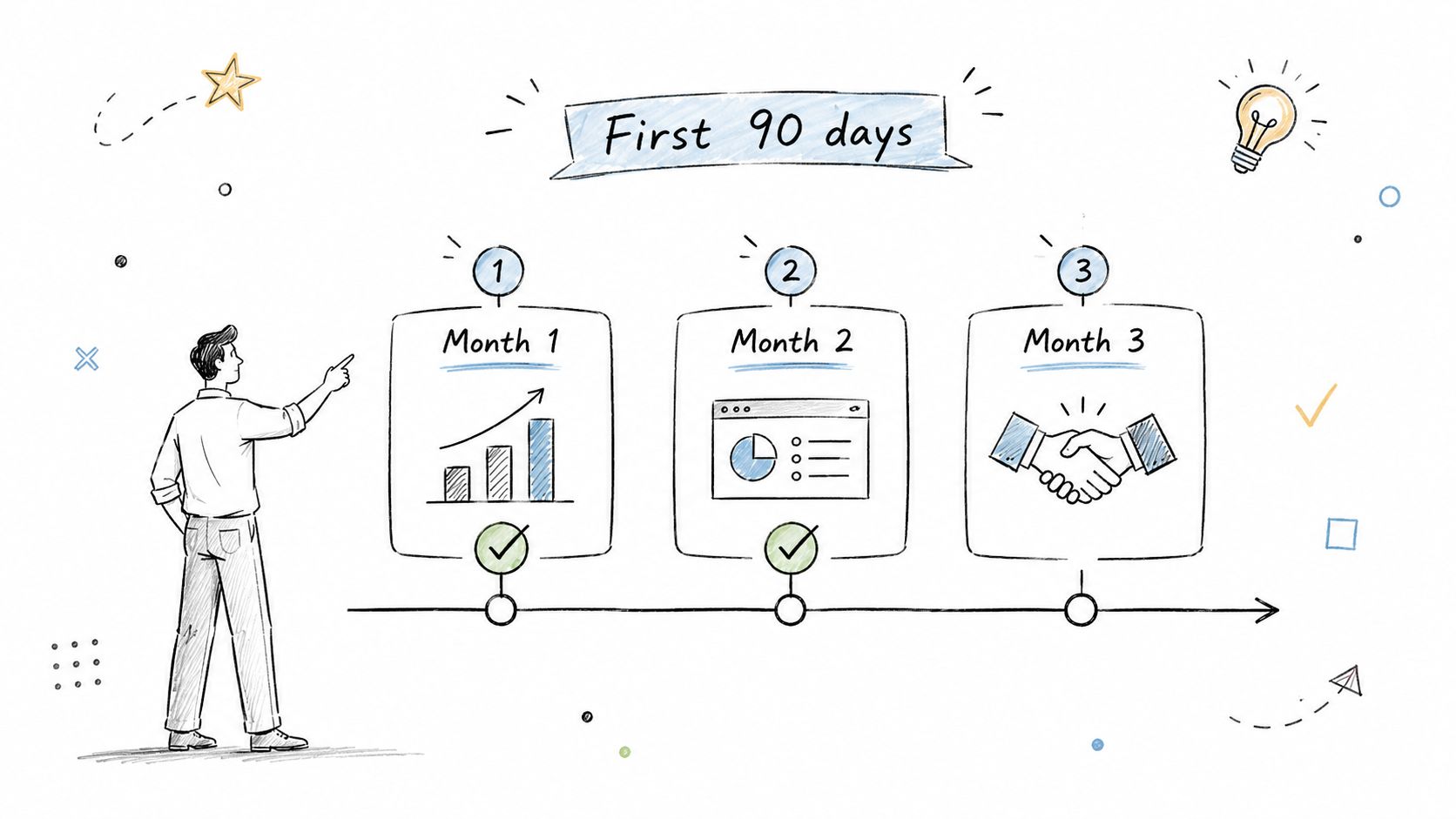
Ask it once you've heard enough about the work to make the question sharp. If the role sounds analytics-heavy, don't stay generic. Say, “Based on what you've shared, what would you consider a strong first 90 days, would it be shipping a new dashboard, improving data quality, or both?” That wording forces specificity and shows you're already mapping your own contribution.
Practical rule: write down the two or three goals they name. Use their exact language later so your thank-you email sounds aligned, not recycled.
If the interviewer stays vague, push once more. “Are there any quick wins or foundational work that would set up longer-term success?” That keeps the tone collaborative and turns a fuzzy answer into something useful. This question fits especially well in behavioral and panel interviews, because it anchors the whole conversation in results. It also works in technical interviews when you want to know whether code quality, speed, or documentation matters most in the first few months.
2. How do team members typically move up in this organization?
This is the growth question that doesn't sound like a grab for promotion. It shows that you care about development, mobility, and how the company rewards people. A lot of candidates ask about title ladders. Better candidates ask how people really move.
Use it when the conversation has already covered the basics of the role. In a fintech interview, you can make it more grounded: “I noticed your team leads came from different departments. How did they typically progress into those roles? Was it after hitting certain metrics, or did they move across teams first?” That's the right level of direct. You're not asking for a promise, you're asking for a pattern.
What the answer really tells you
If the interviewer talks about skill growth, internal mobility, or specific accomplishments, that's a good sign. If they only mention tenure, you've learned something too. Either way, you're getting a clearer read on whether the company invests in people or just replaces them.
Ask this with a curious tone, not a transactional one. “I'm curious how the organization thinks about growth” lands better than “How quickly can I get promoted?” If the answer is thin, follow with, “Are there employees who've moved from this role to senior positions in the last few years?” That's a direct way to test whether growth is real or just talk.
This question is especially useful in phone screens and manager interviews, because both settings are more conversational. In a panel, it can also reveal whether different leaders share the same view of development or whether each department has its own rules.
3. What does an ideal candidate or team member look like for you personally?
This question gets past the polished job description and into the interviewer's actual preferences. That matters because people hire for more than skills. They hire for communication style, responsiveness, ownership, and the kind of teammate they can trust when work gets messy.
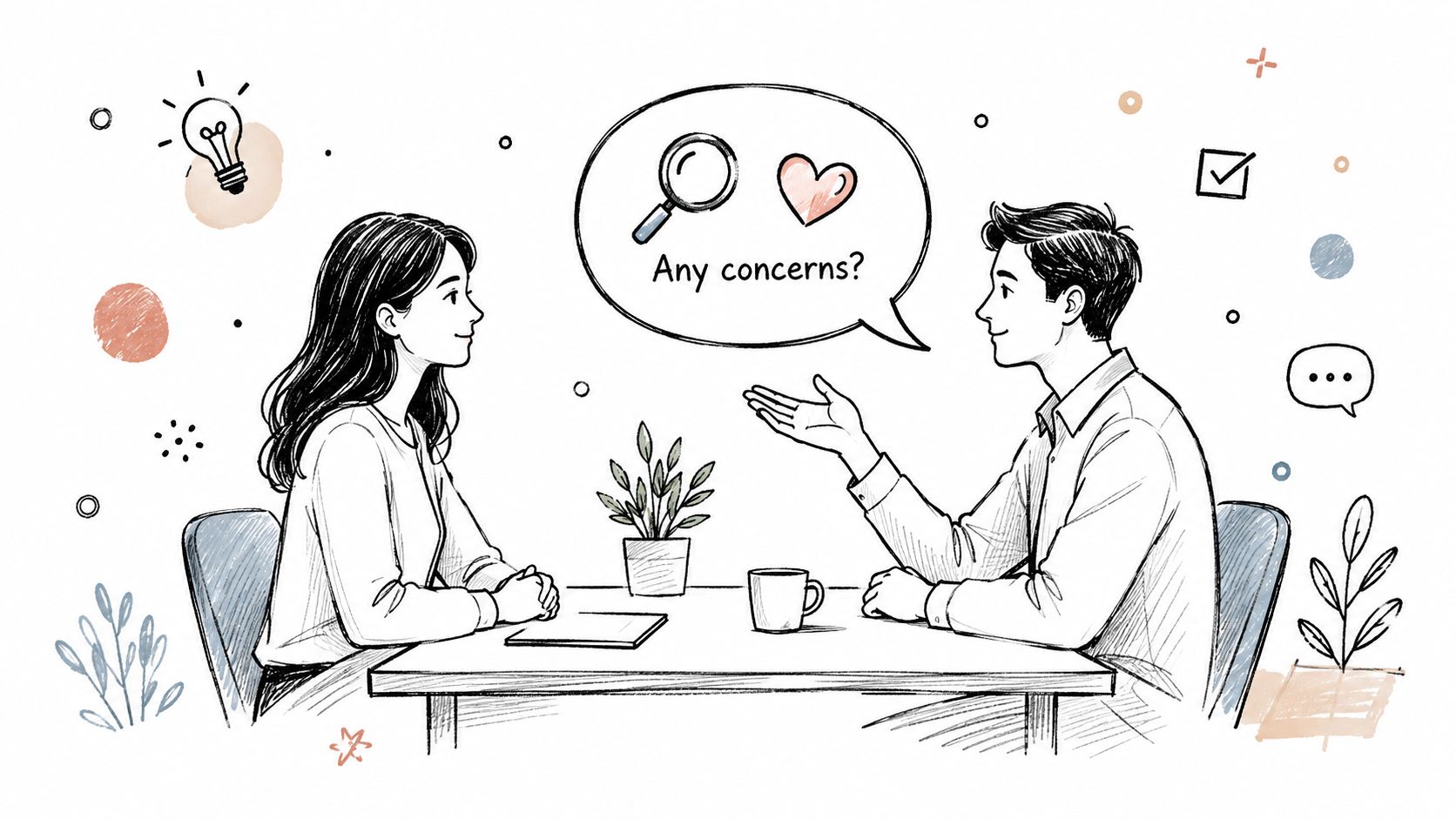
Phrase it in a way that invites an honest, human answer. “From your perspective, what does an ideal team member look like? What qualities would make someone shine on your team?” That small shift matters. It keeps the answer personal instead of corporate.
Listen for the qualities they name. If they say things like “asks clarifying questions” or “brings solutions, not just problems,” you've learned what gets rewarded in that room. If they mention collaboration, speed, or independence, you now know how to frame your own experience in the thank-you email and in the next round. Don't fake a fit you don't have. Map what you do have to the traits they named.
If you're neurodivergent, this question can be useful and uncomfortable at the same time. Use it to learn the team's communication norms, then practice a concise, authentic response instead of overexplaining differences you don't owe them in the moment.
This fits best late in the interview, once rapport is established. It works in behavioral interviews, and it also helps in panel settings because different people often give different clues about what they value. If the answer is very abstract, ask for examples. People usually become more useful when you make them concrete.
4. What's the biggest challenge this team or department has faced in the last year?
This is the question that separates candidates who want a job from candidates who want to understand the work. It shows strategic thinking, because you're asking about business pressure, not just task lists. It also gives you the clearest window into what the team is wrestling with.
The strongest version sounds calm and curious. “Looking back over the last year, what's been the biggest challenge your team has overcome?” In a customer success interview, that could open the door to churn, response time, implementation bottlenecks, or resource strain. Your job isn't to diagnose it on the spot. Your job is to get the interviewer talking openly.
How to handle the answer
If they name a problem, don't jump straight into solution mode. Ask, “How have you tackled it so far?” or “What's worked best?” That keeps the conversation collaborative instead of turning you into an unsolicited consultant. If they sound frustrated, resigned, or cautiously optimistic, pay attention. The tone tells you as much as the words.
Practical rule: don't talk more than you need to here. Let them fill the space. The details you hear are often the best clues about whether the role is stable, under-resourced, or moving in the right direction.
If you have relevant experience, mention it briefly and naturally. “I've worked on a similar issue in another role” is enough. Then stop. The point is to show judgment, not to hijack the interview.
This question works especially well in behavioral interviews and panel rounds, because it invites people to reveal how they think about obstacles. It also works in technical interviews when the challenge is tied to systems, data quality, infrastructure, or release pressure. If you want to sound mature, this is one of the fastest ways to do it.
5. Is there anything in my background or approach that concerns you, or anything you'd want to discuss further?
Ask this when you want the room to be honest. It gives the interviewer permission to surface hesitation while you are still there to answer it, which is exactly where you want any doubt to show up. Used well, it turns quiet concern into a direct conversation.

Say it cleanly and leave space. “I want to make sure we've covered everything. Is there anything about my background, my résumé, or the way I've explained my fit that gives you any pause, or anything you'd like to explore further?” If you want a lower-stakes way to practice that tone before the actual interview, use mock interview practice so the question feels natural instead of forced.
If they raise a concern, do not argue with it. Repeat it back in plain language, then answer it directly. “So you're wondering about my experience in a larger company. That makes sense. Here's how I'd approach that...” That keeps the conversation steady and shows judgment. If you have a resume cue that matches their concern, use it. A short, specific example from the résumé is enough for early-career candidates and for anyone who wants a memory hook they can reach for under pressure.
Keep your body language calm. Many neurodivergent candidates do better when they write this question down, rehearse a short follow-up, and use a simple structure like concern, example, response. That is not overpreparing, it is smart interview control. In phone interviews, this question works best near the end, once the interviewer has enough context to provide a direct answer. In panel settings, aim it at the person who seems most direct, usually the hiring manager or team lead, so the question lands instead of getting lost in the group.
If they say no, accept it and move on. “I'm glad. I've really enjoyed this conversation.” That is enough. You are showing confidence without turning the moment into a performance.
This question fits final rounds best, especially with a potential manager. It also works in behavioral interviews where the interviewer is already reflecting on fit, and in technical interviews when your experience or decision-making needs a closer look. For candidates who can handle feedback without spiraling, it is one of the strongest final questions for job interview closing moments because it gives you a real shot at clearing the air instead of leaving uncertainty hanging.
6. What does your company do really well, and where do you see the biggest opportunity for growth or improvement?
This is the balanced question that shows you've done your homework and you're not afraid of honest answers. It tells the interviewer you can appreciate strengths without pretending the company is perfect. That's a useful signal, especially in final rounds where people are deciding whether you think like a future insider or a passive observer.
Start from a specific detail. “I read that you recently launched [product], and I was impressed by [specific feature]. What was hardest about that launch?” Then follow with the core question. “What do you think the company does really well, and where do you see the biggest opportunity to grow or improve in the next year or two?” That sequence keeps the conversation grounded and avoids sounding like a trap.
Read the answer for clarity, not polish
A strong interviewer can answer this with specifics. They might mention a product strength, a market edge, or a current expansion challenge. If they stay vague, that tells you something about strategy, self-awareness, or both. Don't correct them, even if you think they're wrong about the market. Just listen and extract what's useful.
If they mention an area where you have experience, connect it naturally. “I've worked on similar challenges in [context], and I'd be excited to contribute there.” That's enough. You don't need to oversell.
This question works especially well in panel and manager interviews, because different people often reveal different parts of the company story. It also belongs in final rounds when you want to test how self-aware the organization is. If you ask it with confidence, not criticism, you'll usually get a more useful answer than the standard culture question ever gives you.
7. What would success look like for you as my manager, or what would you need from me to feel like I'm crushing it?
This question flips the frame. You're no longer asking what the company wants from you in theory. You're asking what the person you'll report to needs in practice. That's a mature move, and it often gets a more honest answer than broad questions about performance ever do.
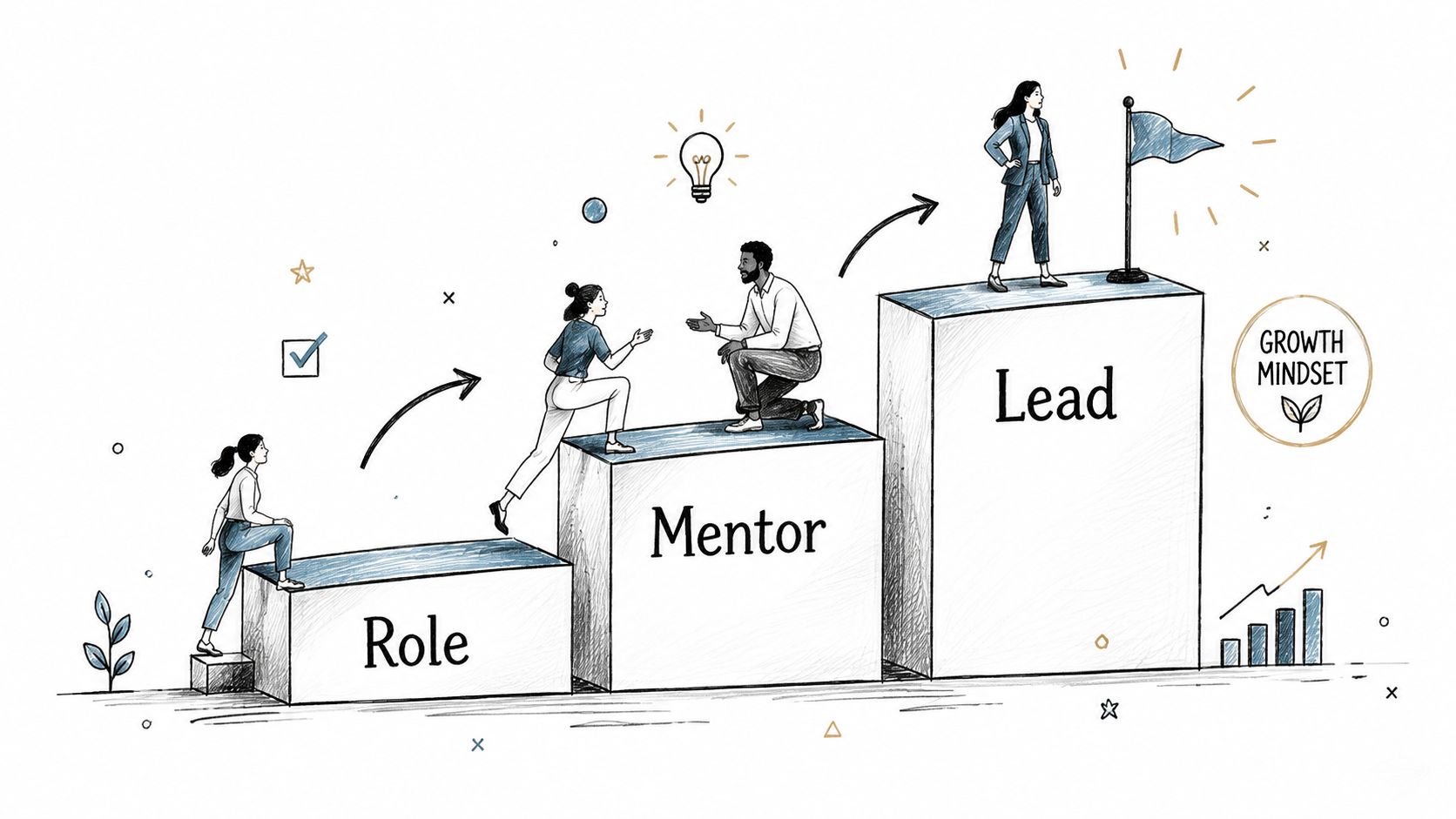
Ask it directly to your potential manager. “I want to make sure I'm supporting you well. From your perspective, what would success look like for you in this role? What would you need me to deliver or embody to feel like I'm crushing it?” If they answer with specifics like solutions, communication, or ownership, you've got the working rules early.
That answer is gold because it tells you how to operate with that person. If they hate surprises, you know to give heads-up updates. If they want options instead of complaints, you know how to bring problems. If they care about communication style, you know what to make visible from day one.
Practical rule: write down the exact phrases they use. Reuse them in your first week so they hear their own priorities reflected back clearly.
This question fits manager interviews best. It can work in panel settings too, but only if the manager is in the room. It's useful in behavioral interviews because it reveals philosophy, not just process. If the answer is vague, don't press too hard in the moment. Ask a follow-up later if needed.
8. What's the best piece of advice you've gotten about this role or company, and what surprised you most when you started here?
This is the most disarming question on the list because it asks for reflection, not evaluation. People usually relax when they're invited to tell a story instead of defend a process. That makes it one of the best final questions for job interview closers when you want warmth, candor, and real context.
Ask it late, when the rapport is already there. “What's one piece of advice you'd give someone starting in a similar role, or what surprised you most when you came on board?” That gives the interviewer room to choose their angle. Their answer may expose hidden norms, unofficial power structures, or a gap between the job description and the day-to-day reality.
If they share a concern, don't argue with it. Say, “I appreciate you being honest about that.” If they mention advice you can use, follow with a natural question like, “Was there a moment when you realized that?” or “How did you adjust to that?” That keeps the exchange human instead of scripted.
For early-career candidates, this question is especially useful because it often reveals the stuff nobody puts in onboarding materials. For neurodivergent candidates, it can also uncover communication norms and team dynamics that matter more than polished culture language. Ask it to multiple people if you can. Different answers help you separate company-wide reality from one person's viewpoint.
This question works well in final rounds, panel interviews, and conversations with senior team members. It's less about proving yourself and more about understanding where you'd be working. That's the mindset strong candidates bring to the close.
Closing Strong A Practical Checklist Before Every Interview
Treat the ending like a decision point, not a courtesy. Before the interview, pick three or four questions from this list and write them down in a notebook so you don't lose them under pressure, because a prepared close still matters when your mind goes blank. Bring one question that reveals role success, one that reveals growth or manager expectations, and one that surfaces a hidden challenge or cultural detail. If the conversation already covers one of them, drop it and move to the next one. Don't force a question just because you prepared it.
During the interview, listen for the exact phrases people use. If someone says “quick wins,” “communication,” or “ownership,” jot that down immediately. Those words are perfect material for your thank-you email, and repeating them back shows you were paying attention instead of just waiting for your turn to talk. If the interviewer gives you a vague answer, ask one clean follow-up and stop there. A good close is focused, not frantic.
After the interview, send a thank-you note that weaves in at least two verbatim phrases from the conversation. Keep it short, specific, and grounded in what they said. If they named a first-90-day goal, mention how you'd approach it. If they described a challenge, reference how your background connects to that work. That is how you turn a good conversation into a memorable one.
Accessibility matters here too. If you're neurodivergent, anxious, or interviewing in a second language, ask for a written version of a question ahead of time, or request written responses by email after the interview if the process allows it. For screening rounds where live pacing is harder, a structured tool like Qcard's Phone mode can help you stay grounded while you keep the conversation natural. You do not need to improvise every closing on the spot. You need to ask questions that help you think clearly and sound like yourself.
The best final questions reveal as much about you as they do about the company. They show your curiosity, your standards, and your willingness to ask the questions most candidates are too tired, too nervous, or too polite to ask.
Key Takeaways
- The close is the only part of the interview where you set the agenda — "I think you covered everything" hands the decision back to the interviewer, while one sharp question signals that you understand the role, the team, and the pressure that comes with both, which is why a flat closing can cost an offer even after clean behavioral answers.
- The first-90-day question is the highest-return opener because its answer becomes reusable material — writing down the two or three goals the interviewer names, in their exact language, gives you specific content for your thank-you email and your first follow-up, so the question does double duty as both signal and intelligence gathering.
- Asking directly whether anything about your background gives them pause is the most underused move in interviewing — it surfaces hesitation while you're still in the room to address it, and the right response is to repeat the concern back in plain language and answer it with a short specific example, never to argue with the premise.
- The manager-fit question ("what would you need from me to feel like I'm crushing it?") gets more honest answers than broad performance questions because it asks about a real person's working preferences — if they hate surprises you know to give heads-up updates, if they want options instead of complaints you know how to bring problems, and reusing their exact phrases in your first week reflects their priorities back clearly.
- Preparation beats improvisation at the close, especially under cognitive load — picking three or four questions in advance, writing them in a notebook, and having a recovery structure ready is smart interview control rather than overpreparation, and for neurodivergent candidates, anxious candidates, and second-language speakers, requesting a written question in advance or written follow-up where the process allows is a legitimate accessibility strategy.
Qcard helps candidates practice these closing questions with resume-grounded memory cues, pacing support, and mock interviews that adapt to final-round conversations. If you want to stop freezing at the end and start closing with confidence, visit Qcard and try it before your next interview.
Ready to ace your next interview?
Qcard's AI interview copilot helps you prepare with personalized practice and real-time support.
Try Qcard Free