TL;DR
Interviews are used for 50% of banking candidate selection decisions, which makes them the decisive filter rather than a formality after testing. Prepare across 8 to 12 weeks in three phases: baseline diagnosis (résumé audit, statements from memory, a specific "why this bank" answer), performance conversion (build models in Excel while speaking, start mocks, add AI and fintech judgment), and a final 48 hours focused on recall rather than new material. Work technical topics in the order interviewers use — statement linkages, then valuation, then application to a specific company, transaction, and sector. Build three reusable STAR stories mapped across multiple competencies rather than one script per question. Run mock interviews as feedback loops with five formats (peer, banker-led, recorded, live Excel, written case), converting vague notes like "be more confident" into observable instructions. Banks increasingly screen for digital adaptability, data judgment, compliance awareness, and responsible AI use, so prepare controlled examples rather than enthusiasm. On the day, use cues over scripts and prepared recovery lines over rambling.
Interviews are used for 50% of banking candidate selection decisions, so structured preparation matters more than any single technical skill. Treat the interview as the decisive performance test, not as a formality after your résumé and written assessments.
That distinction changes how you prepare. A candidate can understand valuation theory and still lose the offer by giving unfocused answers, missing the interviewer's question, or freezing when asked to explain a decision from their résumé. Banking teams need people who can combine numerical reasoning, judgment, communication, composure, and professional credibility in the same conversation.
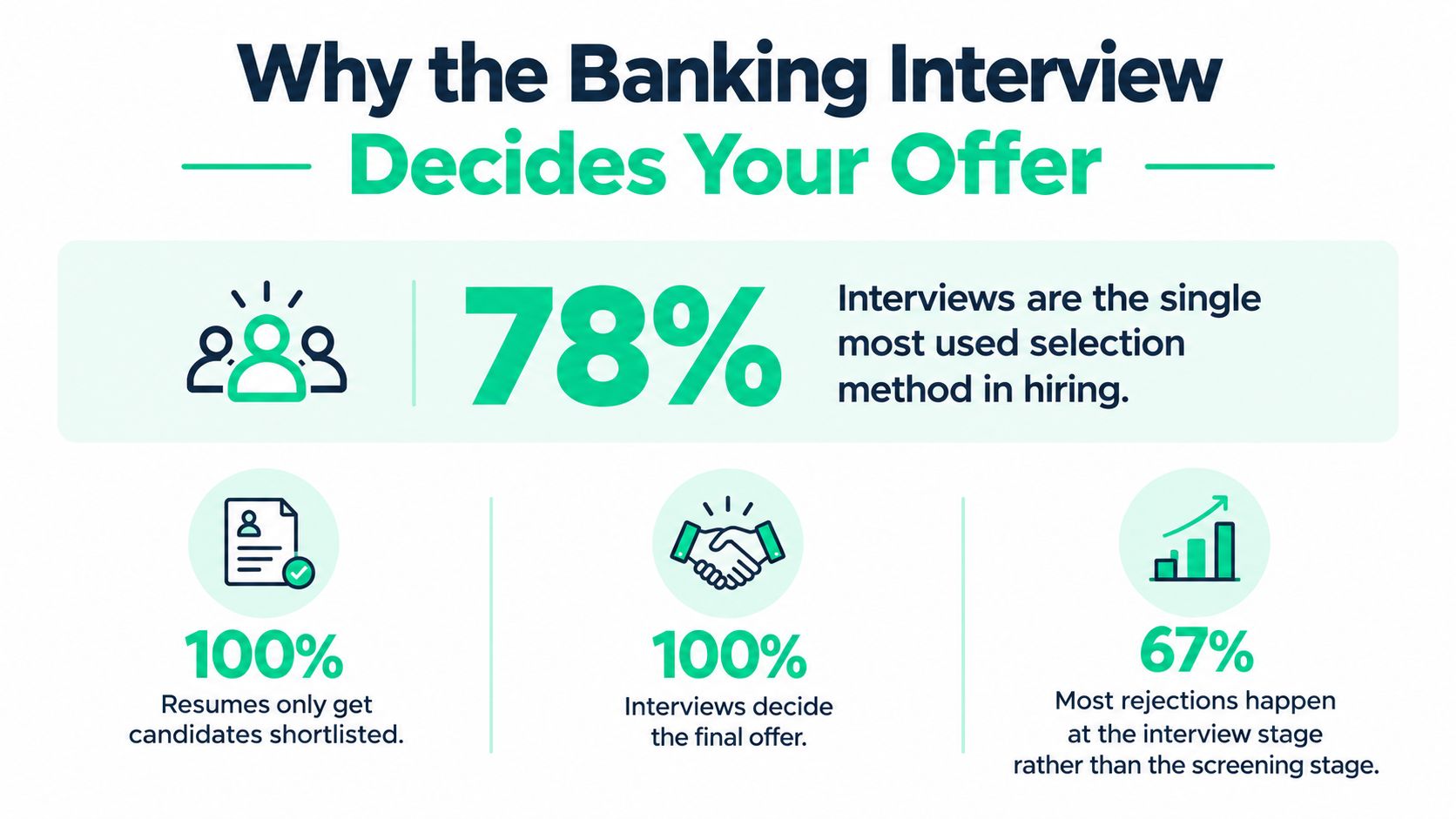
A recruitment study of bank selection methods found that interviews were used for 50% of candidates, written tests for 40%, and group discussions for 10% (bank recruitment and selection study). Those figures make the priority clear. Your technical foundation gets you into contention, but your interview performance determines whether the bank trusts you with clients, confidential information, regulated processes, and demanding deadlines.
How Do You Prepare for a Banking Interview?
Build three separate abilities — technical fluency, behavioral storytelling, and real-time composure — across an 8 to 12 week window. Most candidates only train the first, which is why they can define enterprise value but can't explain it in plain English under follow-up pressure.
Phase 1 — Establish your baseline. Audit your résumé line by line: what you did, why, what changed, what you learned. If you can't explain an item without reading it, it isn't interview-ready. Then test your technical floor — write the three statements from memory, explain their linkages, and give a valuation explanation without notes. Finally, write a specific answer to "why this bank, why this role." "Strong reputation" and "career growth" signal insufficient research.
Phase 2 — Convert knowledge into performance. Replace passive study with timed execution: build a DCF in Excel rather than reading about one, trace how a depreciation or working capital change flows through the statements, and explain each step aloud while you work. Start mock interviews here, not later. A practical minimum routine: two live mocks with an external observer, one live Excel build completed while speaking, one timed written case, one review of your target bank and a relevant transaction, and one recorded answer review focused on pacing.
Phase 3 — The final 48 hours: protect recall. No new technical subjects. Revisit story prompts, accounting links, valuation steps, bank notes, logistics, and your questions. Use memory cues, not scripts — "internship, data error, escalation, corrected process, lesson" supports natural delivery, while a memorized paragraph collapses the moment the follow-up changes.
Technical order that matches how interviewers test: statements first, valuation second, then deal context and market judgment. Show the chain before stating the formula.
Behavioral structure: three short STAR stories covering leadership, results, and failure, plus three strengths and three weaknesses with specific examples. Map each story to multiple competencies rather than scripting a separate answer per question.
If the process gives you less time, compress each phase — but preserve the sequence.
Why the Banking Interview Decides Your Offer
Most candidates prepare as if the interview were a quiz. They memorize accounting definitions, rehearse a few valuation formulas, and assume that correct answers will carry them through. That approach fails because interviewers aren't only testing whether you know the material. They're assessing whether you can use it clearly while another person challenges your assumptions.
The interview is where technical knowledge becomes observable behavior. A banker may ask how a transaction affects the statements, then interrupt with a follow-up about the commercial rationale, then move directly to a question about conflict or motivation. Your ability to switch modes matters. So does your ability to answer directly without turning every response into a lecture.
What interviewers are filtering
A strong interview answer usually demonstrates several things at once:
- You understand the question before answering it.
- You can organize a response into a logical sequence.
- You distinguish facts from assumptions.
- You communicate without unnecessary jargon.
- You can acknowledge uncertainty without losing control.
- You connect your experience to the work of the bank.
The study's selection pattern supports a practical conclusion. Even in structured hiring pipelines, the interview is often the decisive filter rather than a ceremonial step after testing. That's especially true for roles where client-facing judgment, compliance awareness, and numerical reasoning must work together.
The interviewer isn't asking whether you know finance in isolation. They're asking whether they can rely on you when finance, pressure, and other people's expectations arrive at the same time.
Your preparation should therefore cover three separate abilities: technical fluency, behavioral storytelling, and real-time composure. Candidates often practice only the first. They know what enterprise value means but can't explain it in plain English. They have a strong internship but present it as a chronology rather than evidence. They can answer alone but lose structure when the interviewer probes.
Start with the correct mindset. You aren't preparing to recite perfect answers. You're preparing to retrieve relevant evidence, reason through unfamiliar questions, and communicate with enough precision that the interviewer never has to guess what you mean.
Building Your Banking Interview Timeline
An 8 to 12-week preparation window gives you time to build recall, test your weaknesses, and practise under pressure. Investment banking preparation guides commonly divide that period among technical questions, behavioral answers, and market awareness (structured investment banking preparation plan). If the process gives you less time, preserve that order and compress each phase. Do not discard the sequence.
First phase, establish your baseline
Audit your résumé line by line. For every internship, class project, job, and leadership activity, record what you did, why you did it, what changed because of your work, and what you learned. If you cannot explain an item without reading from the page, it is not ready for an interview.
Test your technical baseline next. Write the three financial statements from memory, explain their connections, and give a simple valuation explanation without notes. Record every question that exposes a gap. This phase is for diagnosis, not for collecting endless study material.
Review the bank's business model, target team, recent developments, and role expectations. Write a specific answer to why this bank and why this role. “Strong reputation” and “career growth” are not answers. They show that you have not done enough research.
Middle phase, convert knowledge into performance
Replace passive study with timed execution. Build a DCF in Excel instead of only reading about one. Use a public company's statements and trace how a change in depreciation, working capital, or capital expenditure affects the statements. Explain each step aloud while you work.
Build a compact story bank and start mock interviews during this phase. A structured banking interview preparation guide recommends practice areas such as a one-minute introduction, banking awareness, current-affairs review covering the last three months, and mock interviews. Treat these as recurring checkpoints, not a checklist completed once.
Add the skills banks now screen alongside traditional preparation. Practise explaining how you would use AI tools responsibly, verify their output, protect confidential information, and identify errors. Follow fintech developments relevant to your target team, then connect them to regulation, customer experience, risk, or operating efficiency. You do not need to sound like a software engineer. You do need to show informed judgment.
Use predictable study blocks if a fixed routine improves concentration. Neurodivergent candidates often perform better with written agendas, explicit transition times, quiet practice conditions, and questions shared in advance when the process allows it. Build those supports into the schedule rather than relying on last-minute improvisation.
A practical minimum routine includes:
- Two live mock interviews with an external observer.
- One live Excel model build completed while speaking.
- One written case completed under time pressure.
- One review of your target bank, sector, and a relevant transaction.
- One recorded answer review focused on pacing and clarity.
Final 48 hours, protect recall
The final 48 hours are for review, not a new technical subject. Revisit story prompts, accounting links, valuation steps, bank-specific notes, interview logistics, and questions for the interviewer. Confirm the time, platform, location, documents, camera, microphone, and internet connection.
Use memory cues instead of scripts. A card that says “internship, data error, escalation, corrected process, lesson” supports natural delivery. A paragraph memorized word for word will fail when the interviewer changes the follow-up.
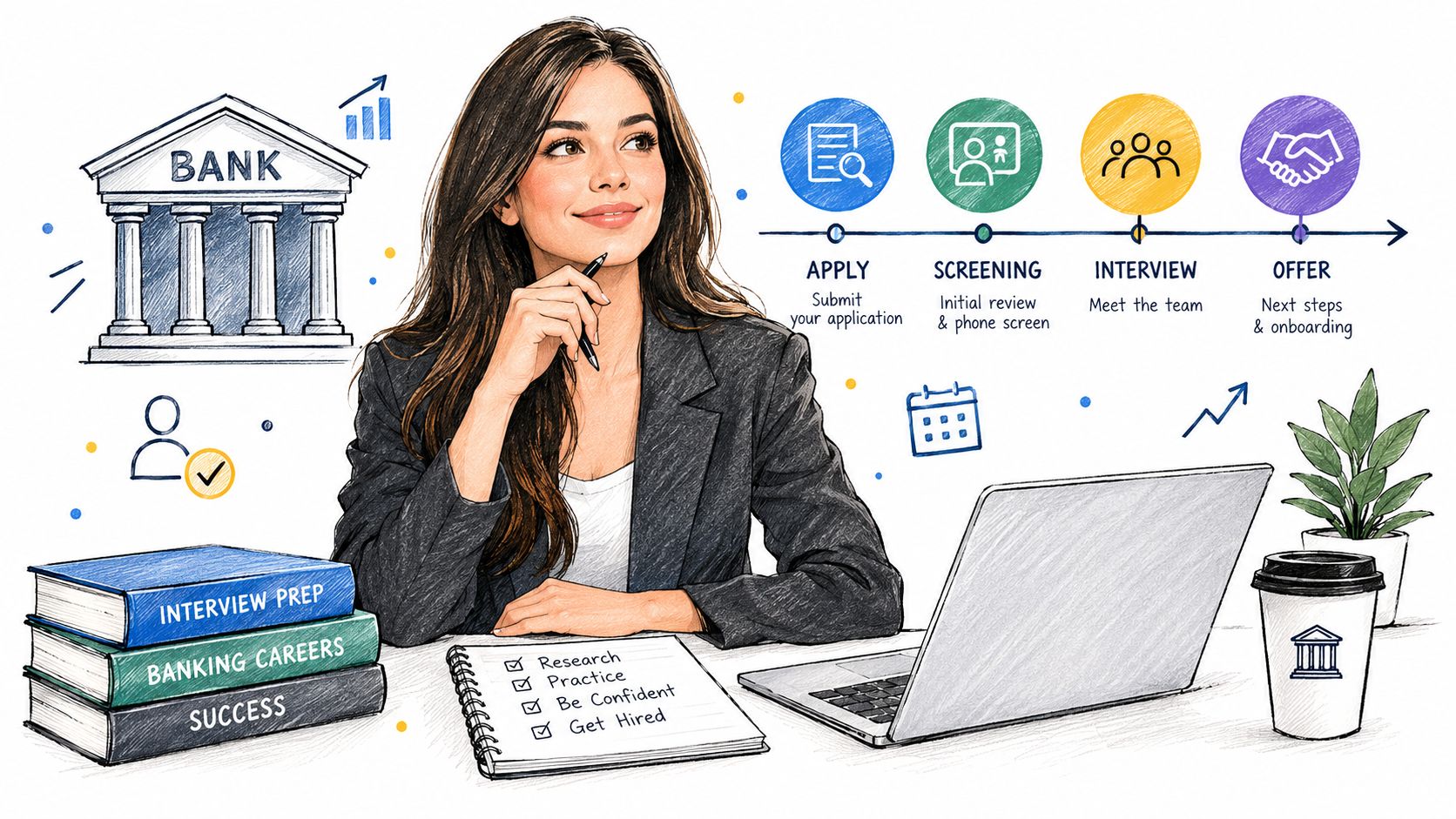
Use this interview preparation guide to organize questions, practice sessions, and review points. By the final day, rehearse delivery, protect your attention, and stop searching randomly for more content.
Mastering Technical Banking Interview Topics
Technical preparation should follow the order an interviewer uses to test your thinking: financial statements first, valuation second, then deal context and market judgment. Memorizing formulas without understanding their connections produces fragile answers and exposes gaps under follow-up questions.
Start with the statements
Explain the income statement, balance sheet, and cash flow statement in plain language. Then practise the linkages. If depreciation increases, describe its effect on operating expenses and earnings, the carrying value of assets, taxes, and the non-cash adjustment in operating cash flow. Show the chain before stating the formula.
Use company filings or reliable public statements instead of relying only on simplified examples. Build a small Excel model with linked statements, change one assumption at a time, and speak while you work: “This reduces pre-tax income, which reduces taxes, while depreciation is added back in operating cash flow.” Interviewers assess the logic and process, not only the final number.
If attention, working memory, or processing speed affects your preparation, make the sequence visible. Use a one-page flowchart, label each model step, and practise with the same verbal structure every time. That reduces cognitive load without weakening the technical standard.
Add valuation after the foundation holds
Once statement linkages are reliable, drill the main valuation methods:
- A DCF converts projected future cash flows into present value through a discount rate and terminal value.
- Comparable company analysis uses relevant market multiples to frame a valuation range.
- Precedent transactions compare completed deals involving similar businesses.
- Enterprise value and equity value require a clear understanding of debt holders' and shareholders' claims.
Answer the question asked, use a clear sequence, and stop. Technical banking interview guidance emphasizes financial-statement linkages, DCF, comparable companies, enterprise value, live Excel execution, and concise step-by-step delivery as high-yield preparation areas.
Finish with application
Prepare one company, one transaction, and one sector view you can discuss without bluffing. Explain what the business does, what drives its economics, how you would value it, and which risks could change your conclusion. For a deal, state whether the rationale makes sense and identify the assumptions that matter.
Banks also screen for practical digital judgment. Be ready to explain how you would use AI to organise research, test assumptions, or improve workflow while checking outputs and protecting confidential information. Know the fintech developments relevant to your target bank, and connect them to revenue, costs, risk, or customer behaviour.
Use the prompt “Walk me through your valuation.” Move from business understanding to projections, method selection, assumptions, outputs, and limitations. If the interviewer changes the method, adapt the framework rather than restarting from memory.
Use these practice interview questions to test whether you can retrieve answers aloud. Reading a definition creates familiarity. Building the model, explaining it, handling a follow-up, and checking AI-generated work create interview readiness.
Creating a Behavioral Story Bank
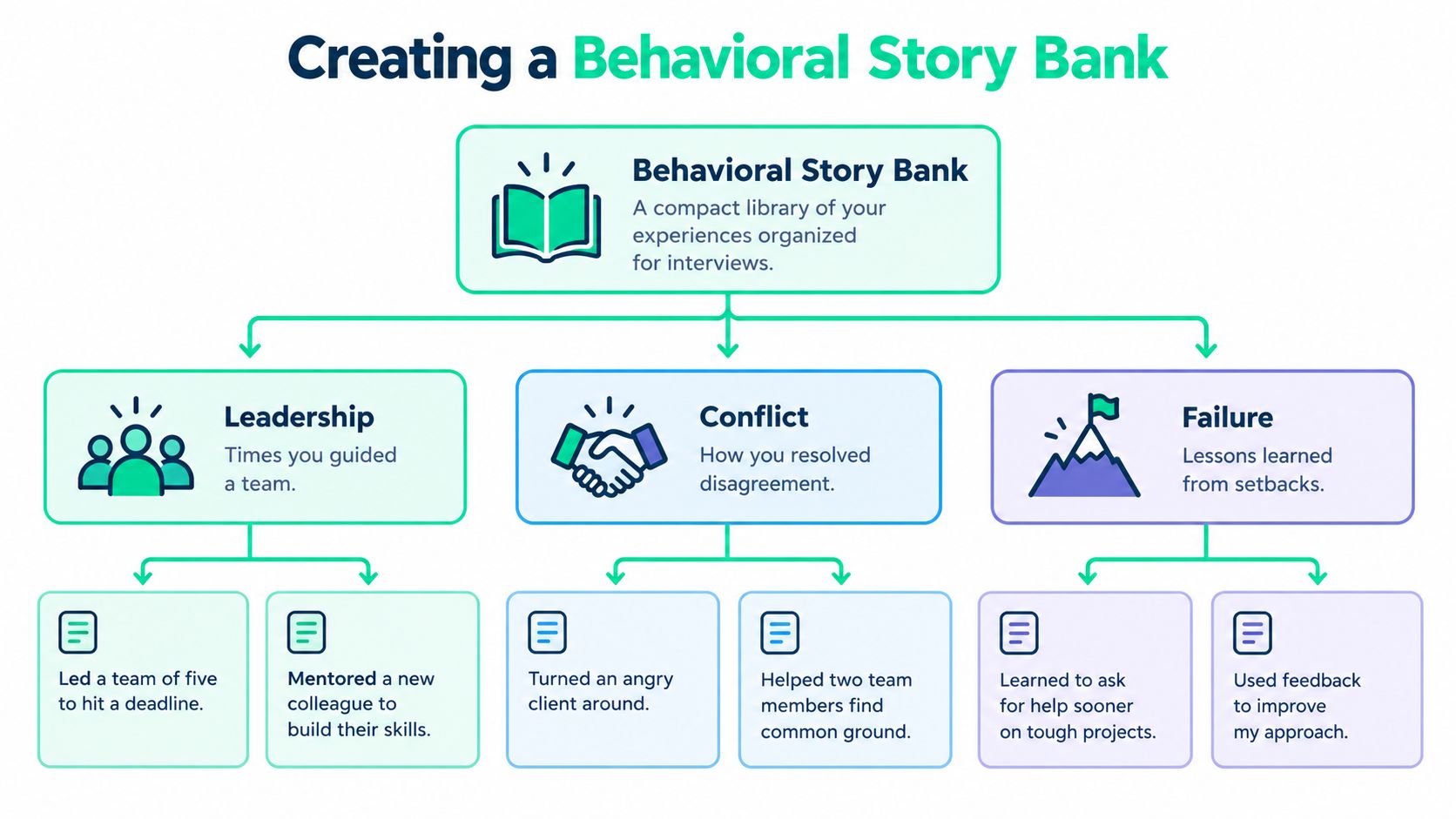
Behavioral questions expose disorganization quickly. Candidates often have enough experience but haven't decided which examples prove leadership, judgment, teamwork, resilience, or ethical awareness. Under pressure, they search their entire history and produce a long answer with no clear result.
Build a small story bank before you write polished scripts. A practical structure is three short STAR stories, covering leadership, winning results, and failure. Add three strengths and three weaknesses, each supported by a specific example. The stories should come from work, school, internships, volunteering, or personal projects, but they must show what you did.
Make each story reusable
Don't create a separate script for every possible question. Map each story to several competencies:
- A team project can show leadership, disagreement management, and prioritization.
- A process error can show accountability, accuracy, and ethical judgment.
- A difficult deadline can show resilience, planning, and communication.
- A strong result can show initiative, commercial thinking, and problem solving.
For example, suppose you worked on a university finance project where two teammates disagreed about the model. The weak answer says, “We discussed it and completed the presentation.” The useful answer explains how you defined the disagreement, tested the assumptions, assigned the work, communicated the decision, and what the final result taught you about reviewing inputs.
Use STAR without sounding mechanical
STAR means Situation, Task, Action, and Result. Keep the situation short. Explain the task in terms of your responsibility. Spend most of the answer on your actions, then close with the result and lesson.
A story about failure shouldn't become a confession or a vague claim that you learned to work harder. State what went wrong, what you noticed, what you changed, and how you prevent the same issue now. Banking interview guidance recommends chronological, concise, résumé-grounded stories tied to genuine finance motivation rather than generic achievements (investment banking interview preparation advice).
Your story bank should function like a set of evidence files. Each file needs a clear problem, your specific action, and a credible outcome.
Practice retrieval, not recitation. Write only cue words, then answer the question in different ways. If the interviewer asks about conflict instead of leadership, use the same experience but change the emphasis. This flexibility proves that the story belongs to you.
Mock Interviews and Feedback Loops
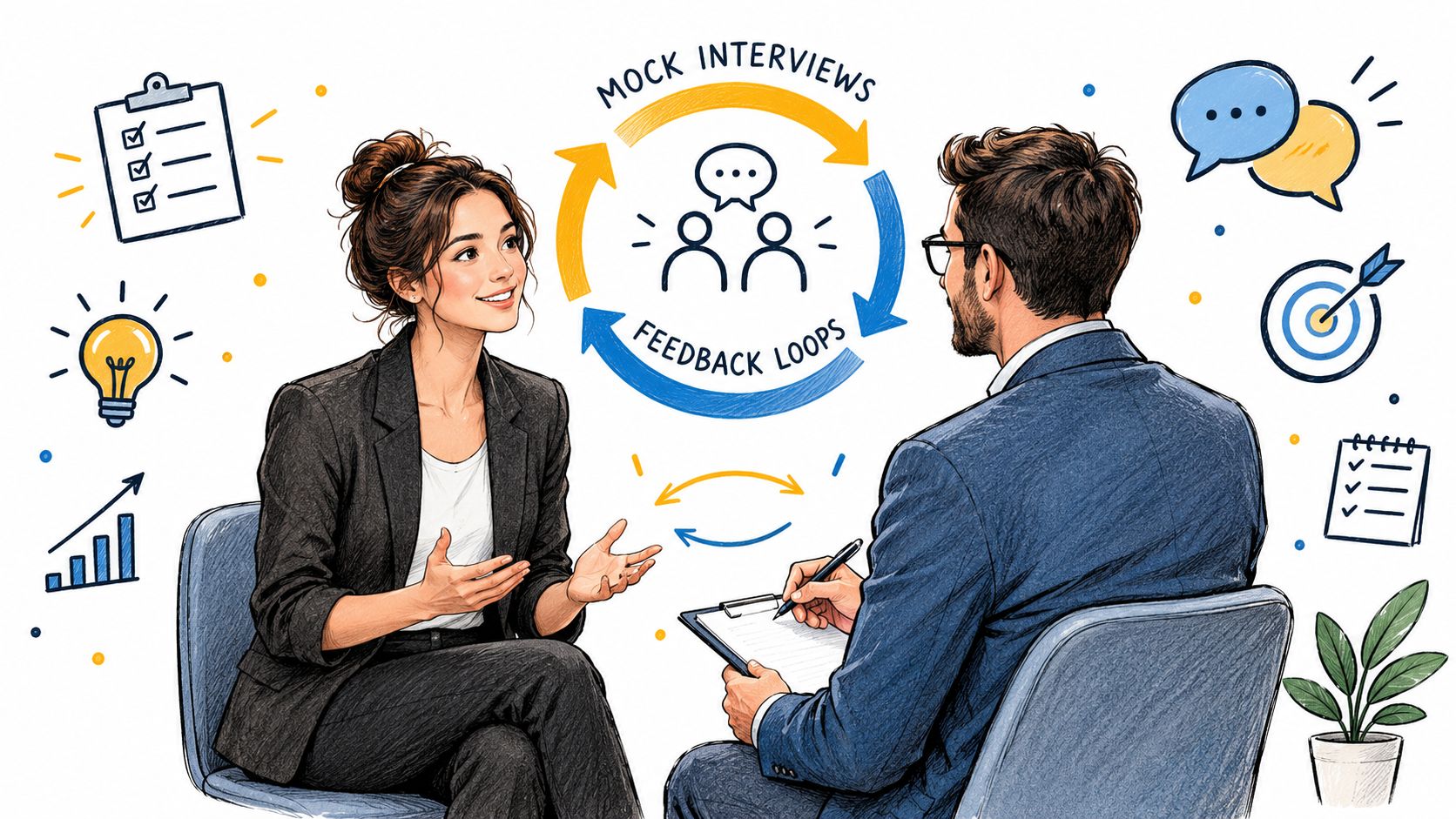
A mock interview without feedback is rehearsal, not preparation. You can repeat filler words, answer too slowly, or bury the result beneath unnecessary context. Use a disciplined loop: attempt, observe, diagnose, change, and attempt again. Systematic practice exposes weak delivery before the bank does, while last-minute cramming mainly produces more notes and more surprises.
Run different kinds of practice
Use several formats. Each exposes a different failure:
- A peer mock tests whether your answer makes sense to a non-specialist.
- A banker-led mock tests technical depth and follow-up pressure.
- A recorded session reveals pacing, filler words, facial tension, and answer length.
- A live Excel session tests whether you can reason while operating a model.
- A written case tests structure when nobody can rescue a confused explanation.
After each session, record three strengths, three recurring errors, and one change for the next attempt. Reject vague feedback such as “be more confident.” Turn it into an observable instruction: lead with the conclusion, pause before answering, state the assumption, or stop after the result.
Review the transcript, not just your feelings
A difficult session does not identify the problem by itself. Review the transcript for unanswered questions, repeated phrases, missing results, and explanations that become abstract. Documind on transcript analysis offers a useful way to turn recordings into specific evidence about your delivery.
Practice under consistent conditions, then change one variable at a time. Use the same question set to measure whether answers become shorter, clearer, and more complete. Neurodivergent candidates can make this process easier by requesting questions in writing where possible, using cue cards with single-word prompts, rehearsing a predictable sequence, and choosing a quiet setting with controlled lighting and sound. These adjustments improve retrieval without turning answers into scripts.
Qcard's AI mock interview tool provides another way to practise aloud, receive feedback, and handle follow-up questions. Software, a coach, and a colleague each have limits. Judge every method by the same standard: it must produce a concrete adjustment for the next attempt.
Your goal is not to sound rehearsed. It is to make your judgment easy to follow when pressure rises. Keep the loop active until your weak patterns are visible, named, and corrected.
Adapting Prep for Modern Banking Hiring Trends
Traditional banking preparation is incomplete if it covers only accounting, valuation, and generic fit questions. Recent hiring coverage indicates that twenty-twenty-six banking and financial-services recruiting is shifting toward digital adaptability, data analytics, fintech, cybersecurity, compliance, and AI fluency, while also using AI to screen candidates and assess speech, content coverage, and knowledge gaps during human-led interviews (financial-services hiring trends).
That doesn't mean abandoning core finance. It means showing how finance works inside modern operating environments. A candidate who can explain a DCF but can't discuss data quality, model controls, cybersecurity exposure, or responsible use of AI may look less prepared than someone with slightly less technical polish and stronger judgment about digital workflows.
Turn transferable experience into evidence
You don't need a fintech title to demonstrate these capabilities. Translate your existing experience into relevant examples:
- A classroom analytics project can show how you cleaned data, checked assumptions, and explained limitations.
- A retail or service role can show accurate execution under rules and careful handling of customer information.
- A coding or automation project can show process improvement, testing, and awareness of errors.
- A compliance, audit, or operations task can show why documentation and escalation matter.
- A group project can show how you worked across technical and non-technical contributors.
If asked how you use AI, don't answer with enthusiasm alone. Explain a controlled use case, such as summarizing public information before checking the original sources, generating questions for a data review, or identifying inconsistencies for human verification. State what you would never delegate, including confidential judgment, regulatory interpretation, and final approval.
Prepare for changing assessment signals
Banks may evaluate not only what you say but whether your answer covers the question, whether your speech is understandable, and whether your reasoning shows awareness of risk. Practice concise responses with explicit signposts: “I see three issues,” “my assumption is,” and “the control I would add is.”
Neurodivergent candidates deserve preparation that supports communication without forcing artificial performance. Use written prompts, predictable practice formats, sensory adjustments, and permission to pause. Ask recruiters about format and accommodations early. A request for a short pause, written agenda, or clarification of a multi-part question can improve accuracy without reducing professionalism.
Skills-based hiring makes evidence more important than pedigree. Show the interviewer how you learn tools, protect data, work within controls, and explain technical decisions to people who don't share your background.
Day-of Execution and Neurodivergent Strategies
Interview day rewards control, not theatrical confidence. Your task is to make your thinking easy to follow while preserving enough attention to listen properly. That matters for everyone, and it can matter even more for neurodivergent candidates managing sensory overload, anxiety spikes, working-memory pressure, or difficulty retrieving a memorized answer in real time.
Use cues, not scripts
Place a short set of memory cues beside your screen or outside the camera frame. Use categories such as “motivation,” “leadership,” “failure,” “technical sequence,” and “questions.” Don't write full sentences. Full scripts encourage you to search for exact wording, while cues help you retrieve your own experience.
For technical answers, use a verbal structure:
- State the conclusion or definition.
- Explain the steps in order.
- Name the key assumption.
- Stop and invite the follow-up.
For behavioral answers, begin with the situation and task, focus on your action, then state the result and lesson. These signposts reduce cognitive load because you don't have to invent the structure while also managing nerves.
Recover when your mind goes blank
Brain fog isn't a verdict on your ability. Use a controlled recovery line:
- “I want to organize that before I answer.”
- “I see two parts to the question. I'll start with the technical point.”
- “Could you repeat the second part so I address it accurately?”
- “I don't want to guess. My assumption would be this, and I would verify it by checking that data.”
Take a brief pause, breathe out, and write one cue word. Interviewers generally prefer a thoughtful pause to a rambling answer that never reaches a conclusion. If you give an incomplete answer, correct it directly: “I missed the impact on cash flow. The adjustment would be...” Recovery shows judgment.
For candidates exploring workplace adjustments or strategies related to attention regulation, this resource on support for ADHD professionally offers useful context. Your preparation should help you communicate your capabilities, not hide the conditions that help you perform consistently.
Manage the practical environment
Before a virtual interview, test the platform, microphone, camera angle, lighting, and notification settings. Keep water nearby and remove visual distractions. For an in-person meeting, plan the route, arrive with time to spare, and bring only what you need.
Online assessments can appear before live interviews. One banking preparation guide describes an assessment stage lasting 30 to 60 minutes, covering numerical reasoning, logical thinking, and sometimes recorded video responses (online banking assessment guidance). Practice timed calculations and short recorded answers so speed doesn't overwhelm accuracy.
First-round investment banking interviews commonly last 30 to 45 minutes and combine behavioral and technical questions, while a final Superday can involve back-to-back conversations with analysts, associates, VPs, and MDs (investment banking interview process guide). Prepare your attention for changing interviewers and repeated questions. Keep your core message consistent, but tailor examples and questions to each person.
End with thoughtful questions about the team's work, learning expectations, feedback, current priorities, or a specific transaction or sector. Afterward, send a concise thank-you email that references a real topic from the conversation and reinforces your fit. Generic gratitude is forgettable. Specific follow-up shows that you listened.
Key Takeaways
- The interview is the decisive filter, not a formality — a bank recruitment study found interviews used for 50% of candidate selections versus 40% for written tests and 10% for group discussions, which means technical knowledge gets you into contention while interview performance determines whether the bank trusts you with clients, confidential information, and deadlines.
- Technical preparation should follow the interviewer's testing order — financial statement linkages first, valuation second, then deal and market application — because memorizing formulas without understanding connections produces fragile answers that collapse under follow-up; show the chain ("this reduces pre-tax income, which reduces taxes, while depreciation is added back in operating cash flow") before stating the formula.
- One story should serve multiple competencies rather than one script per question — a team project can demonstrate leadership, disagreement management, and prioritization; a process error can show accountability, accuracy, and ethical judgment — and writing only cue words forces you to practice retrieval instead of recitation, which is what makes the story recognizably yours.
- A mock interview without feedback is rehearsal, not preparation — use five formats that each expose a different failure (peer mock for clarity, banker-led for technical depth, recorded for pacing and filler words, live Excel for reasoning while operating, written case for structure), then convert vague feedback into observable instructions like "lead with the conclusion" or "state the assumption."
- Modern banking screens add digital judgment to the traditional checklist — 2026 hiring coverage points to digital adaptability, data analytics, fintech, cybersecurity, compliance, and AI fluency, so prepare a controlled AI use case (summarizing public information before checking original sources, flagging inconsistencies for human verification) and state clearly what you would never delegate: confidential judgment, regulatory interpretation, and final approval.
Qcard provides resume-grounded memory cues, AI-scored practice, mock interviews with follow-up questions, and real-time coaching for pacing, filler words, and answer length. Use the Qcard toolkit to rehearse banking questions, reduce brain fog without relying on scripts, and enter your next interview with a clearer structure.
Ready to ace your next interview?
Qcard's AI interview copilot helps you prepare with personalized practice and real-time support.
Try Qcard Free