Top 7 Resources for Amazon LeetCode Questions in 2026

Navigating the Amazon technical interview requires more than just knowing data structures and algorithms; it demands a strategic approach to practice. The sheer volume of potential problems can be overwhelming, leaving even seasoned engineers unsure where to focus their efforts. This guide cuts through the noise, providing a direct path to mastering the coding challenges you're most likely to face.
We've compiled the definitive resources for tackling the most frequently asked Amazon LeetCode questions. This isn't just another generic list of problems. Instead, we're diving into platforms that offer structured learning paths, pattern recognition tools, and targeted practice specifically for Amazon's interview process. You will find a detailed breakdown of each resource, complete with screenshots and direct links, to help you choose the best platform for your study style.
Whether you're preparing for an Online Assessment (OA) or a final onsite loop, this curated list will equip you with the exact tools and knowledge needed to solve complex problems confidently. Our goal is to help you demonstrate the bar-raising logic Amazon looks for in its engineers. Let's dive into the platforms that will transform your preparation from scattered to strategic, ensuring you focus your valuable time on what truly matters. This article will cover everything from comprehensive question banks on LeetCode and GeeksforGeeks to specialized training systems like Qcard and AlgoMonster.
1. Qcard
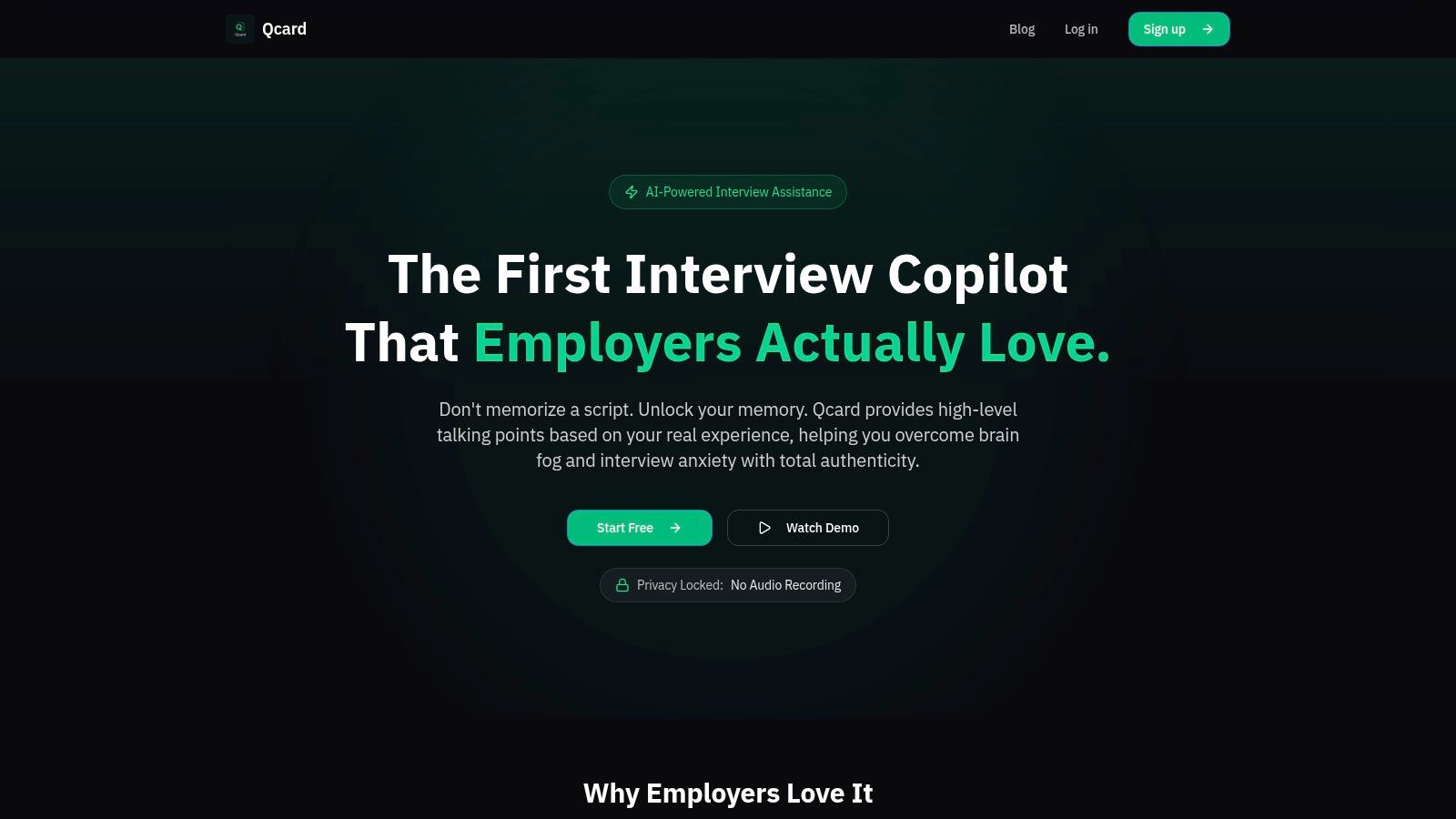
Qcard offers a sophisticated and unique approach to interview preparation, functioning as an AI-powered copilot designed to help you excel in both behavioral and technical interviews. While not a direct repository of Amazon LeetCode questions, its true value lies in its ability to support you during the live coding and systems design rounds. It helps you articulate your thought process clearly and recall key project details under pressure, which is a critical, often overlooked, component of the Amazon interview.
This platform operates on a principle of "cognitive equity." It provides real-time, resume-grounded memory cues and talking points, ensuring your answers remain authentic and grounded in your actual experience. Instead of generating generic, scripted responses that can sound robotic, Qcard surfaces key metrics, project specifics, and STAR-method bullet points directly from your background. This helps you speak naturally and confidently, eliminating the anxiety of blanking on a crucial detail.
Why Qcard Excels for Amazon Technical Interviews
What makes Qcard a standout choice is its integration with technical interview platforms like HackerRank and CoderPad. As you work through Amazon LeetCode questions, the AI copilot can provide algorithmic hints and data structure reminders without giving away the solution. This allows you to demonstrate your problem-solving skills authentically while getting a gentle nudge when you're stuck, a process that mirrors real-world pair programming.
The platform's real-time Interview Coach provides live feedback on your communication style. It tracks your pacing, use of filler words (like "um" or "ah"), and the length of your responses. This is invaluable for the behavioral portions of the Amazon interview, where demonstrating the Leadership Principles through clear, concise storytelling is paramount.
Core Features and Practical Applications
Qcard is more than just a live-interview tool; it's a comprehensive preparation toolkit. Its features are designed to build confidence and polish your delivery from every angle.
- Resume‑Locked Cues: The system’s "Zero‑Script" policy means every suggestion is tied directly to your verified experience. This prevents AI hallucinations and ensures you present an accurate and compelling narrative.
- Live Performance Tools: Low-latency streaming and live voice transcription deliver suggestions in sub-second time. It offers multiple interface modes (Full, Mini, Phone) to adapt to any screen setup, whether you're on a laptop or using a multi-monitor configuration.
- Comprehensive Prep Suite: Before the interview, you can use AI-scored practice sessions, conduct mock interviews with intelligent follow-up questions, and utilize a built-in question bank. After the interview, it even helps you generate a personalized thank-you email.
- Privacy-First Architecture: Sessions are encrypted, and the company maintains a strict policy of no audio recording or retention. Your data is never used to train its AI models, ensuring complete confidentiality.
Pricing and Access
Qcard promotes a "Start Free" option, allowing users to explore its core functionalities before committing. However, detailed pricing for its premium plans is not publicly listed on the website; prospective users must sign up to view the full cost structure. The platform is web-based and designed to run alongside video conferencing and technical assessment tools.
Key Insight: Qcard's primary strength is not in providing a list of Amazon LeetCode questions, but in equipping you with the real-time cognitive support to solve them effectively while communicating your process clearly. It focuses on how you answer, not just what you answer.
Website: https://qcardai.com
2. LeetCode
LeetCode is the definitive platform and the primary source for practicing Amazon LeetCode questions. It has become so foundational to the tech interview process that the problem style itself is named after the platform. Its extensive library, combined with powerful filtering and community features, makes it an indispensable tool for anyone preparing for Amazon's rigorous technical interviews.
Why LeetCode is Essential for Amazon Prep
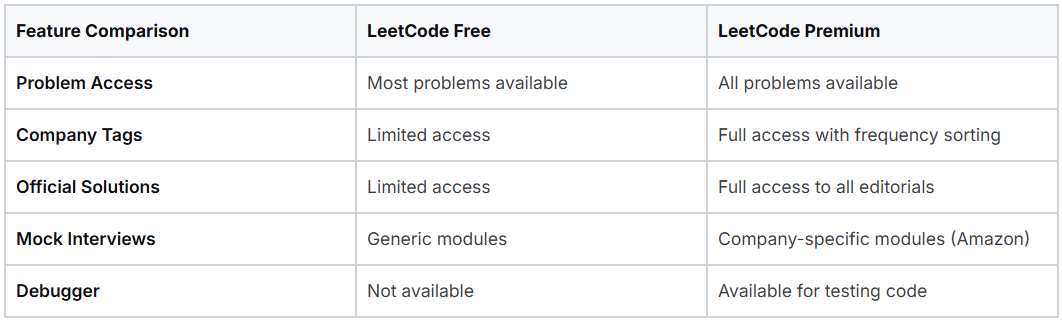
The core value of LeetCode lies in its massive, well-categorized problem bank and, crucially for targeted prep, its company-tagging system. With a Premium subscription, you can directly filter for problems that have been reportedly asked at Amazon within specific timeframes (e.g., the last 6 months, 1 year). This allows you to focus your efforts on the most relevant and frequently encountered challenges, maximizing the efficiency of your study time.
The platform's user interface is clean and functional, featuring an integrated coding environment that supports numerous languages. Each problem is accompanied by a community discussion board, which is often a goldmine of optimized solutions, alternative approaches, and detailed explanations from other users who have tackled the same problem for their own Amazon interviews.
Key Features and How to Use Them
To make the most of LeetCode for your Amazon preparation, leverage these features strategically:
- Amazon Tagged List (Premium): This is the most powerful feature. Navigate to the "Problems" section and filter by company, selecting "Amazon." Sort this list by frequency to prioritize the questions that appear most often.
- Editorials and Solutions: Many problems, especially the popular ones, come with official editorials that explain the optimal solution, often with visual aids and code. Premium users get access to all editorials, which are crucial for understanding the underlying patterns.
- "My Lists" Feature: Create custom lists to organize your study plan. You might have separate lists for "Amazon Phone Screen," "Amazon Onsite - Graphs," or "Problems to Revisit." This helps track progress and ensures you cover all necessary topics.
- Mock Interviews: LeetCode offers a mock interview section where you can simulate an interview environment. The Amazon-specific module provides a timed assessment with a set of questions mirroring the real experience, helping you manage time and pressure.
Pro Tip: Don't just solve the problem; dive into the discussion forums for each Amazon-tagged question. You'll often find insights on how Amazon interviewers might frame the question or what follow-up questions to expect.
Website: https://leetcode.com
3. GeeksforGeeks – Amazon SDE Sheet
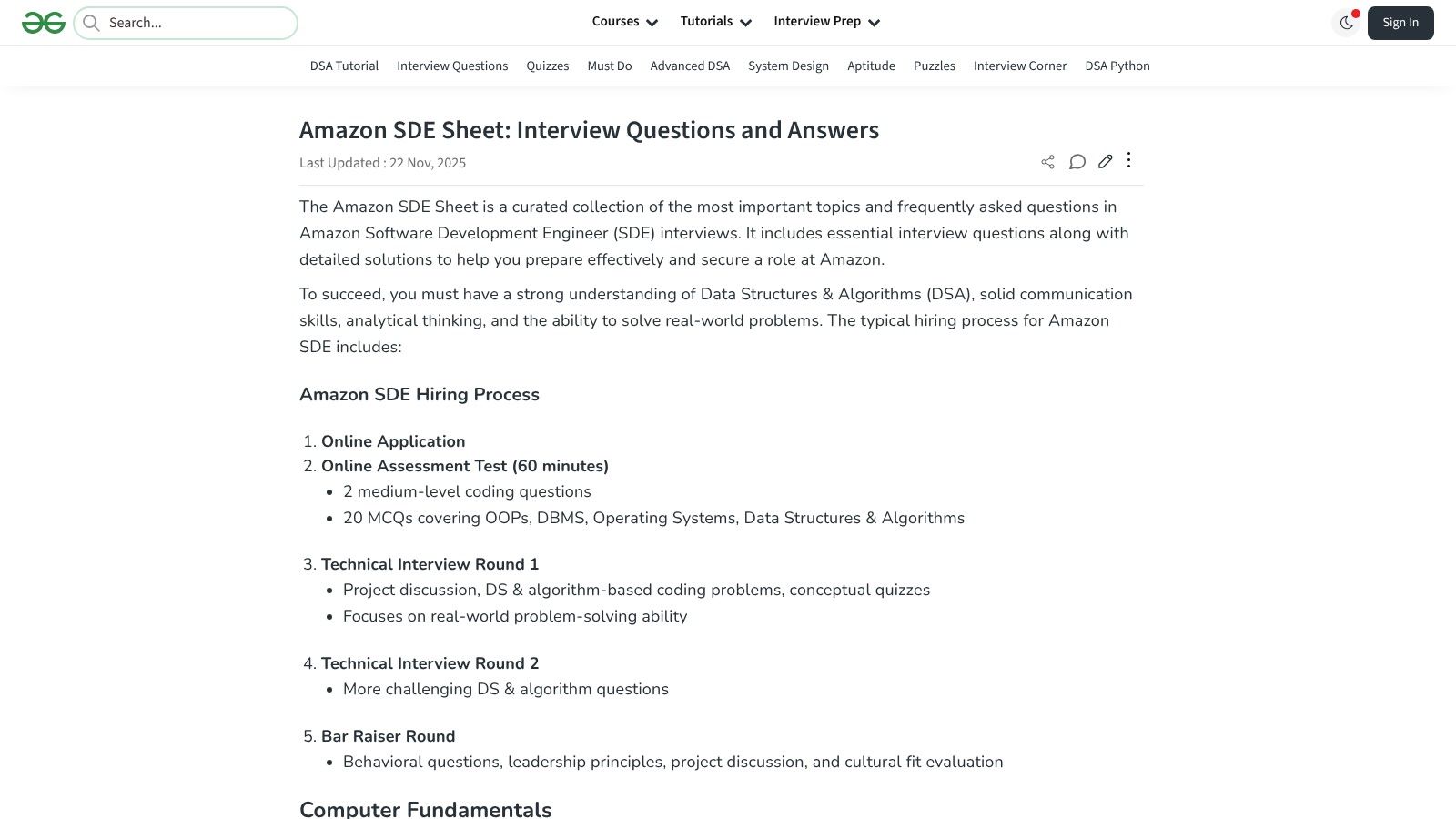
GeeksforGeeks offers a powerful, free resource that serves as an excellent structured complement to raw LeetCode grinding: the Amazon SDE Sheet. This curated collection gathers frequently asked Amazon LeetCode questions and organizes them by topic, providing a clear roadmap for methodical preparation. Unlike randomly tackling problems, this sheet offers a guided path through essential data structures and algorithms relevant to Amazon's interview process.
Why the GfG SDE Sheet is a Valuable Asset
The primary advantage of the GeeksforGeeks sheet is its structured, topic-based organization, which is ideal for building a strong foundation. Instead of jumping between random high-frequency problems, you can work through dedicated sections for arrays, strings, linked lists, graphs, and dynamic programming. This approach helps you master one concept at a time before moving to the next, which is crucial for internalizing patterns.
Each problem on the sheet links to a detailed article on the GeeksforGeeks platform. These articles often provide multiple approaches to a solution, starting from brute-force and moving towards the optimal one, which is invaluable for understanding the thought process an interviewer wants to see. The content is entirely free, making it one of the most accessible and comprehensive starting points for Amazon prep.
Key Features and How to Use Them
To integrate the GfG sheet into your study plan effectively, focus on these components:
- Topic-Wise Problem Buckets: The sheet is divided into sections like "Arrays," "Strings," "Searching & Sorting," and "Dynamic Programming." Start with your weakest topics or follow the order sequentially to ensure comprehensive coverage.
- Detailed Explanations: For each problem, click through to the full GfG article. Don't just copy the code; read the explanation to understand the "why" behind the optimal solution and its time/space complexity.
- Ancillary CS Topics: The sheet often includes links to core computer science fundamentals (e.g., OOP, DBMS, Operating Systems) and multiple-choice questions (MCQs). This is particularly useful for preparing for Amazon's Online Assessment (OA), which can include theoretical questions alongside coding challenges.
- Regular Updates: The sheet is maintained and updated based on recent interview experiences, ensuring the problem selection remains relevant to what Amazon is currently asking candidates.
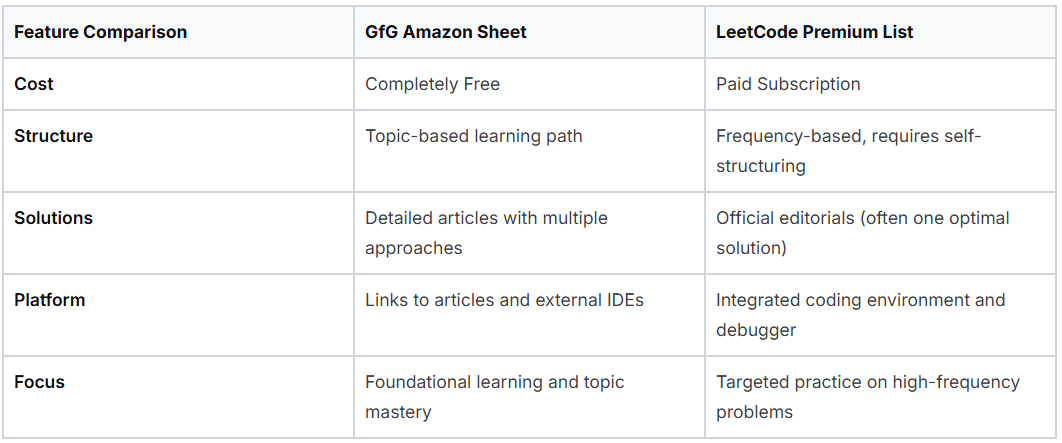
Pro Tip: Use the GeeksforGeeks SDE Sheet to learn the patterns for a specific topic (e.g., Two Pointers). After solving the GfG-listed problems for that topic, switch to LeetCode and solve the top 5-10 most frequent Amazon-tagged questions on the same topic to solidify your understanding.
Website: https://www.geeksforgeeks.org/dsa/amazon-sde-sheet-interview-questions-and-answers/
4. InterviewBit – Amazon Interview Questions
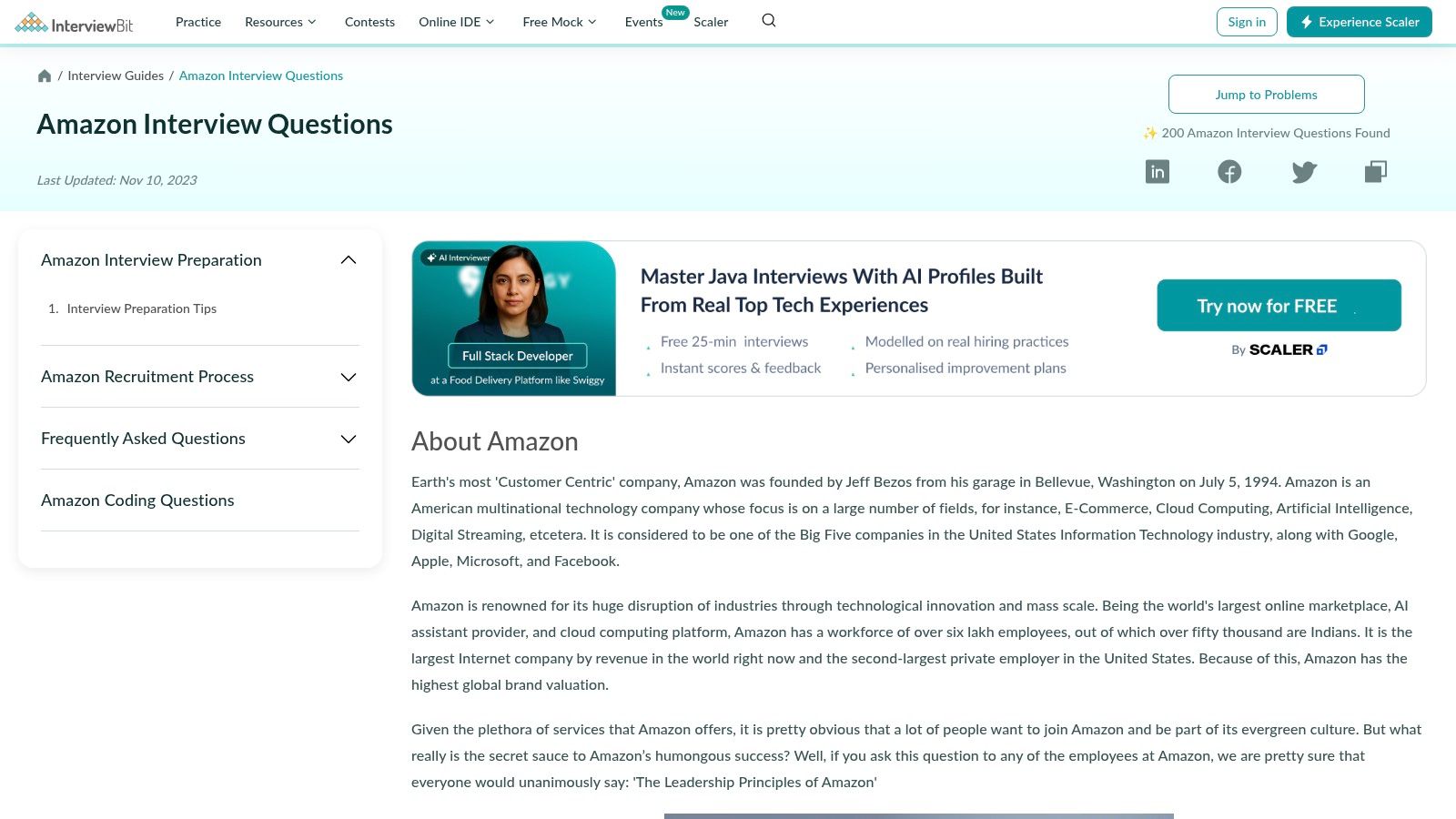
InterviewBit offers a unique, guided approach to tackling Amazon LeetCode questions by blending problem-solving with crucial interview process insights. Instead of just presenting a list of problems, it frames the practice within the context of Amazon's specific interview rounds, making it an excellent resource for structuring your preparation and for last-minute strategic review.
Why InterviewBit is Essential for Amazon Prep
InterviewBit’s primary strength is its structured, curriculum-like format. The platform's dedicated Amazon interview page doesn't just list coding challenges; it provides an overview of the entire interview process, from the online assessment to the onsite loops. This holistic view helps you align your practice with what to expect in each specific round, ensuring you're not just solving problems but are also preparing for the interview format itself.
The platform segments its Amazon-tagged problems into difficulty levels and provides a clean, in-browser IDE for practice. Its guided paths ensure you cover a broad range of topics methodically, preventing gaps in your knowledge. This makes it particularly useful for candidates who prefer a more structured study plan over an open-ended problem list.
Key Features and How to Use Them
To effectively use InterviewBit for your Amazon interview prep, focus on these components:
- Amazon Interview Guide: Start by reading their overview of the Amazon interview process. This section details the rounds, expectations, and frequently tested topics, providing a solid foundation for your study plan.
- Segmented Problem Lists: Work through the coding problems categorized by difficulty (Easy, Intermediate, Advanced). This allows for a gradual ramp-up, helping you build confidence and master fundamental concepts before tackling more complex challenges.
- Guided Paths: Engage with the platform's guided topic paths (e.g., Arrays, Graphs, Dynamic Programming). This ensures comprehensive coverage and that you understand interconnected concepts rather than just isolated problems.
- Free Mock Assessments: Take advantage of the mock interview modules. Simulating a timed, test-like environment is critical for practicing your problem-solving speed and managing pressure, which are key skills for Amazon's online assessments.
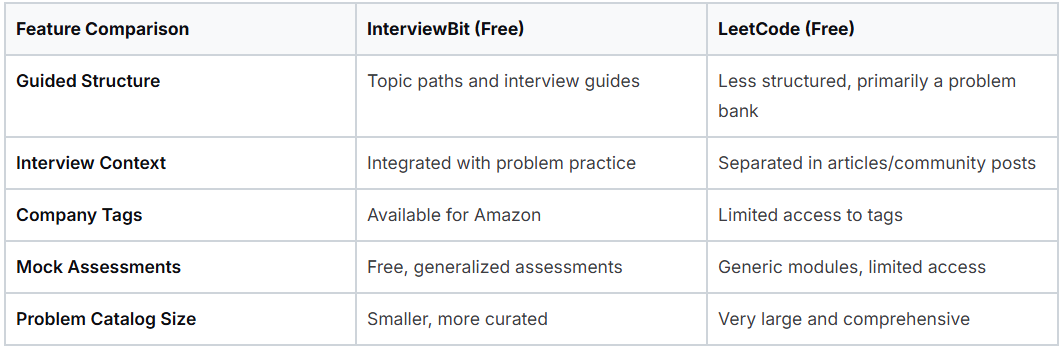
Pro Tip: Use InterviewBit as a checklist before your interviews. Review its Amazon page to ensure you've covered all the key topics and understand the expectations for each round. Its structured format is perfect for a final, high-level review.
Website: https://www.interviewbit.com/amazon-interview-questions/
5. AlgoMonster
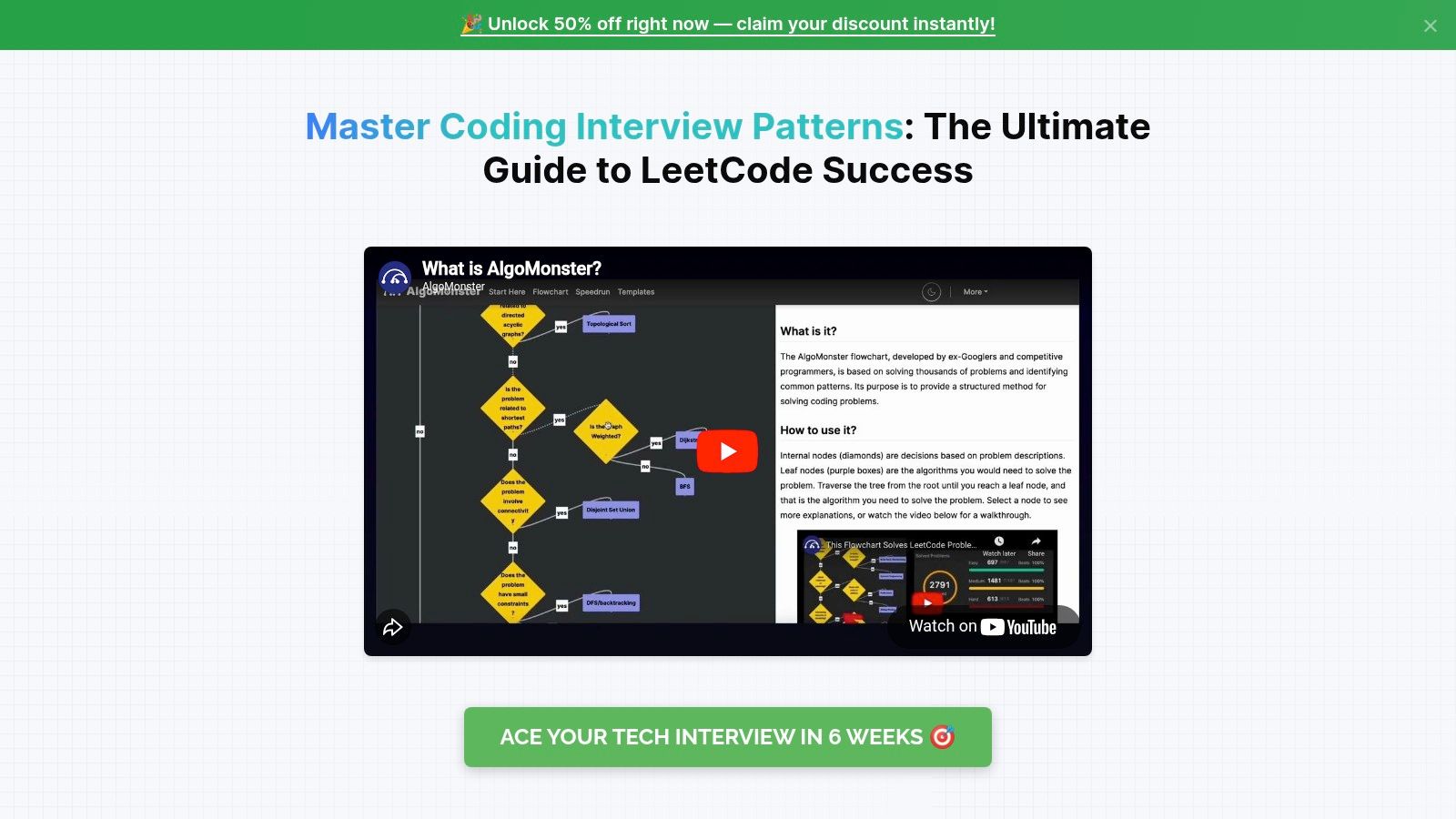
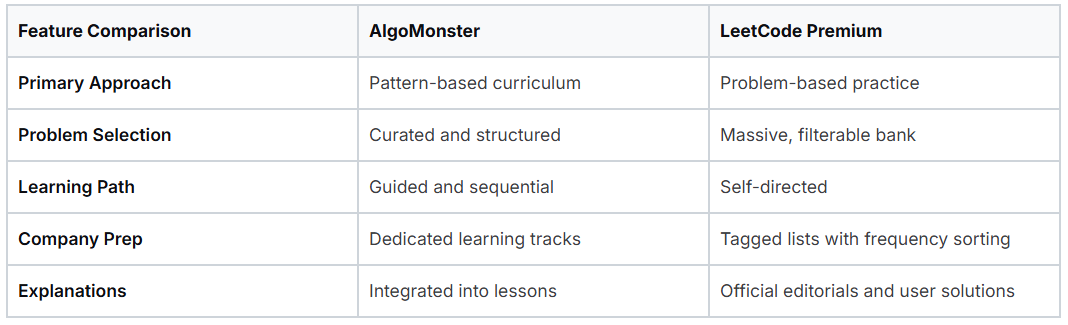
AlgoMonster offers a highly structured, pattern-based curriculum that shifts the focus from rote memorization of individual problems to a deep understanding of the underlying algorithmic patterns. For candidates preparing for Amazon LeetCode questions, this approach can be more efficient, teaching you repeatable techniques that can be applied to a wide range of unfamiliar problems, which is crucial for succeeding in Amazon's interviews where variations are common.
Instead of presenting an endless list of problems, AlgoMonster curates its content into a systematic course. This guided path is designed to build foundational knowledge first and then apply it to company-specific challenges, including a dedicated module for Amazon. Its text-first, illustrative approach caters to learners who prefer reading and diagrams over video lectures, making complex concepts easier to digest and retain.
Why AlgoMonster is Essential for Amazon Prep
AlgoMonster’s core advantage is its emphasis on "learning the pattern, not the problem." Amazon interviews are known for testing a candidate’s ability to adapt and solve novel problems. By mastering the 40+ common coding patterns AlgoMonster teaches, you gain a versatile toolkit that makes it easier to deconstruct and solve the specific Amazon LeetCode questions you'll encounter. The curriculum is meticulously designed to eliminate the guesswork of what to study next, providing a clear roadmap from basic data structures to advanced dynamic programming.
The platform integrates lessons, visualizations, and curated problems into a seamless experience. Each pattern is explained thoroughly before you are presented with relevant problems, including those frequently seen at Amazon. This structured learning process helps reduce the cognitive load of deciding what to practice, allowing you to focus entirely on mastering the concepts.
Key Features and How to Use Them
To maximize AlgoMonster for your Amazon interview preparation, focus on these integral features:
- Company-Specific Tracks: Navigate directly to the Amazon track. This module contains problems and patterns that have been identified as high-priority for Amazon interviews, ensuring your study time is highly targeted.
- Pattern-Based Curriculum: Follow the curriculum sequentially. Start with fundamental patterns like Two Pointers or Sliding Window and progress to more complex ones. This builds a strong, layered understanding of algorithmic problem-solving.
- Integrated Explanations & AI Assistant: Don't just jump to the solution. Utilize the built-in hints and step-by-step explanations for each problem. The AI assistant can provide clarification if you get stuck, reinforcing the learning process.
- Visualizations and Illustrations: Pay close attention to the diagrams and visual aids accompanying each lesson. They are designed to simplify complex logic, such as tree traversals or graph algorithms, which are common in Amazon interviews.
Pro Tip: After completing a pattern section in AlgoMonster, try to find 2-3 similarly tagged but untagged "hard" problems on LeetCode. This will test your ability to apply the pattern to a completely new problem, simulating the real Amazon interview experience.
Website: https://algo.monster/landing-coding-interview-prep
6. NeetCode
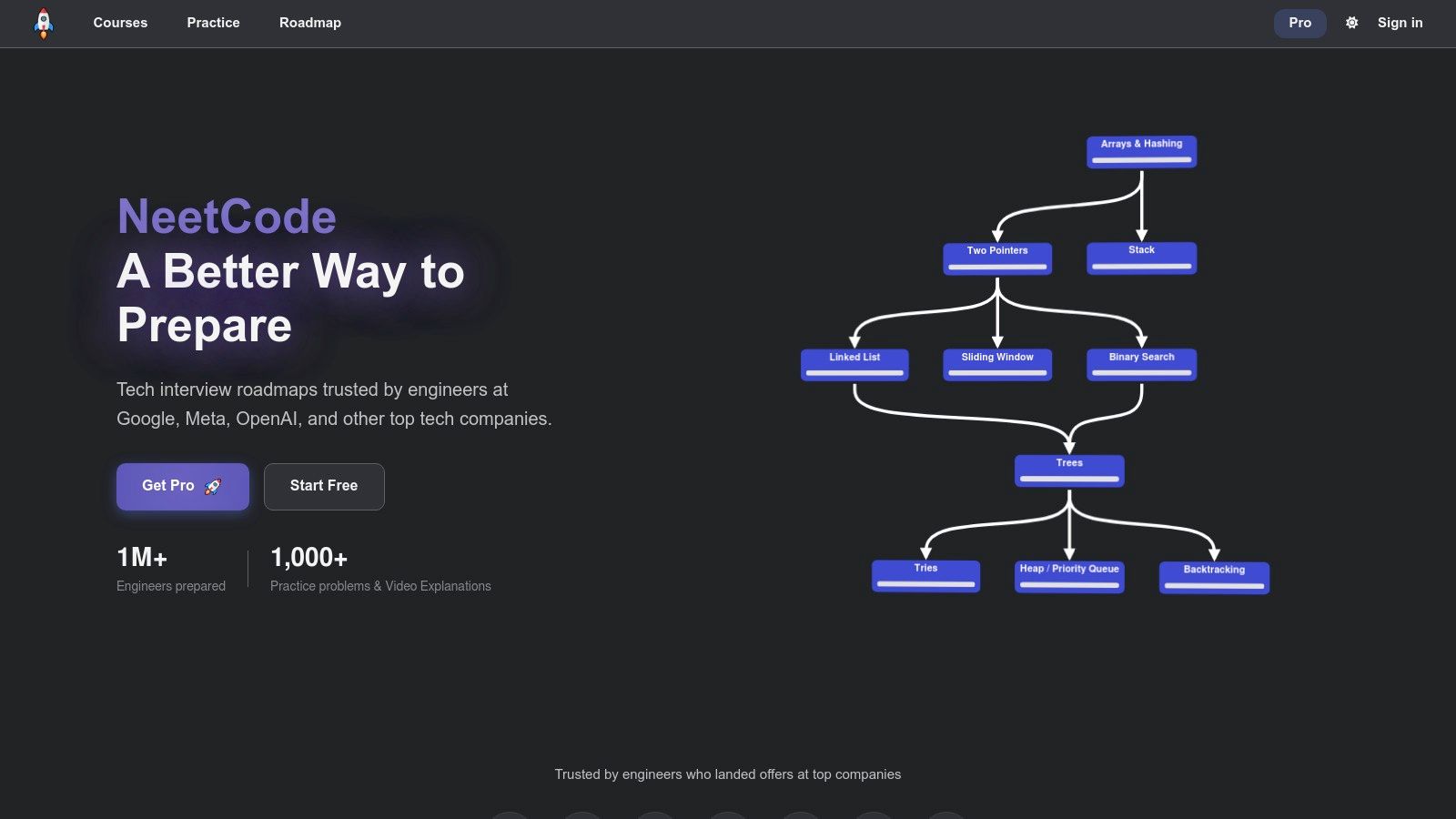
NeetCode provides a structured, pattern-based approach to tackling technical interviews, making it an excellent resource for preparing for Amazon LeetCode questions. Instead of a massive, unfiltered list, it offers a curated roadmap known as the "NeetCode 150," which focuses on the fundamental problem-solving patterns that frequently appear in interviews at top tech companies like Amazon. Its video-first format is ideal for visual learners who want clear, concise explanations.
Why NeetCode is Essential for Amazon Prep
The primary strength of NeetCode is its focus on patterns over problems. By mastering the core concepts behind the NeetCode 150 list (e.g., Two Pointers, Sliding Window, Backtracking), you equip yourself to solve not just those specific questions but any variation that Amazon might ask. This approach builds a deeper, more flexible understanding of data structures and algorithms, which is more effective than rote memorization.
Each problem on the NeetCode roadmap is accompanied by a high-quality video walkthrough that breaks down the intuition, logic, and implementation step-by-step. These explanations are famously succinct and clear, helping you grasp complex topics quickly. The platform acts as a powerful educational layer on top of LeetCode, guiding your practice sessions toward what truly matters for an Amazon interview.
Key Features and How to Use Them
To integrate NeetCode effectively into your Amazon study plan, focus on these features:
- The NeetCode 150 Roadmap: This is the core of the platform. Work through the problems topic by topic, starting with "Arrays & Hashing" and "Two Pointers." The list is structured to build foundational knowledge first, which aligns perfectly with Amazon's emphasis on core computer science principles.
- Video Explanations: Before attempting a problem on LeetCode, watch the corresponding NeetCode video to understand the underlying pattern. This pre-learning step can save you hours of frustration and solidify your understanding of the optimal approach.
- Code Solutions: NeetCode provides clean, commented code solutions in multiple languages (Python, Java, C++, JavaScript). Use these to compare against your own implementation and learn best practices for writing interview-ready code.
- Progress Tracking: The platform's dashboard allows you to track which problems you've completed, helping you stay organized and motivated. Use this to ensure you cover all essential patterns before your Amazon interview dates.
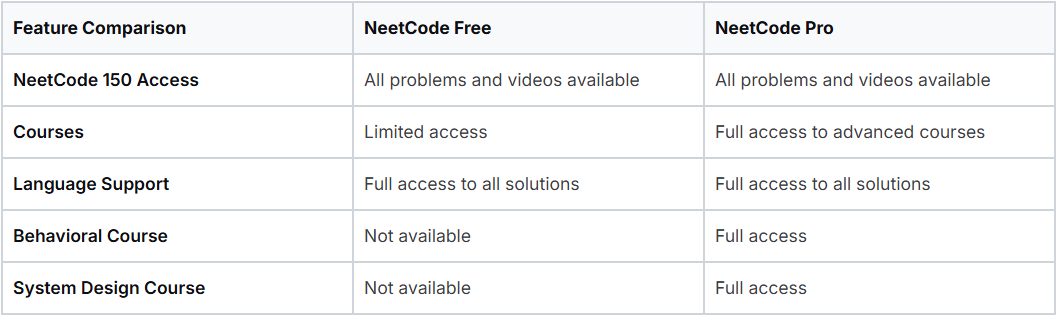
Pro Tip: Use NeetCode and LeetCode in tandem. Follow the NeetCode 150 list for structure and explanations, but implement and submit your solutions directly on LeetCode. This combines NeetCode's excellent teaching with LeetCode's robust coding environment and community discussions.
Website: https://neetcode.io/
7. GitHub – leetcode-companywise-interview-questions (snehasishroy)
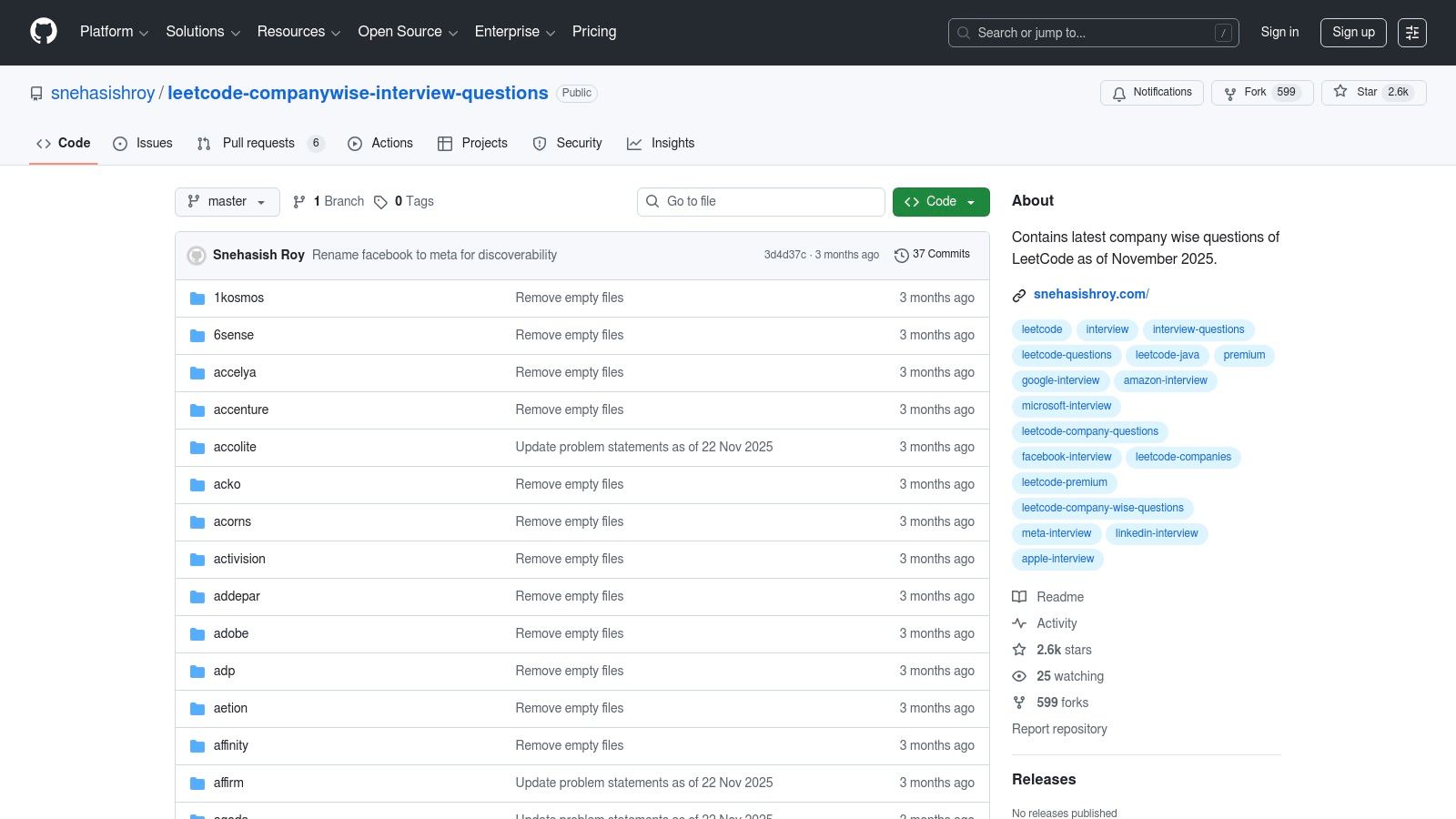
For developers who prefer a data-driven, do-it-yourself approach to interview prep, this GitHub repository by Snehasish Roy is a hidden gem. It offers a free, powerful alternative to paid services by scraping and compiling company-tagged LeetCode questions into easily accessible CSV files. It's an excellent resource for anyone looking to build a custom study plan for Amazon LeetCode questions without a premium subscription.
The repository's core function is to provide structured data on which problems are reportedly being asked. By organizing questions into time-based folders (e.g., last 30 days, 6 months, 1 year), it allows you to spot recent trends in Amazon's interview process, helping you prioritize problems that are currently in high rotation.
Why This Repository is Essential for Amazon Prep
The primary value of this GitHub project lies in its accessibility and flexibility. While LeetCode Premium gates its company frequency data, this repository democratizes that information. You can download the CSV files for Amazon and immediately get a list of problems, complete with titles, links, acceptance rates, and difficulty levels, which you can then sort and filter using any spreadsheet software.
This raw data format is perfect for integrating into your own custom tracking systems. Whether you use a Notion database, a Google Sheet, or even Anki flashcards for spaced repetition, these CSV files serve as the perfect starting point. It empowers you to build a personalized study tracker that fits your specific learning style, something a rigid platform cannot always offer.
Key Features and How to Use Them
To extract maximum value from this repository for your Amazon preparation, follow these steps:
- Download the Amazon CSVs: Navigate to the companies/amazon folder. Inside, you'll find CSVs organized by timeframe, such as amazon_30_days.csv or amazon_6_months.csv. Start with the 6-month list for a balanced view of relevant problems.
- Sort by Frequency: Open the CSV in a spreadsheet program like Excel or Google Sheets. The repository often includes frequency data. Sort the list in descending order of frequency to tackle the most commonly asked questions first.
- Integrate with Your Tools: Import the CSV into your preferred study tool. You can create a simple checklist in a spreadsheet, a more complex database in Notion with columns for "Status," "Confidence," and "Last Reviewed," or even automate flashcard creation for key concepts.
- Fork and Customize: As an open-source project, you can fork the repository. This allows you to track your own progress directly within GitHub, add personal notes, or even write scripts to further process the data.
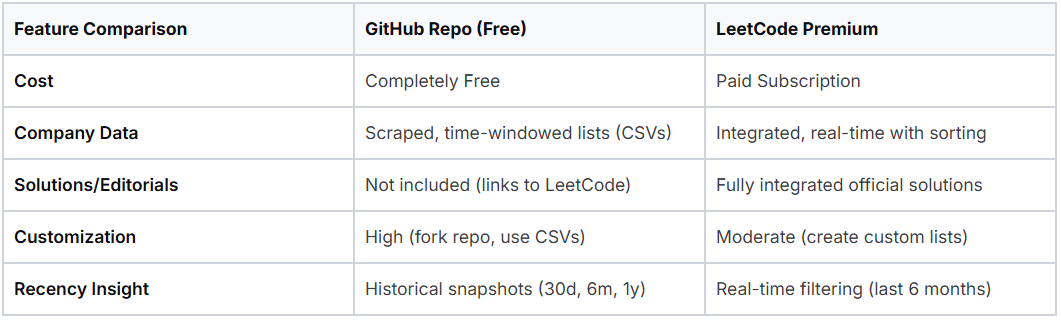
Pro Tip: Use the 30-day or 3-month CSVs a few weeks before your interview to identify and practice the "hottest" Amazon questions. This helps you focus on what's most likely to appear in your online assessment or phone screen.
Website: https://github.com/snehasishroy/leetcode-companywise-interview-questions
From Practice to Performance: Your Next Steps
You have navigated through a curated collection of the most critical amazon leetcode questions and the powerful tools designed to help you master them. The journey from encountering a complex problem to confidently presenting an optimal solution in an interview is built on strategic, consistent practice. This guide has equipped you not just with a list of problems but with a framework for understanding the underlying patterns that Amazon frequently tests.
We've explored how foundational platforms like LeetCode and GeeksforGeeks provide the raw material for your practice. We also saw how pattern-centric resources like AlgoMonster and NeetCode help you connect the dots, transforming isolated problem-solving into a systematic understanding of algorithmic principles. Curated lists on InterviewBit and GitHub offer a focused lens, ensuring your effort is directed at the questions most likely to appear in your Amazon coding rounds.
The ultimate goal, however, isn't just to memorize solutions. It's to internalize the logic so deeply that you can articulate it clearly and concisely under the pressure of a live interview. This is where the distinction between knowing the answer and performing becomes critical.
Building Your Personalized Amazon Study Stack
Your preparation should be as unique as you are. Rather than picking one tool and sticking with it, the most effective approach is to build a personalized "study stack" that addresses your specific needs. Here’s a practical way to combine the resources we've discussed:
- Foundation (Choose One): Use LeetCode or GeeksforGeeks as your primary platform for hands-on coding. This is where you’ll spend the bulk of your time writing, testing, and debugging solutions.
- Pattern Recognition (Choose One): Supplement your foundational practice with NeetCode or AlgoMonster. When you get stuck on a problem, find the corresponding pattern in these resources to understand the "why" behind the solution, not just the "how."
- Performance and Recall (Add-On): Integrate Qcard into your daily routine. As you solve important Amazon LeetCode questions, create Qcards for the key patterns, edge cases, and time/space complexity. This active recall practice solidifies your knowledge, ensuring you don't forget what you’ve learned and can retrieve it instantly during an interview.
Key Takeaway: The difference between a good candidate and a great one often comes down to communication. Your ability to calmly walk an interviewer through your thought process, justify your choices, and consider alternatives is just as important as writing correct code.
From Knowledge to Confident Delivery
Remember, Amazon’s interview process, particularly its emphasis on Leadership Principles, evaluates your problem-solving process as much as the final result. They want to see how you handle ambiguity, how you break down complex challenges, and how you communicate your strategy. Simply grinding through hundreds of amazon leetcode questions without a system for retention and clear articulation can lead to burnout and anxiety.
Your final preparation step should be to simulate the interview environment. Practice talking through problems out loud, either with a peer or by recording yourself. This helps bridge the gap between solving a problem on your screen and explaining it to another human being. This is where your Qcard practice pays dividends, providing the mental scaffolding to keep your explanation structured and on point, even when you're nervous. By deliberately practicing both the coding and the communication, you transform your hard-earned knowledge into a confident, hire-worthy performance.
Ready to ensure every hour you spend on LeetCode translates into confident interview performance? Qcard, Inc. is designed to bridge the gap between practice and recall, helping you conquer the anxiety of "blanking out" on key concepts. Solidify your understanding of amazon leetcode questions and walk into your interview prepared to articulate your solutions with clarity by trying Qcard today.
Amazon LeetCode FAQs
Q: What kind of LeetCode questions does Amazon ask in interviews?
Amazon's technical interviews frequently focus on medium to hard difficulty questions that test fundamental data structures and algorithms. Common topics include arrays, strings, linked lists, trees/graphs (especially breadth-first and depth-first search), dynamic programming, recursion, and hash tables. Questions often relate to real-world scalability and system design principles.
Q: Are there specific LeetCode question lists or patterns I should study for Amazon?
Yes, Amazon is known for having a frequently asked question list. Focus on curated lists like "Amazon Top 50" or "Most Asked Amazon Questions" on LeetCode. More importantly, study the underlying patterns (e.g., sliding window, two pointers, topological sort) rather than just memorizing solutions. Mastering these patterns will help you solve new, unseen problems during the interview.
Q: How should I prepare for the Amazon Online Assessment (OA) and final interview rounds?
For the Online Assessment, practice solving two medium-to-hard coding problems under time pressure. For the final rounds (the "loop"), prepare to explain your thought process aloud, write clean code on a whiteboard or shared document, discuss time/space complexity in detail, and consider edge cases. Behavioral questions using Amazon's Leadership Principles are also crucial and happen alongside coding questions.
Q: Is solving hundreds of random LeetCode problems the best strategy for Amazon?
No, a targeted approach is more effective. Prioritize quality over quantity. Deeply solve 100-150 problems from Amazon-focused lists, ensuring you understand each solution thoroughly. It's better to master common question patterns and be able to derive solutions than to have skimmed hundreds of problems without deep comprehension.
Q: What other skills, besides solving LeetCode problems, are important for Amazon's interview?
Beyond algorithmic problem-solving, you must be proficient in at least one major programming language (e.g., Java, Python, C++). Strong understanding of Object-Oriented Design (OOD) principles is often tested. You should also be ready to answer behavioral questions using the STAR method, framed around Amazon's 16 Leadership Principles, as these are weighed equally in the final decision.
Ready to ace your next interview?
Qcard's AI interview copilot helps you prepare with personalized practice and real-time support.
Try Qcard Free